
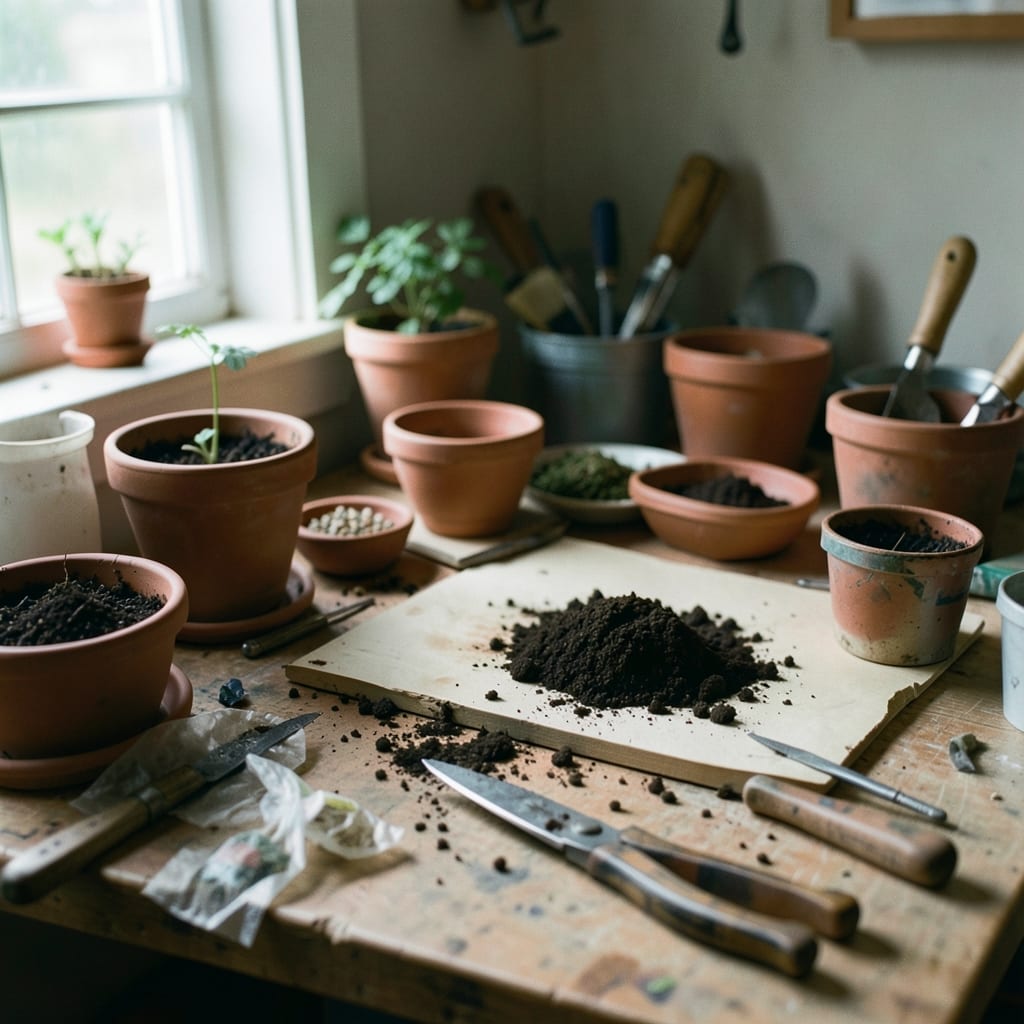
It started with a cherry tomato seedling that kept wilting
The first time I planted a cherry tomato seedling, it was late May in West Virginia, and the soil was still cool from the rain.
I’d pressed the tiny root ball into the hole, patted it down, and watered it just like the packet said—lightly, but enough to settle the dirt.
By morning, the leaves were already drooping, not the happy, upright curl of a healthy plant but something limp, like a hand reaching for help. I watered it again, this time deeper, but the stems stayed soft. Two days later, it was brown at the edges.
I’d followed every rule: full sun, well-draining soil, the right spacing. The packet had promised ‘vigorous growth,’ but this one looked like it was giving up before it even began. The next morning, I dug it up to check the roots.
They were tangled, yes, but not rotted—just too crowded in that tiny cell. The soil around them was damp, but not soggy. I replanted it in a bigger pot with fresh compost, and for a week, it perked up.
Then the heatwave hit, and the leaves curled inward again, as if the plant itself was trying to shield its own heart from the sun.
I’d made every mistake a beginner could: overwatering, under-watering, planting too deep, planting too shallow. Each time I fixed one thing, another would go wrong. The seedling would green up for a day, then wilt again. By the third attempt, I was convinced I’d never grow a tomato worth eating.
Nine tries before it finally took
The fourth time, I stopped using store-bought soil. I mixed my own: half compost from my grandfather’s old bin, half sand from the creek bed, and a handful of worm castings I’d saved from the last batch of compost.
I planted the seedling at the same depth it had grown in the tray, and this time, I watered it with rainwater collected in a bucket—no chlorine, no mystery chemicals. The first day, it stayed upright. The second, the leaves unfurled just a little more.
Then the heatwave came again, and I panicked.
I built a shade cloth over the pot, but the humidity trapped under it made the leaves yellow. I took it down and tried misting the plant twice a day, but the roots were still struggling. By the fifth attempt, I’d given up on pots entirely.
I dug a trench in the garden bed, filled it with the same soil mix, and planted the seedling deep—all the way up to its first true leaves. For three days, nothing happened. Then, on the fourth, a new leaf pushed through, bright green and firm.
I didn’t dare touch it.
The sixth time, I added a slow-release fertilizer pellet to the soil. The seventh, I mulched the bed with straw to keep the moisture steady. The eighth, I tested the soil pH and adjusted it with lime. Each change was small, but each time, the plant lasted a little longer.
By the ninth try, I’d stopped treating it like a science experiment. I watered when the soil felt dry an inch below the surface, I moved it to the shadiest corner of the garden when the afternoon sun turned brutal, and I stopped checking the leaves every hour.
That’s when it finally stayed alive.
The mind behind these pages

That cherry tomato was mine. I was twelve years old, sneaking into my grandfather’s garden in the early morning while he was still asleep, digging up handfuls of dirt and pressing seeds into the earth just to see what would happen.
He’d let me, even when most of the plants I chose never made it past the first week. ‘Some things take time,’ he’d say, and I’d nod like I understood, even though I didn’t.
Years later, I’d find myself doing the same thing—planting, failing, trying again—only this time, I’d write down every mistake.
I’m the kind of person who doesn’t give up on the third try, or even the fifth.
I’m the one who keeps adjusting the watering can, the one who moves the shade cloth an inch closer to the plant, the one who stays up late reading about root rot when the leaves start to spot.
My grandfather used to say I had ‘a stubborn streak wider than a garden row,’ and it’s true. I’d rather spend a month figuring out why a plant is wilting than admit I might’ve done something wrong. That’s how this site started: one stubborn seedling, one lesson at a time.
I don’t grow tomatoes just to eat them. I grow them to watch them grow—how the first true leaves unfurl, how the vines thicken, how a single fruit swells from the size of a marble to something heavy enough to bend the stem.
There’s a quiet joy in seeing life push through soil, even when you’re the one who put it there.
This is still about that cherry tomato. Every page here is written the way that plant was: with patience, with attention to the small things, and with the understanding that the first try is never the one that counts.
Everything here is written the way that cherry tomato was
That first seedling taught me that gardening isn’t about following instructions—it’s about paying attention to what those instructions don’t say. So every guide here starts with the basics, but it doesn’t stop there.
We test soil mixes until we find the one that works, we adjust watering schedules for heatwaves and droughts, and we never assume a plant will behave the way it’s supposed to.
If a tomato variety is supposed to thrive in full sun but yours keeps scorching in July, we’ll tell you how to fix it—because the real lesson is in the fixing.
The pages you’ll find here are built the same way: one attempt, then another, then another, until something finally takes. We don’t publish a guide on pruning until we’ve pruned the same plant nine different ways and seen which scars heal and which don’t.
We don’t recommend a soil amendment until we’ve tested it in three different beds. And we never, ever, write about a plant before we’ve watched it struggle—and then recover.
Months after a page goes live, we’ll go back and update it. Maybe the weather changed, or a new pest moved in, or we found a better way to describe how to tell if a seed is still viable. Gardening isn’t static, and neither are these pages.
That cherry tomato is still out there somewhere, probably buried under a new bed of compost by now. But the way it taught me to grow things never will be.
What that means for you
You’ll find no perfect solutions here, only real ones—and real ones come with trade-offs. If a method works for 90% of gardeners but not you, we’ll tell you how to adapt it.
If a plant thrives in one climate but wilts in another, we’ll give you the signs to watch for.
And if you’re just starting out, like I was with that first seedling, you’ll get the same advice I wish I’d had: start small, pay attention, and don’t be afraid to dig up the dirt and try again.
What you won’t find are step-by-step guides that assume every garden is the same. No ‘foolproof’ methods, no guarantees, no jargon. Just the same stubborn approach I took with that cherry tomato: try, watch, adjust, and write it all down so the next person doesn’t have to start from scratch.
Got a plant that just won’t behave? Or a trick that finally worked after five tries? We’d love to hear about it—especially the failures. The contact page is where to send your stories, and the ones that help others learn will make it here.
The guides are grouped by category: Advice, Aphids, Blooming, Companion Plants, Container Gardens and How To.