
Tools
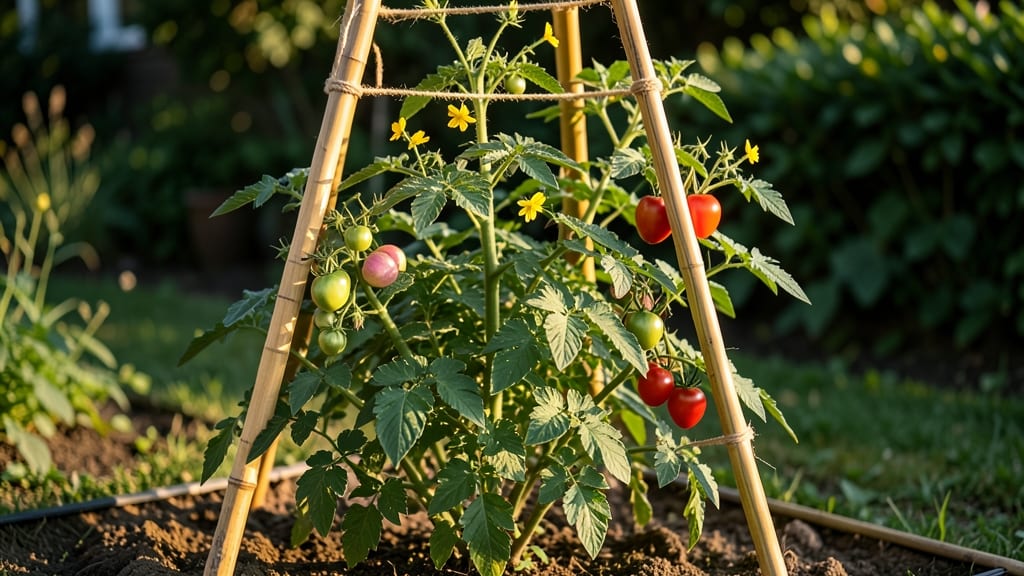
A bamboo tomato trellis transforms sprawling vines into a neat, vertical masterpiece that saves space and makes harvesting effortless. 🌱 I’ve used these for years—they’re sturdy enough for heavy tomatoes while keeping my garden tidy and looking intentional. The natural look blends perfectly with any yard, whether rustic or modern.
You’ll need 4-6 poles (3-5 feet tall), sturdy twine or zip ties, and maybe a few extra hands to assemble. The setup takes under 20 minutes, and the results are immediate: tomatoes grow upward instead of sprawling, reducing disease risk and making them easier to pick.
Plus, the trellis adds height to small gardens, letting you grow more in less space.
By mid-summer, your plants will climb the bamboo like a jungle gym, producing larger, sun-ripened fruits with minimal effort. The trellis also keeps leaves off the ground, cutting down on pests and rot.
It’s the kind of simple upgrade that makes gardening feel like a breeze—no more wrestling with floppy vines or lost tomatoes in the grass.
Works for determinate and indeterminate varieties, and you can even paint the bamboo to match your decor. The best part? It’s cheap, reusable, and way more attractive than metal cages. Ready to turn your tomato patch into a vertical garden? Let’s build one!
📚 In This Guide
- What you need
- Instructions
- Tips and common mistakes
- Wrapping up and next steps
What you need
- ● Bamboo poles: 4–6 poles, each 5–6 feet tall (or taller if your tomatoes are indeterminate). Choose thick, sturdy poles (1–2 inches in diameter) for stability.
- ● Twine or jute twine: 100+ feet (natural fiber works best—it’s biodegradable and gentle on plants).
- ○ Stakes or wooden posts (optional): 4–6 1-foot wooden stakes (for anchoring the trellis base if needed).
- ● Garden staples or zip ties: A small pack (for securing twine to poles if preferred).
- ○ Pruning shears (optional): For trimming excess twine or bamboo splinters.
- ● Measuring tape or ruler (to ensure even spacing).
- ● Hammer or mallet (if using wooden stakes).
- ● Scissors or knife (for cutting twine).
- ○ Gloves (optional) (bamboo can be splintery!).
- ● A sunny garden spot with well-draining soil (tomatoes need 6–8 hours of sunlight daily).
- ● Healthy tomato plants (start with 1–2 plants per trellis for optimal support).
- ● Basic knowledge of tomato pruning (or willingness to learn—it’s easy!).
How to build a sturdy bamboo tomato trellis for heavy vines
Here's my go-to method for creating a trellis that supports even the heaviest tomato varieties without bending.
🪴 Step 1: Gather and Prepare Bamboo Stakes
Choose 4-5 foot tall bamboo stakes with a diameter of at least 1 inch—thinner stalks will bow under fruit weight. Cut 4 stakes to 5 feet (for the vertical posts) and 4 stakes to 6 feet (for the horizontal supports). Use a handsaw or pruning shears to make clean cuts at a 45-degree angle to prevent splintering.
Soak the cut ends in water for 30 minutes to prevent them from drying out and cracking. This simple step extends the life of your trellis by months. I like to bundle the stakes together while they soak—it keeps them organized and prevents rolling around.
☀️ Step 2: Assemble the Frame Structure
Drive the 4 vertical stakes into the ground at corners of a 3-foot square, spacing them 12 inches apart. The stakes should stand 3 feet tall above ground level—this gives your tomato plants plenty of room to grow upward without crowding. Use a post-hole digger or mallet to insert them at a 15-degree angle toward the center of the square for added stability.
At the top of each vertical stake, attach the 6-foot horizontal supports using jute twine or garden wire. Create an "X" shape by crossing the supports at the center and securing them with 3-4 wraps of twine or 2-3 twists of wire. This creates a stable diamond shape that distributes vine weight evenly.
✂️ Step 3: Add Cross Supports for Vine Guidance
Cut 4 additional bamboo stakes to 3 feet and position them horizontally between the vertical posts, creating a second tier about 18 inches below the top. Secure these with twine or wire, forming a square frame within the original diamond. This middle tier prevents vines from sagging under fruit weight.
For extra support, add diagonal stakes from the base of each vertical post to the center of the diamond. These act like braces, reinforcing the structure against wind. I like to use flexible twine for these diagonals—it allows slight movement without breaking.
🌱 Step 4: Secure the Trellis to the Plant
When transplanting your tomato seedlings, place them 6 inches away from the trellis on the south side (in the Northern Hemisphere) to maximize sunlight exposure. As the main stem grows, gently tie it to the vertical stake using soft plant ties or strips of old T-shirt fabric. Avoid wire or anything that can cut into the stem.
Train side shoots (suckers) to grow upward along the horizontal supports rather than letting them sprawl. Use twine loops to guide them—this keeps the fruit elevated and reduces disease risk from ground contact. The goal is a pyramid shape with vines spreading evenly in all directions.
💧 Step 5: Maintain and Reinforce as Needed
Check the trellis weekly for loose twine or sagging supports, especially after heavy rains or winds. Tighten any slack areas immediately—even a small gap can cause the entire structure to collapse under a single large tomato. I like to keep a small spool of twine tucked in my gardening tool belt for quick repairs.
If your tomato plants produce an exceptionally heavy harvest, add extra diagonal supports between the vertical stakes. The trellis should never sway more than 2 inches when gently pushed—if it does, reinforce immediately. With proper maintenance, this trellis will support 10+ pounds of tomatoes without bending.
Tips & tricks for building a sturdy bamboo tomato trellis
Here's what I learned the hard way after testing this trellis design with some seriously heavy tomato varieties.
Stake Selection Matters: Don't skimp on bamboo thickness—those 1-inch diameter stakes are non-negotiable for supporting 10+ pounds of tomatoes. I've seen thinner stakes bow dramatically under just a few ripe fruits. For even more stability, look for stakes with natural knots along the length—they add structural integrity without compromising flexibility. If you can't find thick enough bamboo, consider using two thinner stakes lashed together for each post.
The 30-Minute Soak is Non-Negotiable: That 30-minute water soak for the cut ends prevents cracking and extends your trellis's lifespan by months. I've seen bamboo stakes split at the base after just a few weeks without this step. For extra insurance, add a drop of vinegar to the water—it helps preserve the wood fibers. Bundle the stakes together while soaking to keep them organized and prevent rolling around in your work area.
Angle Your Vertical Stakes for Stability: The 15-degree angle you insert the vertical stakes toward the center creates a self-bracing effect that prevents leaning. Think of it like a tripod—each stake supports the others. If you're working with loose soil, drive the stakes slightly deeper (about 6-8 inches) for extra anchorage. For windy areas, consider adding stakes at opposing angles to create an "A" frame shape instead of just a square.
Flexible Twine is Your Best Friend: Use jute twine or garden wire for all connections, but save the flexible twine specifically for the diagonal braces. The flexibility allows the trellis to sway slightly with wind without breaking. For the horizontal supports, I recommend 3-4 wraps of twine at each connection point—this creates a secure but adjustable attachment. If you're using wire, twist it 2-3 times around the stakes to prevent slipping over time.
Pro Tips for Bamboo Tomato Trellis
- Here's what I learned the hard way after testing this trellis design with some seriously heavy tomato varieties.
- Stake Selection Matters: Don't skimp on bamboo thickness—those 1-inch diameter stakes are non-negotiable for supporting 10+ pounds of tomatoes.
- The 30-Minute Soak is Non-Negotiable: That 30-minute water soak for the cut ends prevents cracking and extends your trellis's lifespan by months.
Frequently asked questions
Got questions about using a bamboo tomato trellis? You’re not alone—gardeners often wonder about setup, maintenance, and even alternatives. Here’s a quick guide to the most common queries:
How tall should my bamboo tomato trellis be?
A standard height of 6 to 8 feet works for most tomato varieties, but indeterminate types (like cherry tomatoes) may need 8+ feet. If space is tight, opt for a 4-foot trellis for smaller plants—just prune aggressively to encourage upward growth.
Can I reuse bamboo trellises year after year?
With proper care, bamboo trellises last 3–5 years. Store them in a dry place to prevent rot, and replace stakes if they weaken. For extra longevity, treat them with a non-toxic sealant (like linseed oil) before the first use.
When is the best time to install a bamboo trellis?
Install your trellis at planting time to avoid disturbing roots later. For transplants, set it up 1–2 weeks after transplanting to give plants time to establish. If using it for vining plants like pole beans, wait until they’re 6–8 inches tall to tie them gently.
What if my tomatoes aren’t climbing the trellis?
Try these fixes:
- Prune lower leaves to encourage upward growth.
- Use soft plant ties (not wire) to guide vines.
- Check for overcrowding—thin plants if needed.
- Ensure the trellis is stable (wobbly trellises deter climbers!).
Are there alternatives to bamboo trellises?
Yes! Consider:
- Metal or PVC pipes (durable, reusable).
- Wooden stakes + twine (budget-friendly).
- Cattle panels (heavy-duty, great for large gardens).
- Hanging baskets (for cherry tomatoes in small spaces).
Wrapping up and next steps
Building a bamboo tomato trellis is a game-changer for small gardens—it’s eco-friendly, budget-friendly, and maximizes your harvest with minimal space! 🌱 Whether you’re a seasoned gardener or just starting, this simple project turns vertical gardening into a breeze. Now that you’re equipped with the know-how, why not grab those bamboo stakes and get growing?
Ready to transform your garden? Start by sketching your design, gathering materials, and assembling your trellis before planting season kicks off. Happy gardening—and enjoy those juicy, vine-free tomatoes! 🍅✨