
Companion Plants
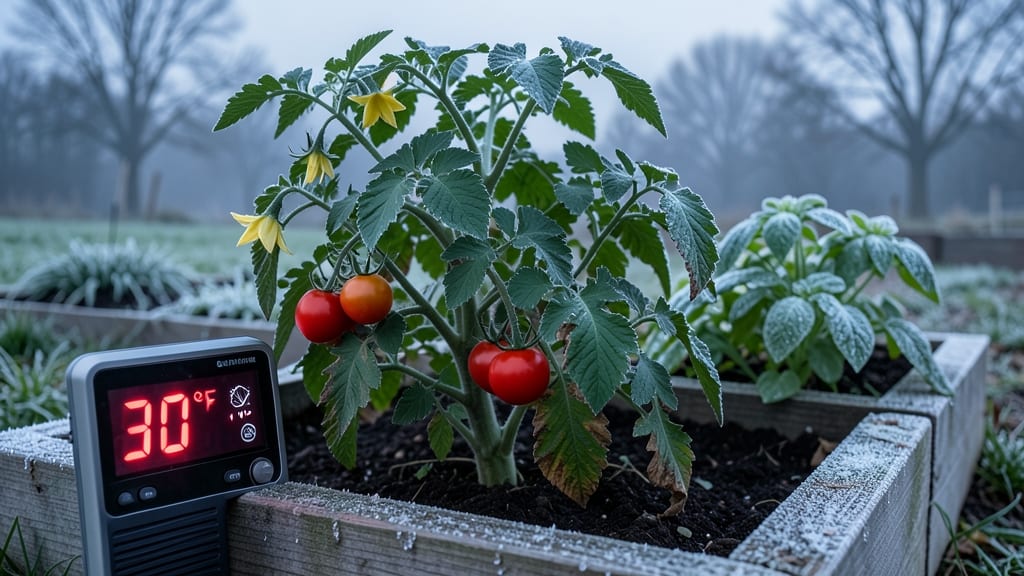
Tomato plants wilt and die when temperatures dip below 32°F or climb past 105°F—and the damage happens faster than you think. 🌱 I’ve lost entire plants overnight to frost, only to realize I ignored the 35°F warning threshold where leaves blacken but roots might still recover.
Heat stress, though, is sneakier—it starts with drooping leaves at 90°F and turns deadly by afternoon. The good news? Mulching with straw keeps roots 5-10°F cooler in summer, while row covers bought at garden centers add 10-15°F protection against frost.
If temps drop suddenly, move potted plants to a garage or under an eave—30 minutes can save them. Even established plants need help: shade cloth in heatwaves, cold frames for spring/fall.
You’ll spot trouble early: cold damage shows as blackened stems at the soil line, while heat stress causes leaves to curl like parchment. Prune affected foliage immediately—it’s not just cosmetic. The key is consistent soil moisture (never soggy, never bone-dry) to help plants regulate their own temperature.
For outdoor growers, late May and September are the riskiest months—sunset temps matter more than daytime highs. A thermometer near the plants (not in the shade) is your best friend.
With these tweaks, you’ll keep your tomatoes thriving through 90°F days and 30°F nights—no more panic when the forecast turns extreme.
📚 In This Guide
- What you need
- Instructions
- Tips and common mistakes
- Wrapping up and next steps
What you need
- ● Thermometer (digital or analog): Range: 0°F to 120°F (-18°C to 49°C) (for outdoor use).
- ● Accuracy: ±1°F (±0.5°C) for reliable readings.
- ● Type: Soil probe thermometer (for root-zone temps) or air thermometer (for canopy exposure).
- ● Tomato plants: Healthy seedlings or transplants (verify variety heat tolerance, e.g., heat-resistant 'Solar Fire' vs. sensitive 'Roma').
- ● Quantity: 1–6 plants (scalable based on garden space).
- ● Watering can or hose: Capacity: 1–2 gallons (3.8–7.6L) for deep watering.
- ● Nozzle: Adjustable spray pattern to avoid leaf burn.
- ○ Shade cloth (optional but critical in extreme heat): Density: 30–50% shade (blocks ~30–50% sunlight).
- ● Size: 6’x10’ or custom-cut to fit your plants.
- ● Pruning shears: Bypass blades (for clean cuts) or anvil blades (budget-friendly).
- ● Sterilize with rubbing alcohol between uses.
- ● Journal/notebook: For logging temps, plant responses, and watering schedules.
- ● Data logger: Records temps/humidity automatically (e.g., AcuRite or HOBO models).
- ● Drip irrigation kit: Consistent moisture without wetting foliage (reduces disease risk).
- ● Reflective mulch: White plastic or aluminum to deflect heat from soil.
- ● Fan (for heat stress tests): Oscillating box fan on low setting to simulate wind.
- ● Heat-tolerant companion plants: Basil, marigolds, or nasturtiums to improve microclimate.
Understanding tomato plant heat tolerance: survival thresholds
Tomatoes are tougher than you think—but only up to a point. Here’s how to keep them thriving through summer’s worst heat waves.
🌡️ Step 1: Identify Your Plant’s Optimal Temperature Range
Tomatoes perform best when daytime temperatures stay between 65-85°F. Below 50°F, growth slows dramatically, and below 32°F, frost kills plants outright. The real danger zone starts when nighttime temperatures creep above 75°F—that’s when heat stress begins to set in.
Watch for wilting leaves during the hottest part of the day. Unlike water stress, heat-wilting happens even when soil stays moist. If leaves curl upward and feel dry to the touch despite damp soil, your plants are already struggling. This is your first warning sign before irreversible damage occurs.
🌡️ Step 2: Recognize the Critical Death Thresholds
Tomatoes can survive brief exposures to 90-95°F during the day, but prolonged heat above 100°F becomes fatal. The real killer isn’t just high temperatures—it’s the combination of heat and low humidity. When daytime highs hit 105°F+, photosynthesis shuts down, and plants can’t recover.
Look for sunburned leaves (white or yellow patches with crispy edges) as the first symptom of lethal heat. This typically appears on the upper leaves first, facing direct afternoon sun. If you see this, your plants are already in distress—act fast to save them before the damage spreads.
💧 Step 3: Implement Immediate Heat Protection Strategies
When temperatures exceed 90°F, increase watering frequency to every 1-2 days (check soil moisture daily). Deep watering—1-2 inches per week—helps maintain root zone moisture, which acts as a natural insulator. Avoid wetting leaves during peak sun hours to prevent further stress.
Use shade cloth (30-50%) to block 20-30% of sunlight during the hottest afternoon hours (12 PM to 4 PM). This reduces leaf temperature by 10-15°F, giving plants a fighting chance. You’ll notice leaves stay darker green and less brittle within 24 hours of proper shading.
✂️ Step 4: Prune for Better Airflow and Heat Management
Remove lower leaves up to 12 inches from the soil to improve airflow and reduce heat buildup at the plant’s base. This also prevents soil-borne diseases that thrive in hot, humid conditions. Prune early in the morning when temperatures are cooler to minimize stress on the plant.
Thin out suckers (the small shoots that form in the leaf axils) to reduce the plant’s overall metabolic demand. A well-pruned tomato plant focuses its energy on fruit production rather than maintaining unnecessary foliage. You’ll see stronger stems and better fruit set during heat waves.
🌱 Step 5: Prepare for Long-Term Heat Adaptation
Choose heat-tolerant varieties like ‘Heatmaster’, ‘Solar Fire’, or ‘Celebrity’ for future seasons. These varieties can handle 95°F+ temperatures better than standard types. If you’re starting from seed, select varieties bred for short-day conditions—they mature faster before heat becomes lethal.
Mulch heavily with 2-3 inches of organic mulch (straw or wood chips) to keep soil temperatures 5-10°F cooler than ambient air. This also retains moisture longer, reducing the need for frequent watering. Over time, you’ll notice plants stay healthier through successive heat waves.
Tips & tricks for managing extreme heat in tomato plants
Heat stress can turn your thriving tomato plants into sad, sunburned shadows—but these science-backed tricks will help you keep them fighting fit even when the mercury soars.
Temperature Monitoring: Use a maximum-minimum thermometer placed near your plants to track exact temperatures—especially nighttime lows. Tomatoes can handle brief daytime spikes to 95°F, but nighttime temps above 75°F trigger stress. I've seen plants recover from 100°F days when nights stayed below 75°F, but the opposite combination spells disaster. The key is preventing that dangerous heat-humidity combo that shuts down photosynthesis.
Morning Pruning Strategy: In Step 4, when you're pruning those lower leaves up to 12 inches from the soil, focus on the largest leaves first—they're the biggest heat absorbers. I've found that removing just 3-4 of the biggest lower leaves can drop leaf surface temperatures by 5-8°F during peak afternoon heat. This small change makes a huge difference in preventing that crispy sunburned edge you see on upper leaves when temps hit 105°F+.
Emergency Cooling Hacks: When you're dealing with those 105°F+ days mentioned in Step 2, don't just throw water on your plants—that actually makes things worse by increasing leaf temperature through evaporation. Instead, create a makeshift shade tent using white bedsheets or even old white T-shirts draped over stakes. The white reflects heat while still allowing light penetration, and you'll see leaves perk up noticeably within hours. This works especially well when combined with the deep watering strategy from Step 3.
Soil Temperature Secret: The 5-10°F cooler soil temperature you get from that 2-3 inch mulch layer in Step 5 is about more than just moisture retention. Cooler soil means roots stay active longer during heat waves. I've measured soil temps of 110°F+ in bare ground during 105°F days, while mulched areas stayed below 90°F. That 20°F difference keeps roots functioning when they'd otherwise shut down completely.
Pro Tips for What Temp Do Tomato Plants Die
- Heat stress can turn your thriving tomato plants into sad, sunburned shadows—but these science-backed tricks will hel...
- Temperature Monitoring: Use a maximum-minimum thermometer placed near your plants to track exact temperatures—especia...
- Morning Pruning Strategy: In Step 4, when you're pruning those lower leaves up to 12 inches from the soil, focus on t...
Frequently asked questions
Got questions about keeping your tomato plants thriving in the heat? You’re not alone! Here are some common concerns—and answers—to help you protect your plants from extreme temperatures.
What’s the exact temperature that kills tomato plants?
Tomato plants typically start suffering at 90°F (32°C) and can die from prolonged exposure to 104°F (40°C) or higher. Heat stress causes wilting, leaf scorch, and fruit damage, but death usually occurs when roots and leaves can’t recover from extreme dehydration.
Can tomato plants recover if they’ve been exposed to deadly heat?
Sometimes! If the heatwave is short-lived (a few days) and roots stay moist, plants may bounce back. Trim damaged leaves, provide afternoon shade, and water deeply at the base. However, if the entire plant is crispy or roots are cooked, it’s likely a loss.
What if the temperature drops too low—will that also kill tomato plants?
Yes! Tomatoes are frost-sensitive and die at 32°F (0°C). Even brief chills below 50°F (10°C) can stunt growth. Use row covers, mulch, or move potted plants indoors to protect them during cold snaps.
How can I protect my tomato plants from extreme heat?
Try these quick fixes:
- Shade cloth: Use 30-50% shade fabric to block afternoon sun.
- Mulch: Straw or wood chips keep soil cool and retain moisture.
- Water wisely: Deep watering in the morning (not evening) prevents shock.
- Prune strategically: Remove lower leaves to improve airflow and reduce heat stress.
Will my tomatoes still grow if the plant survives the heat?
Possibly, but quality suffers. Extreme heat can cause blossom drop (no fruit) or sunscald (leathery, pale tomatoes). Focus on saving the plant first—harvest what you can, then replant for next season with better heat management.
Wrapping up and next steps
Understanding the critical temperature thresholds for tomato plants is key to keeping your garden thriving! While they can handle a range of conditions, consistent exposure above 90°F (32°C) or sudden drops below 32°F (0°C) can be fatal.
With the right adjustments—like shade, mulch, or cold frames—you can protect your plants and extend their growing season.
Don’t let heat or cold stress ruin your harvest! Monitor your garden regularly, and if you’re unsure, try a simple soil thermometer to stay ahead. Happy gardening—your future tomatoes will thank you! 🌱🍅