
Size
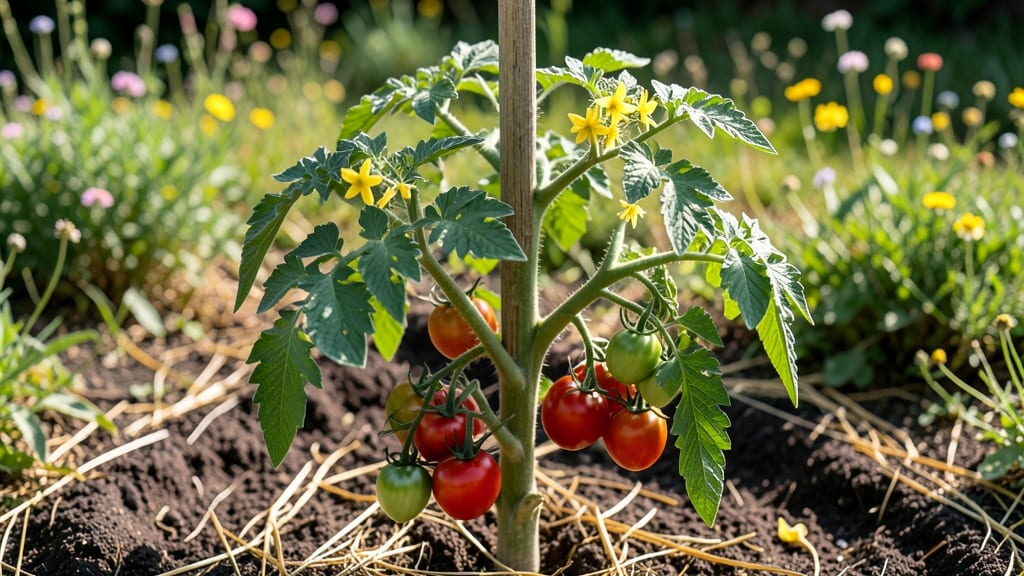
Growing healthy tomato plants starts with the right foundation—soil so rich it makes vines reach for the sky. 🌱 I’ve learned the hard way that skimping on prep leads to weak stems and sad fruit, but with the proper mix of compost, sunlight, and patience, you’ll grow plants that burst with tomatoes instead of struggling through the season.
The secret isn’t complicated: start with well-draining soil packed with organic matter, stake your plants early to prevent flopping, and water at the roots—not the leaves—to keep everything disease-free.
Most beginners overwater or under-prune, but these small tweaks transform floppy, leafy messes into sturdy producers with heavy clusters of ripe fruit.
By midsummer, your plants will be thriving—vines thick as your thumb, leaves glossy and green, and tomatoes swelling with color. The key is consistency: feed them every few weeks, prune suckers religiously, and watch as your garden becomes the talk of the neighborhood.
Works for containers, raised beds, or in-ground plots—just adjust spacing and support. Here’s how to keep them growing strong from seed to harvest.
📚 In This Guide
- What you need
- Instructions
- Tips and common mistakes
- Wrapping up and next steps
What you need
- ● Tomato Seeds or Seedlings: Choose disease-resistant varieties like Cherry Tomatoes, Beefsteak, or Roma. Start with 5–10 seeds (or seedlings) per plant, depending on your space.
- ● Containers or Garden Beds: For containers: 5-gallon pots or larger (minimum 12" deep) with drainage holes. Use 1–2 pots per plant.
- ● For garden beds: Loose, well-draining soil in a sunny spot (6–8+ hours of light daily). Space plants 18–24" apart.
- ● High-Quality Potting Mix: A sterile, nutrient-rich blend (e.g., 60% organic matter, 20% perlite/vermiculite, 20% compost). Avoid garden soil—it’s too dense!
- ● Fertilizer: Start with a balanced fertilizer (10-10-10 or 5-5-5) at planting.
- ● Switch to a tomato-specific fertilizer (high in phosphorus/potassium, like 7-9-5) when flowers appear.
- ● Watering Can or Hose with Soaker Nozzle: Drip irrigation or a can with a gentle spray prevents soil erosion.
- ○ Stakes or Cages: 6-foot wooden stakes or metal cages (1 per plant) to support vines. Optional: tomato clips for extra security.
- ● Mulch: Straw or shredded leaves (2–3 inches thick) to retain moisture and suppress weeds.
- ● Pruning Shears: For trimming suckers and dead leaves (sterilize with rubbing alcohol between uses!).
- ● pH Test Kit: Keep soil pH between 6.0–6.8 (tomatoes love slightly acidic soil).
- ● Garden Gloves: Protect your hands from thorns and soil-borne pathogens.
- ● Row Cover or Shade Cloth: 30–50% shade cloth for hot climates or frost protection in early spring.
- ● Organic Pest Control: Neem oil, beneficial nematodes, or row covers to deter pests like aphids or hornworms.
- ● Sunlight: Confirm your spot gets full sun (6+ hours/day). Tomatoes are sun-worshippers!
- ● Warmth: Soil should be at least 60°F (15°C) before planting (use a soil thermometer if unsure).
- ● Time: Allocate 10–15 minutes daily for watering, pruning, and checks.
- ● Patience: From seed to harvest, plan for 60–90 days (longer for heirlooms).
Step-by-step instructions for growing healthy tomato plants
Here's the method I've refined over years of growing tomatoes—focused on strong vines and disease resistance.
🌱 Step 1: Start Seeds Indoors at the Right Time
Begin seeds 6-8 weeks before your last frost date when indoor temperatures stay above 60°F. Fill 2-3 inch deep biodegradable pots with sterile seed-starting mix (never garden soil—it harbors pathogens). Plant 2 seeds per pot at ¼ inch depth, then cover lightly with additional mix. The outer seed coat can be tough, so I soak seeds in lukewarm water for 12 hours before planting to speed germination.
Water gently from the bottom by placing pots in a tray of ½ inch of water for 10 minutes. This prevents washing seeds too deep. Keep soil consistently moist but never soggy—you'll see condensation on the pot's sides when moisture is perfect. Expect sprouts in 5-10 days at 75-85°F.
☀️ Step 2: Provide Optimal Light and Prevent Leggy Growth
The instant seedlings emerge, move them to a south-facing window or under grow lights for 14-16 hours daily. Without enough light, seedlings stretch toward the window (called "legginess"), and those plants never recover. You'll know your setup is right when seedlings have thick stems, dark green leaves, and compact spacing between leaves.
Use a full-spectrum LED grow light positioned 2-4 inches above the plants. Raise it as they grow to maintain that gap. Rotate pots ¼ turn daily so plants grow straight instead of leaning. Once seedlings have 2-3 sets of true leaves (not the first seed leaves), transplant them into 5-inch pots with fresh potting mix.
🪴 Step 3: Harden Off and Transplant After Frost
Two weeks before your last frost date, start hardening off seedlings by placing them outside in a sheltered, shaded spot for 1-2 hours the first day. Gradually increase time outside by 1 hour daily until they tolerate full sun for 6+ hours. This process teaches plants to handle wind, sun, and temperature swings without shock.
Transplant after all danger of frost has passed and soil temperatures reach 60°F. Choose a full-sun location with 6-8 hours of direct sunlight and soil that drains well. Dig holes slightly deeper than the root ball to encourage strong root growth. Space plants 18-24 inches apart in rows 3 feet apart for proper air circulation (critical for disease prevention).
💧 Step 4: Water Deeply and Support Vines Early
Water deeply at the base every 2-3 days until the top 2 inches of soil feel dry. Shallow watering encourages weak roots and surface-level fruit. Use a soaker hose or drip irrigation to deliver water slowly at the soil line—this prevents wetting leaves, which spreads fungal diseases like early blight. Mulch with 2-3 inches of straw to retain moisture and suppress weeds.
Install cages or stakes the day you transplant. Tomatoes grow fast, and vines that flop onto the ground develop rot and pests. I use 5-6 foot tall cages for determinate varieties and 6-8 foot stakes with twine for indeterminate types. Gently weave vines through the cage as they grow—this prevents stem damage and encourages upward growth.
✂️ Step 5: Prune and Fertilize for Maximum Health
When plants reach 12 inches tall, begin succession pruning to focus energy on fruit production. Remove suckers (the small shoots that form in the leaf axils) by pinching them off with your fingers. These compete with fruit for nutrients. Also, prune lower leaves that touch the soil to improve airflow and reduce disease risk.
Feed plants every 2 weeks with a balanced fertilizer (10-10-10 or 5-5-5) until flowers appear, then switch to a low-nitrogen, high-phosphorus fertilizer (like 5-10-10) to encourage fruiting. You'll see healthier leaves and more blossoms within 2-3 weeks of switching. Avoid over-fertilizing—too much nitrogen produces lush foliage but few tomatoes.
Tips & tricks for growing strong tomato vines
Here's what I've learned after years of growing tomatoes—these details make all the difference between healthy plants and disappointing harvests.
Seedling Setup: The 6-8 week timing before your last frost is non-negotiable for strong starts, but don't skip the 12-hour soak for seeds. This softens the tough outer coat and speeds germination by 30-50%. I use a small glass jar with lukewarm water and a paper towel to keep seeds submerged without drowning them. Also, those 2-3 inch deep biodegradable pots are worth the investment—they prevent root binding that stunts growth.
Lighting Strategy: The 14-16 hours of daily light is critical, but positioning matters just as much. Place your grow lights 2-4 inches above seedlings and adjust as they grow—too high and they'll stretch, too low and they'll burn. I've found that rotating pots ¼ turn daily prevents plants from leaning toward the light source, which creates stronger stems. Watch for those dark green leaves and compact spacing between them—they're your sign you're doing it right.
Transplanting Technique: When you're hardening off seedlings, start with just 1-2 hours on day one and increase by 1 hour daily. This gradual exposure prevents shock that can set plants back for weeks. And here's a pro move: transplant on a cloudy day or late afternoon when temperatures are cooler. The deeper holes you dig (slightly deeper than the root ball) encourage roots to grow downward rather than circling, which leads to stronger plants that handle drought better.
Ongoing Care: That 2-3 inch straw mulch isn't just for looks—it's a game-changer for moisture retention and weed suppression. I've seen soil temperatures stay 10°F cooler with mulch, which prevents fruit from splitting during hot spells. And when it comes to cages, install them the day you transplant. Tomatoes grow fast, and vines that flop onto the ground develop rot and pests you don't want to deal with later.
Pro Tips for Grow Healthy Tomato Plants
- Here's what I've learned after years of growing tomatoes—these details make all the difference between healthy plants...
- Seedling Setup: The 6-8 week timing before your last frost is non-negotiable for strong starts, but don't skip the 12...
- Lighting Strategy: The 14-16 hours of daily light is critical, but positioning matters just as much. Place your grow ...
Frequently asked questions
Got questions about growing lush, productive tomato plants? You’re not alone—even seasoned gardeners hit snags! Here are answers to the most common queries to keep your vines thriving and your harvests bursting with flavor.
How often should I water my tomato plants?
Water tomato plants deeply 1–2 times per week, aiming for about 1–2 inches of moisture. Avoid shallow watering, which encourages weak roots. Early morning is best to prevent fungal diseases. Mulch helps retain moisture and keeps soil consistently damp—just don’t overdo it in rainy seasons!
When is the best time to transplant tomato seedlings?
Transplant seedlings after the last frost when soil temps hit 55–65°F (13–18°C). Harden off seedlings first (acclimate them to outdoor conditions over 5–7 days). For warmer climates, plant in early spring; cooler regions may wait until late spring. Use tomato cages or stakes at transplanting to avoid disturbing roots later!
What are the most common tomato plant pests, and how do I stop them?
Watch for hornworms (green caterpillars), aphids (sticky clusters), and whiteflies. Handpick hornworms or introduce beneficial nematodes. Spray aphids with soapy water. For whiteflies, use yellow sticky traps. Neem oil is a gentle, organic deterrent for all three. Rotate crops yearly to break pest cycles!
Why are my tomato leaves turning yellow?
Yellow leaves often signal overwatering, nutrient deficiency, or disease. Check soil moisture—tomatoes hate soggy roots! Yellowing between veins? Likely iron deficiency; amend soil with chelated iron or compost. Brown spots with yellow halos? Early blight—remove infected leaves and space plants for airflow. Prevention is key: water at the base, not overhead!
Can I grow tomatoes in containers, and what’s the best setup?
Use containers at least 5 gallons for dwarf varieties, 15+ gallons for indeterminate types. Ensure drainage holes and fill with lightweight potting mix. Place pots in full sun (6+ hours daily) and fertilize every 2–3 weeks. Cherry tomatoes thrive in containers—just prune regularly to control size and boost airflow!
Pro Tip: Rotate your tomato varieties yearly to prevent soil-borne diseases and keep flavors exciting! Try heirlooms like Brandywine or Sungold for a showstopping harvest.
Wrapping up and next steps
Growing healthy tomato plants is all about patience, care, and a little know-how! By choosing the right varieties, providing proper soil and sunlight, and staying consistent with watering, pruning, and pest control, you’ll be rewarded with juicy, homegrown tomatoes that taste like summer. 🍅✨
Now that you’re armed with these vine-strong secrets, it’s time to roll up your sleeves and get planting! Start small—whether it’s a single pot or a full garden bed—and watch your green thumb grow. Happy gardening!