
Plants
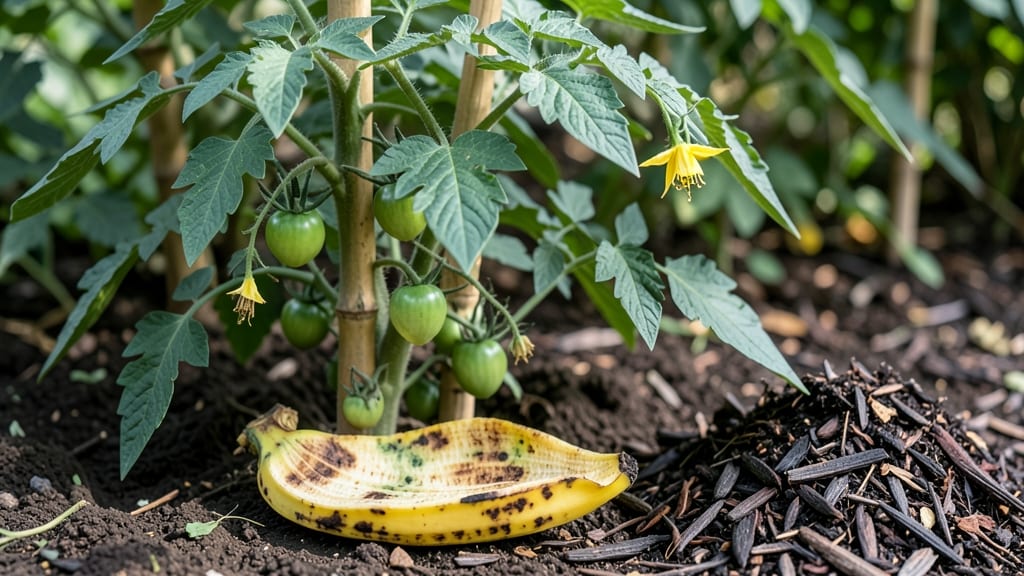
Bananas are good for tomato plants because their peels provide potassium, phosphorus, and calcium, while the fruit's natural sugars feed soil microbes. Use composted peels or brew banana peel tea for best results without over-fertilizing.
Banana peels act like a natural fertilizer because they're packed with nutrients tomatoes crave, especially potassium, which helps with fruit development and disease resistance. 🌱 The phosphorus in peels strengthens roots, while calcium prevents blossom-end rot—a common tomato problem.
I've seen gardeners double their tomato yield by using banana peel tea every two weeks during the growing season, but it's crucial to balance it with other organic matter to avoid over-salting the soil.
For best results, chop peels into small pieces and compost them or steep them in water for 24 hours to create a nutrient-rich liquid fertilizer. This method avoids the risk of mold growth while maximizing nutrient absorption for your plants.
💡 In This Article
- Nutritional Breakdown: Why Banana Peels Benefit Tomato Growth
- How to Use Banana Peels for Tomato Plants: Safe Methods
Nutritional breakdown: why banana peels benefit tomato growth
Banana peels contain a powerhouse of nutrients that directly address tomato plants' needs. The peel's potassium content—about 1,000 mg per 100g—is particularly valuable, as tomatoes require high potassium levels for fruit development and disease resistance.
This compares favorably to commercial fertilizers like 5-10-5 blends, where potassium is the last number, often 5% or less by weight. The phosphorus in peels (around 40 mg per 100g) strengthens root systems, while calcium prevents blossom-end rot, a common tomato issue caused by calcium deficiency.
What makes banana peels unique is their magnesium content—about 25 mg per 100g—which helps with chlorophyll production, giving leaves that vibrant green color.
This magnesium also aids in activating enzymes that convert sugars and starches into energy for the plant. 🌱 Unlike synthetic fertilizers that deliver nutrients in concentrated forms, banana peels release these minerals gradually as they decompose, mimicking nature's slow-release system.
The natural sugars in the peel further feed beneficial soil microbes, creating a symbiotic relationship that improves nutrient uptake.
The potassium-to-phosphorus ratio in banana peels (roughly 25:1) aligns well with tomato plants' requirements during fruiting stages. This balance supports both vegetative growth and fruit production without overwhelming the plant, which can happen with over-fertilization.
For comparison, a typical banana fruit contains about 350 mg of potassium, but the peel holds nearly three times that amount—making it an underutilized garden resource.
One scientific mechanism at play is how potassium regulates water movement within plant cells, improving drought resistance. Tomatoes with adequate potassium can better withstand fluctuations in soil moisture, which is particularly useful in containers or regions with irregular watering schedules.
The peel's fiber content also contributes to soil structure, improving aeration and root penetration—critical factors for tomato plants that develop deep root systems.
While commercial fertilizers provide precise nutrient ratios, banana peels offer a more holistic approach by improving soil health over time. The organic matter from decomposing peels increases water retention capacity by up to 20% in sandy soils, while also attracting earthworms that further aerate the soil.
This creates a feedback loop where healthier soil leads to stronger plants that can better utilize the nutrients available.
For gardeners concerned about nutrient balance, banana peels should be used as a supplement rather than a sole fertilizer source. Pairing them with nitrogen-rich materials like grass clippings or compost ensures a complete nutrient profile.
The slow-release nature of banana peel nutrients means you won't see immediate dramatic results, but over a growing season, the cumulative benefits become evident in larger fruit yields and more robust plants.