
Pests and Diseases
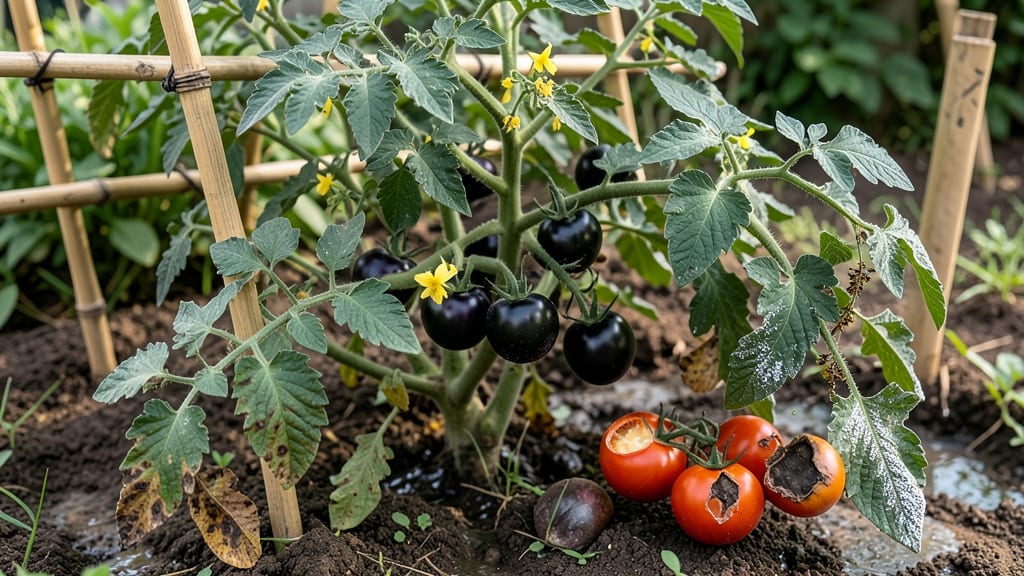
The Black Krim tomato problems—like porcelain cracking and blight susceptibility—hit hard when moisture and care aren’t consistent, as I learned after my first harvest turned into a mosaic of split fruit. 🌱 The deep purple-black skins hide a surprising vulnerability: these heirlooms demand steady moisture to prevent both cracking and blossom end rot, two problems that plague growers every summer.
Blight loves the humid conditions Black Krims thrive in, turning leaves to brown lace within days. My first year, I lost half my plants to early blight, but switching to morning watering and spacing plants for airflow made all the difference.
The key is balancing what this variety loves—rich soil and warmth—with its weaknesses: too much water, too little sun, or crowded stems.
With consistent care, you'll end up with tomatoes so flavorful they'll change how you think about heirlooms. The cracked ones still taste amazing if you use them quickly, and a few organic sprays keep blight at bay.
It's not about perfection—it's about working with the plant's quirks to get that deep, smoky-sweet flavor Black Krims are famous for.
Whether you're growing in containers or garden beds, these fixes work for any climate. The secret is watching your plants daily and adjusting water, shade, and spacing before problems start. Trust me, the first harvest makes the effort worth it.
Why it happens
Black Krim tomatoes are prized for their rich, smoky flavor and striking appearance, but they’re also prone to specific issues that can leave gardeners scratching their heads. 🌱🍅 From unsightly cracks to sudden wilting, these problems often stem from a mix of environmental stress, cultural mismatches, and biological vulnerabilities.
Let’s break down the science behind why your Black Krims might be struggling—and how to address it at its source.
🌡️ Uneven Watering and Soil Stress
Black Krim tomatoes thrive in consistent moisture, but fluctuations in water availability can trigger cracking and blossom end rot. Here’s why:
- Rapid water uptake: When soil dries out unevenly, tomatoes absorb water quickly after irrigation, causing cells in the fruit to expand faster than the skin can stretch. This leads to radial cracks (vertical splits) or concentric cracks (circular rings). Black Krims, with their thick skins, are slightly more resistant but still susceptible.
- Calcium deficiency: Blossom end rot occurs when calcium—essential for cell wall integrity—can’t reach the developing fruit due to dry soil or competing roots. Since Black Krims are indeterminate (continuous producers), they’re especially vulnerable if water or nutrients aren’t evenly distributed.
- Soil temperature swings: Cold soil (<60°F/15°C) slows calcium absorption, while hot soil (>85°F/30°C) speeds up transpiration (water loss), creating a double whammy. Black Krims, which prefer cooler climates, are more sensitive to these extremes.
Actionable fix: Use drip irrigation or mulch (straw or grass clippings) to maintain 1–2 inches of consistent moisture. Add calcium-rich amendments like crushed eggshells or gypsum (calcium sulfate) at planting.
🍄 Fungal Pressure and Humidity Mismatches
Black Krim tomatoes are susceptible to early blight (Alternaria solani) and late blight (Phytophthora infestans), two fungal diseases that thrive in the high humidity and dense foliage these plants develop. Here’s the biology behind it:
- Spores love moisture: Fungal spores germinate in film of water on leaves (e.g., from overhead watering or morning dew). Black Krims’ large, broad leaves provide ample surface area for spores to latch on.
- Poor airflow: Crowded plants or thick canopies create microclimates with 90%+ humidity, ideal for fungal growth. Late blight, in particular, spreads 10x faster in these conditions.
- Stress weakens defenses: Tomatoes under nutrient stress (e.g., nitrogen deficiency) or physical damage (e.g., from hail or pests) are 3x more likely to succumb to blight.
Actionable fix:
- Space plants 18–24 inches apart and prune suckers to improve airflow.
- Avoid watering leaves; use soaker hoses at soil level.
- Apply copper fungicide preventatively (especially in humid climates) or use baking soda spray (1 tbsp baking soda + 1 quart water + a drop of soap).
🌱 Poor Soil Drainage and Root Constraints
Black Krim tomatoes despise waterlogged soil, which leads to root rot (Pythium or Fusarium) and stunted growth. The science:
- Oxygen deprivation: Roots need 10–15% oxygen to function. Compacted or clay-heavy soil traps water, suffocating roots and triggering anaerobic respiration, which produces toxic ethanol and acids.
- Nutrient lockout: Waterlogged conditions leach nitrogen and phosphorus from the root zone, starving plants even if fertilizer is present. Black Krims, which are heavy feeders, show symptoms like yellowing leaves and small, deformed fruit.
- Pathogen entry: Stagnant water creates the perfect breeding ground for Pythium fungi, which attack roots within 48–72 hours of soil saturation.
Actionable fix:
- Amend soil with compost or perlite to improve drainage.
- Plant in raised beds or containers with drainage holes if your native soil is heavy.
- Test soil pH (6.0–6.8 is ideal) and add sulfur if alkaline.
🐛 Pest Damage and Secondary Infections
Insects like hornworms, aphids, and spider mites don’t just eat leaves—they create entry points for disease and stress Black Krims into vulnerability. Here’s how:
- Hornworm feeding: These caterpillars skeletonize leaves, reducing the plant’s ability to photosynthesize. A single hornworm can defoliate a plant in 3–5 days, leaving it weak and prone to blight.
- Aphid honeydew: These pests excrete sticky sugar-rich waste, which fosters sooty mold (a secondary fungus) and blocks sunlight, further stressing the plant.
- Mite stress: Spider mites pierce cells to feed, causing silver stippling on leaves. This disrupts gas exchange, leading to wilting and premature fruit drop.
Actionable fix:
- Handpick hornworms (look for green droppings on leaves) or use Bt (Bacillus thuringiensis) spray.
- Blast aphids off with water or introduce ladybugs as natural predators.
- Spray neem oil weekly to deter mites and strengthen plant resilience.
Quick Fixes for Common Black Krim Tomato Troubles
Black Krim tomatoes are prized for their rich, smoky flavor and striking dark purple hue—but even the hardiest varieties can fall victim to issues like cracking, blossom end rot, and blight. The good news?
Most problems have simple, practical solutions. Below, we’ve mapped out cause-specific fixes to restore your tomatoes to their juicy, vibrant best, plus prevention tips to keep them thriving all season.
Cause: Rapid moisture fluctuations (too much water after dry spells) or uneven soil hydration. Fix It Fast:
- Harvest immediately 🍅—cracked tomatoes are still delicious! Use them in sauces, salsas, or roasted dishes where texture doesn’t matter.
- Reduce watering 💦: Switch to deep, infrequent watering (1–1.5 inches per week) instead of daily light sprinkles. Water at the base of the plant in the morning to avoid evening dampness.
- Mulch heavily 🌿: Apply 3–4 inches of straw or wood chips around the plant to retain moisture and stabilize soil temps.
Prevent Future Cracks: ✅ Drip irrigation 🔥—keeps roots consistently hydrated without surface evaporation. ✅ Avoid overhead watering 🚫💦—prevents skin stress from sudden moisture changes. ✅ Choose trellises 🌱—supporting vines reduces stress on the fruit as it grows.
Cause: Calcium deficiency (often from uneven watering or compacted soil) or root stress. Fix It Fast:
- Trim the rotten bottom ⏰—cut off the affected area with sterilized scissors and compost it (don’t use it in the garden).
- Boost calcium 🥛: Spray calcium-rich solutions like:
- 1 tbsp crushed eggshells per gallon of water (steep for 24 hours).
- Commercial calcium nitrate (follow package rates).
- Improve soil drainage 🏗️: Mix compost or aged manure into the soil around the plant to enhance nutrient uptake.
Prevent It Next Time: 💡 Test your soil—ideal pH for tomatoes is 6.0–6.8; amend with lime if needed. 💡 Keep soil moist but not soggy—use a moisture meter or stick your finger 1–2 inches deep to check. 💡 Side-dress with compost 🌱 every 3–4 weeks for steady calcium supply.
Cause: Fungal infections (Alternaria for early blight, Phytophthora for late blight) thriving in humid, wet conditions. Fix It Fast:
- Remove infected leaves 🗑️: Prune yellow/brown spots (including stems) and dispose of them in the trash (not compost).
- Apply copper fungicide 🛡️: Use baker’s copper fungicide or neem oil (mix 2 tbsp neem oil + 1 tsp mild soap per gallon of water) every 7–10 days until the threat passes.
- Space plants for airflow 🌬️: Thin vines so leaves don’t touch, reducing humidity pockets where spores spread.
Prevent Future Outbreaks: ✨ Rotate crops 🌱—avoid planting tomatoes (or nightshades like peppers) in the same spot for 3+ years. ✨ Water at the base 💦—never overhead, especially in the evening. ✨ Use resistant varieties 🔍—if blight is recurrent, try ‘Mountain Merit’ or ‘Defiant PhR’ (phytophthora-resistant hybrids).
Cause: Sap-sucking insects (aphids, spider mites) or voracious caterpillars (hornworms, fruitworms). Fix It Fast:
- Handpick hornworms 👨🍳: Check leaves daily for green caterpillars with white stripes—drop them in soapy water.
- Blast aphids with water 💦: Use a strong hose spray to knock them off, then apply insecticidal soap (repeat every 3 days).
- Set up traps 🕷️: Place yellow sticky traps near plants to catch flying pests.
Prevent Pest Problems: 💡 Encourage predators 🐞—plant marigolds, basil, or dill nearby to attract ladybugs and lacewings. 💡 Neem oil spray 🌿—apply weekly as a deterrent (mix 1 tbsp neem oil + 1 tsp soap per quart of water). 💡 Row covers early 🛡️—use floating fabric over seedlings to block pests until flowers form.
Pro Tip: 🌡️ Morning care is key—watering, pruning, and fungicide sprays work best when applied before 10 AM, giving plants time to dry out and reduce fungal risks.
By tackling these issues early and consistently, your Black Krim tomatoes can bounce back stronger—yielding juicy, disease-free harvests all season. 🍅✨
Frequently asked questions
Why do my Black Krim tomatoes keep cracking?
Cracking happens when soil moisture fluctuates—too much water after a dry spell causes fruit to expand faster than the skin can stretch. Black Krims are especially prone because their thick skins can't always keep up. Fix it by watering consistently (1-2 inches per week) and using mulch to stabilize soil moisture.
How can I prevent blossom end rot on Black Krims?
Blossom end rot occurs when calcium can't reach developing fruit due to dry soil or uneven watering. Add crushed eggshells to soil at planting, maintain consistent moisture, and consider a calcium supplement like gypsum if your soil is sandy or alkaline.
What should I do if my Black Krim leaves develop brown spots?
Those brown spots are likely early blight (Alternaria), common in humid conditions. Prune infected leaves immediately, avoid overhead watering, and apply copper fungicide every 7-10 days. Space plants properly for better airflow to prevent future outbreaks.
Are Black Krim tomatoes more susceptible to pests than other varieties?
They're not inherently more vulnerable, but their large leaves attract pests like hornworms and aphids. Handpick caterpillars daily and use neem oil spray weekly as prevention. Planting marigolds nearby can help deter pests naturally while keeping your Black Krims thriving.
Can I still use cracked or blight-affected Black Krim tomatoes?
Cracked tomatoes are perfect for sauces, soups, or roasting where texture doesn't matter. For blight-affected fruit, remove only the visibly diseased portions (if any) and use the rest. The flavor remains excellent—don't let minor issues go to waste!