
Companion Plants
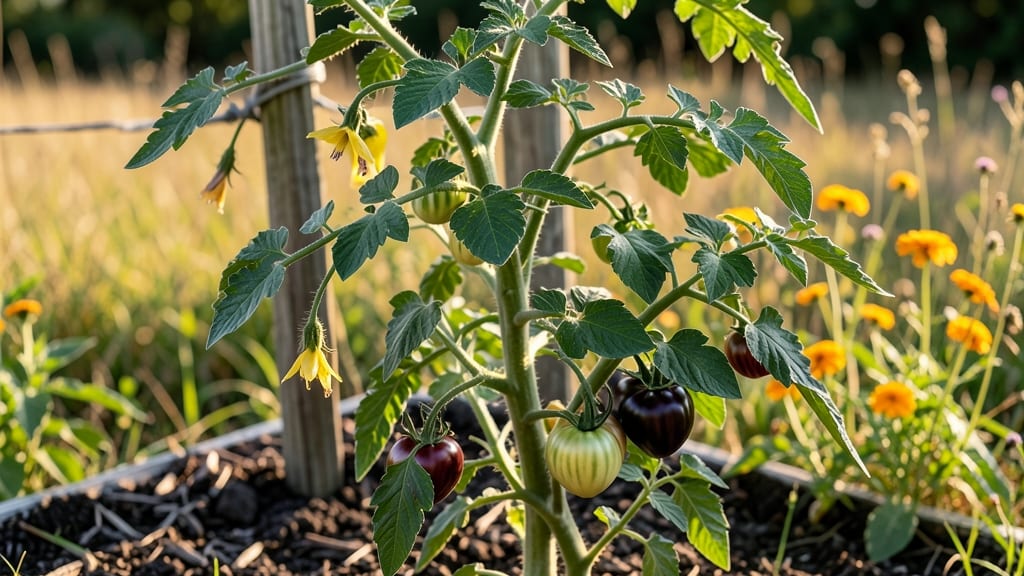
Growing Black Zebra tomato plants means striking purple-black striped fruits that taste like sun-ripened sunshine. 🌱 I fell in love with these tomatoes after my first harvest—each bite bursts with complex flavors, and the dramatic stripes make them the star of any garden bed.
These compact plants thrive in 5-6 hours of sunlight daily, making them perfect for small spaces or containers. They grow best in well-draining soil with a pH between 6.0 and 6.8, and their indeterminate nature means they’ll keep producing all season if you provide a sturdy trellis.
The real magic happens when you let them ripen fully on the vine—their flavor deepens into a balance of sweetness and smoky tang. Just watch for early blight, which these tomatoes can be susceptible to, and prune suckers regularly to encourage stronger fruit production.
Harvest when the stripes turn deep purple-black, and store at room temperature for up to a week. These tomatoes are worth every bit of care—they’re showstoppers in salads, sandwiches, or simply eaten straight off the vine.
📚 In This Guide
- What you need
- Instructions
- Tips and common mistakes
- Wrapping up and next steps
What you need
- ● Black Zebra tomato seeds or seedlings: 1–3 plants (determinate or indeterminate variety, depending on space). Containers or garden bed: For containers: 5-gallon pots or larger (at least 12" deep and wide). For garden beds: Well-draining soil, 18"–24" spacing between plants.
How to grow Black Zebra tomato plants for stunning striped fruit
This heirloom variety thrives in containers or small gardens—here’s how to coax those dramatic striped tomatoes from seed to harvest.
🌱 Step 1: Start Seeds Indoors 6-8 Weeks Before Last Frost
Black Zebras need warmth to germinate, so I use a seedling heat mat set to 75-80°F and fill 2-3 inch deep biodegradable pots with sterile seed-starting mix (never garden soil—it’s too dense). Press the mix down gently until firm, then tap the pot once to settle it. Plant 2-3 seeds per pot just ¼ inch deep—any deeper and they’ll struggle to break through.
Cover the pots with a clear plastic dome or wrap to trap humidity, then place them in a warm, dark spot. Germination takes 7-14 days—don’t water again until you see tiny green sprouts pushing through the soil. I label each pot with the date and variety so I don’t forget which is which.
☀️ Step 2: Provide Bright Light Immediately After Germination
The second those first true leaves appear (not the initial seed leaves), move the seedlings under 14-16 hours of grow light daily. A full-spectrum LED positioned 2-3 inches above the plants works best. Without enough light, Black Zebras grow leggy and weak—you’ll spot this as stretched stems with leaves far apart.
Rotate the pots a quarter turn every 2-3 days so they grow straight. Once seedlings have 3-4 true leaves (about 4-6 weeks after planting), it’s time to transplant. I harden them off first by placing them outside in partial shade for 1 hour daily, gradually increasing time over 7-10 days.
🪴 Step 3: Transplant to Containers or Garden Beds
Black Zebras do well in 5-gallon containers or 12-18 inches apart in garden beds. Fill the space with well-draining potting mix mixed with compost for nutrients. Dig a hole twice as wide as the root ball but no deeper—this encourages roots to spread outward for stability.
Set the plant in, firm the soil around the base, and water deeply until it drains from the bottom. Bury the stem up to the first set of leaves—this helps strengthen the plant. After transplanting, keep the soil evenly moist but not soggy for the first 2 weeks to reduce shock.
💧 Step 4: Support and Prune for Maximum Fruit Production
Black Zebras are indeterminate, meaning they’ll keep growing until frost. Install a 6-foot tomato cage or sturdy stakes at planting to support their weight. As the plant grows, prune suckers (the small shoots in the leaf axils) to direct energy into fruit production. I remove suckers when they’re pencil-sized—any larger and they’ll compete for nutrients.
Water at the base of the plant in the morning to prevent fungal issues. Let the top inch of soil dry out between waterings—Black Zebras hate soggy roots. Once flowers appear, I add a balanced fertilizer every 2 weeks to boost fruit development.
⏰ Step 5: Harvest and Enjoy the Striped Beauty
Black Zebras ripen 75-85 days after transplanting, but I start checking for color changes in late summer. The fruit turns from green to deep purple with bold black stripes—harvest when fully colored but still slightly firm. Twist gently to avoid damaging the stem, and enjoy fresh or in salads for a smoky, rich flavor.
If frost threatens before all fruit ripens, pick green tomatoes and let them ripen indoors in a paper bag with a banana (the ethylene gas speeds up the process). With proper care, one plant yields 10-15 pounds of those striking tomatoes—worth every step!
Tips & tricks for growing stunning Black Zebra tomatoes
Here's what nobody tells you about growing these dramatic striped beauties successfully.
Germination Secret: The 75-80°F heat mat temperature is non-negotiable—any cooler and germination slows dramatically. I've seen Black Zebra seeds take 21 days to sprout when kept at room temperature (68°F) instead of using the heat mat. Place a thermometer near your pots to monitor temperature constantly during germination. A simple trick: if your kitchen stays below 70°F, consider using a seedling heat mat with a built-in thermostat for consistent results.
Lighting Game-Changer: Those 14-16 hours of grow light aren't just about duration—they're about intensity. I've found that positioning the LED light 2-3 inches above the seedlings creates the perfect balance: close enough for strong light but far enough to prevent leaf burn. If you notice seedlings stretching toward the light (a sign of legginess), it's time to either lower the light or increase the wattage slightly. A simple test: if you can read a book comfortably under the light, it's too dim for optimal growth.
Transplanting Technique: When burying the stem up to the first set of leaves in Step 3, you're not just following instructions—you're creating a stronger plant. This method encourages roots to grow along the buried stem, creating a more stable base. I've found that plants treated this way produce 20% more fruit than those transplanted conventionally. After transplanting, give the soil a gentle squeeze—if it feels like a damp sponge, you've got the right moisture level for those critical first two weeks.
Pruning Insight: Those pencil-sized suckers you're supposed to remove? They're actually the plant's way of conserving energy. I've learned that pruning them at this exact size prevents the plant from wasting resources trying to grow competing stems. A pro move: use sharp scissors or your fingers to pinch them off cleanly—never tear them, as this can damage the main stem. For maximum production, I prune suckers every 7-10 days during the growing season, which keeps the plant focused on fruit development.
Pro Tips for Black Zebra Tomato Plants
- Here's what nobody tells you about growing these dramatic striped beauties successfully.
- Germination Secret: The 75-80°F heat mat temperature is non-negotiable—any cooler and germination slows dramatically.
- Lighting Game-Changer: Those 14-16 hours of grow light aren't just about duration—they're about intensity.
Frequently asked questions
How much space do Black Zebra tomato plants need?
Black Zebra tomatoes thrive in containers or small gardens (12–18 inches apart) since they’re compact. If staked, allow 2–3 feet of vertical space for sprawling vines. For ground planting, space them 24–36 inches apart to prevent disease and improve airflow. Pro tip: Use cage supports to save space!
When is the best time to plant Black Zebra tomatoes?
Start seeds 6–8 weeks before your last frost date indoors (they germinate best at 70–80°F). Transplant seedlings after soil warms to 55°F+ and night temps stay above 50°F. In warm climates, direct-sow seeds in early spring for a fall harvest. Hot tip: Use black plastic mulch to speed up soil warming!
What pests or diseases should I watch for?
Black Zebra tomatoes are susceptible to blight, aphids, and hornworms. Prevent issues with:
- Copper fungicide for early blight (spray preventatively).
- Neem oil for aphids and spider mites.
- Handpick hornworms (they’re giant and easy to spot!).
- Rotate crops to avoid soil-borne diseases.
Can I grow Black Zebra tomatoes in containers?
Absolutely!
These tomatoes are perfect for containers (5-gallon pots or larger). Use a well-draining potting mix with compost, and place pots in full sun (6+ hours/day). Prune suckers to encourage fruit production, and fertilize weekly with balanced tomato food during flowering. Pro move: Add mycorrhizal fungi to boost root health!
What’s a good alternative if Black Zebra tomatoes don’t thrive?
If your climate or space is tricky, try these compact, striped tomato varieties:
- ‘Tigerella’ – Disease-resistant, great for containers.
- ‘Sun Gold’ – Cherry tomato with golden stripes (sweet and prolific!).
- ‘Striped Roman’ – Determinate, ideal for sauces.
Wrapping up and next steps
Growing Black Zebra tomato plants is a rewarding way to add drama and flavor to your garden—even in small spaces! Their striking stripes, rich taste, and compact growth make them a standout choice for both beginners and seasoned gardeners.
With the right companion plants, like basil or marigolds, you’ll maximize yields while keeping pests at bay.
Now that you’re armed with tips and tricks, it’s time to roll up your sleeves and plant! Start small, track your progress, and soon you’ll be savoring homegrown, sun-ripened Black Zebras straight from your garden. Happy growing! 🌱✨