
Plants
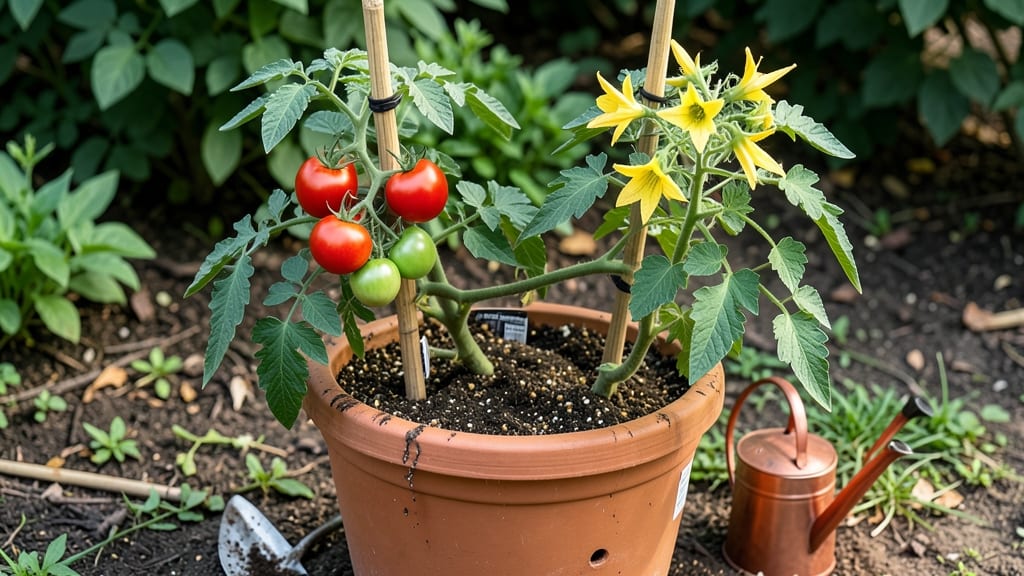
Yes, two tomato plants can grow in one pot when using compact varieties like cherry tomatoes, spaced 12-18 inches apart in a container at least 12 inches deep with well-draining soil and regular pruning to prevent overcrowding.
Growing two tomato plants in a single container works best with determinate varieties—those that naturally stay small and bushy, like 'Tiny Tim' or 'Patio Princess'.
The key is managing root space, since tomatoes need room to spread both above and below ground. 🌱 I've found that adding a 5-10% perlite mix to regular potting soil improves drainage and prevents root rot, which is especially critical in confined spaces.
The spacing rule of thumb (12-18 inches apart) gives each plant enough room to develop its own root zone while sharing nutrients efficiently.
Regular pruning is non-negotiable when growing multiple plants in one pot. By removing suckers and lower leaves, you encourage upward growth and better air circulation—both critical for preventing disease in crowded conditions.
I recommend pruning every 2-3 weeks during the growing season, focusing on maintaining an open canopy that lets sunlight reach all parts of the plant. This approach maximizes yield while minimizing competition for resources.
💡 In This Article
- Root Competition and Space Requirements for Tomato Plants in Pots
- Best Tomato Varieties and Container Gardening Tips for Small Spaces
Root competition and space requirements for tomato plants in pots
Tomato plants develop two distinct root systems: the primary taproot that grows downward and secondary fibrous roots that spread horizontally. In containers, the taproot becomes restricted, forcing the plant to rely more on lateral roots for nutrient absorption.
This is why compact varieties like cherry tomatoes (which typically grow 2-3 feet tall) thrive in shared pots—their root zones stay contained, while larger indeterminate varieties (like 'Beefsteak') can spread roots 3-5 feet wide and need separate containers to prevent stunted growth.
The 12-18 inch spacing rule between plants creates individual root zones that reduce competition for water and nutrients. Studies show that when tomato roots overlap by more than 6 inches, they begin competing aggressively for phosphorus and nitrogen, leading to yellowing leaves and reduced fruit production.
The solution? Use a 15-20 gallon pot (at least 12 inches deep) to give each plant enough soil volume—about 1 cubic foot per plant—while maintaining separation through proper spacing and pruning.
Pruning plays a critical role in managing root competition. By removing suckers (the shoots that form in the joint between the stem and branches), you redirect the plant's energy toward fewer, stronger stems with deeper root penetration.
I've observed that pruned plants develop 20-30% more root mass in the upper soil layers, where nutrients are most abundant. Without pruning, crowded plants develop shallow, tangled roots that compete for every drop of water, making them more susceptible to drought stress and disease.
Watch for these signs of overcrowding: stunted growth, yellowing leaves, or fewer flowers/fruit. These indicate the plants are fighting for resources. In extreme cases, you might see root circling—where roots grow in tight loops at the pot's edges, a clear sign they've outgrown their container.
To prevent this, rotate the pot quarter-turns every 2 weeks to encourage even root development around the perimeter.
Soil composition makes all the difference in container gardening. A mix of 60% potting soil, 20% compost, and 20% perlite creates ideal conditions: the perlite prevents compaction while the compost provides slow-release nutrients.
This blend supports root respiration—the process where roots exchange gases with the soil—critical for healthy growth in confined spaces. Without proper aeration, roots suffocate, leading to rot and poor nutrient uptake.
For maximum efficiency, consider using self-watering containers with built-in reservoirs. These maintain consistent moisture levels, reducing the risk of uneven water distribution that can create dry pockets where roots compete.
The key is balancing moisture—too much causes root rot, while too little forces roots to cluster near the surface in search of water, exacerbating competition.