
Companion Plants
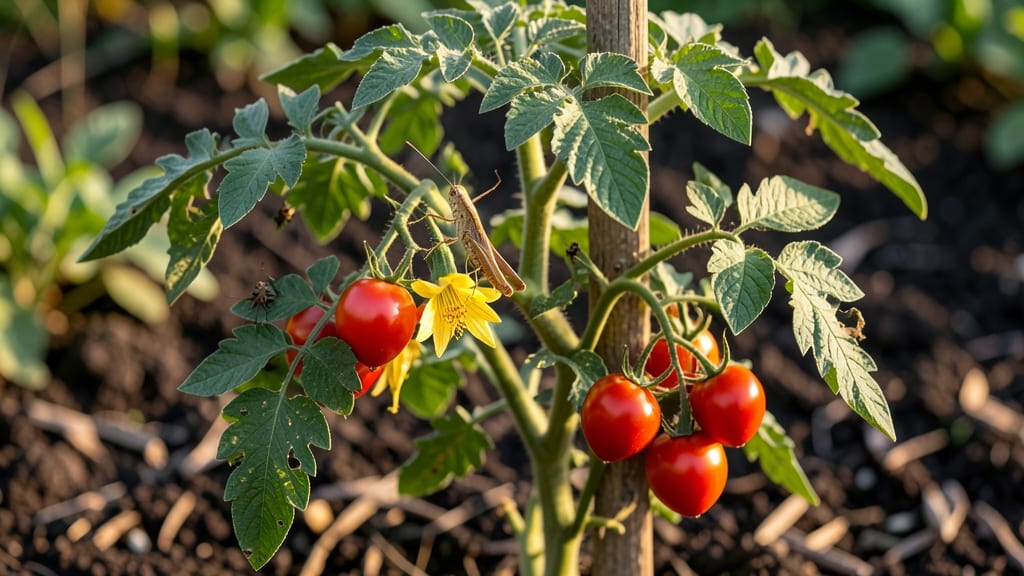
Grasshoppers do eat tomato plants, targeting leaves, stems, and even fruit, often creating jagged holes and skeletonized foliage that weaken the plant and reduce yields. Young plants are especially vulnerable.
Grasshoppers are notorious for their appetite, and tomato plants are a prime target due to their tender, nutrient-rich foliage. 🌱 These pests don't just nibble—they leave behind distinctive damage, like irregular holes and chewed leaf edges, which can stunt growth and lower fruit production.
Young tomato plants are particularly at risk because their soft stems and leaves offer little resistance. Understanding their feeding patterns helps gardeners act quickly to protect their crops before the damage becomes severe.
To combat these pests effectively, I recommend combining preventive measures with targeted solutions. For instance, planting strong-smelling herbs like basil or marigolds nearby can deter grasshoppers naturally. If an infestation occurs, organic options like neem oil or introducing beneficial predators, such as parasitic wasps, can help without harming the ecosystem.
Chemical pesticides should be a last resort, as they can disrupt the balance of your garden.
💡 In This Article
- How Grasshoppers Identify and Damage Tomato Plants
- Natural and Chemical Control Methods for Grasshopper Infestations
How grasshoppers identify and damage tomato plants
Grasshoppers locate tomato plants using a combination of visual and olfactory cues. Their compound eyes detect movement and color contrasts, while their antennae pick up on volatile organic compounds (VOCs) emitted by healthy, nutrient-rich foliage.
Tomato plants, especially young ones, release higher concentrations of these chemical signals when stressed or damaged, making them irresistible targets. 🌿 The pests prefer tender new growth, which contains higher moisture and sugar content—ideal for their high-energy diet.
The damage patterns are unmistakable: grasshoppers create irregular, jagged holes along leaf edges and between veins, often leaving behind a "skeletonized" appearance where only the tougher leaf structure remains. They also chew notches into stems and can strip entire leaves from young plants, exposing them to sunburn and disease.
Unlike caterpillars that create smooth, circular holes, grasshoppers leave behind rough, uneven edges that can be identified by their strong mandibles. In severe cases, they may even feed on developing fruit, reducing both quality and yield.
Young tomato plants are particularly vulnerable because their stems are softer and less lignified. A single grasshopper can consume up to 10% of its body weight daily, and in a garden setting, even a small infestation can quickly escalate.
The damage isn't just cosmetic—it weakens the plant's ability to photosynthesize, leading to stunted growth and lower fruit production. This is why gardeners often notice a sudden decline in plant health during peak grasshopper season, typically late summer when populations explode.
Grasshoppers also use vibration sensing to locate plants. When they hop or land, the vibrations travel through the soil and plant stems, signaling nearby pests to join the feast.
This communal feeding behavior accelerates the damage, making early intervention critical. 🔥 The key to protecting your tomatoes lies in understanding these behaviors and acting before the infestation becomes visible.
One fascinating detail is how grasshoppers prioritize their meals. Studies show they prefer plants with higher nitrogen content, which is why over-fertilized tomato plants may attract more attention.
The pests also avoid plants with strong odors or textures, which is why companion planting with herbs like basil or thyme can be an effective deterrent. This natural repellence works because the strong aromas mask the tomato plants' chemical signals.
For gardeners, recognizing these patterns early is crucial. Start by inspecting the undersides of leaves where grasshoppers often hide during the day. Look for fresh feeding signs, such as tiny black droppings or chewed foliage.
If you spot even a few pests, act quickly—grasshopper populations can double in just two weeks under ideal conditions, turning a minor issue into a full-blown crisis.