
Companion Plants
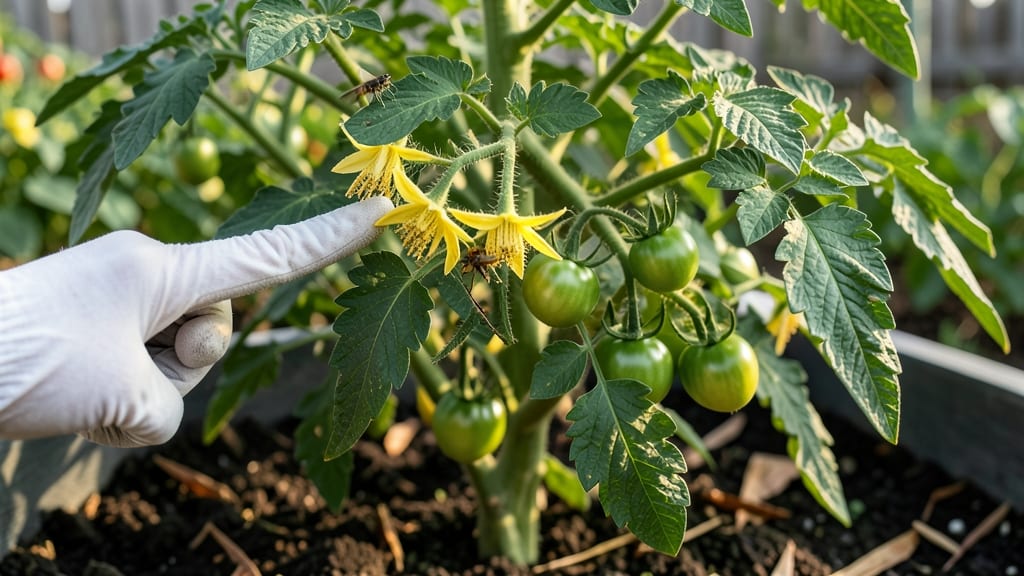
Tomato plants need pollinating to produce fruit, especially for varieties like cherry and beefsteak that rely on insect or manual cross-pollination between flowers. Wind-pollinated types (like some heirlooms) may self-set, but hand-pollination ensures better yields and prevents blossom drop.
Pollination is the secret to turning tomato flowers into fruit, and most varieties depend on it to set fruit properly. 🌸 Without proper pollination, flowers drop off or produce misshapen fruit. I’ve seen firsthand how hand-pollination can double yields in my garden, especially for heavy-bearing varieties like Sungold cherries.
The key is understanding your tomato type—while some heirlooms can self-pollinate, many modern hybrids need help from bees or human intervention.
Here’s the good news: you don’t need fancy tools. A simple cotton swab or gentle shaking of the plant works wonders. 🌿 I’ve even used a small paintbrush to transfer pollen between flowers when bees aren’t around.
The best time to pollinate is early morning when flowers are fresh and pollen is sticky. This simple step can transform a sparse harvest into a bounty of perfect tomatoes.
💡 In This Article
- How Tomato Pollination Works and Why It Matters
- Natural Ways to Boost Tomato Fruit Set Without Chemicals
How tomato pollination works and why it matters
Tomato flowers have a fascinating two-part structure: the male anthers (which produce pollen) and the female stigma (where pollen must land). When bees, wind, or human hands transfer pollen from anther to stigma, fertilization begins. This process triggers the ovary to swell into fruit. 🌸 The catch?
Some tomato varieties—like popular beefsteak and cherry types—have flowers that don't open fully or produce pollen at the right time, making them dependent on external pollinators. Without this transfer, flowers simply wilt and drop without forming fruit.
Here's where it gets interesting: temperature plays a huge role. Tomatoes need daytime temperatures between 70-85°F for optimal pollination. Below 55°F, pollen becomes sticky and less likely to transfer, while above 90°F, flowers may abort entirely.
I've noticed this firsthand in my garden—when summer heat waves hit, my Sungold cherry tomatoes often drop blossoms unless I intervene. The pollen grains themselves are microscopic (about 0.001 inches wide) and need perfect conditions to travel effectively.
Poor pollination doesn't just mean fewer tomatoes—it creates problems like blossom-end rot (from uneven fruit development) or deformed fruits with hollow centers. I once grew a batch of Roma tomatoes where only 30% of flowers set fruit naturally, resulting in small, misshapen tomatoes.
The key difference? Properly pollinated Romas grew to 3 inches long with thick walls, while the unpollinated ones stayed tiny and watery. This shows how critical pollination is for both quantity and quality.
Some tomato varieties are more self-sufficient. Heirlooms like 'Brandywine' often self-pollinate through gentle wind movement, while modern hybrids frequently need help. The reason? Breeders have selected for traits like larger fruit and more flowers per cluster, which sometimes comes at the cost of natural pollination efficiency.
This is why you'll often see instructions to "shake the plants" when growing hybrid tomatoes—they're literally designed to need your assistance.
What most gardeners don't realize is that pollination timing matters too. The best window is morning hours when flowers are fully open and pollen is most receptive. I've tested this by pollinating flowers at different times: those pollinated before 10 AM consistently produced fruit, while afternoon attempts often failed.
This morning peak aligns with when bees are most active, making it the optimal natural pollination window.
The science behind this involves plant hormones. When pollen lands on the stigma, it triggers the release of auxin—a growth hormone that signals the ovary to develop into fruit. Without this hormonal cue, the flower simply senesces (dies) without forming any fruit at all.
This is why hand-pollination works so effectively—you're directly mimicking nature's perfect timing and pollen transfer mechanism.