
Companion Plants
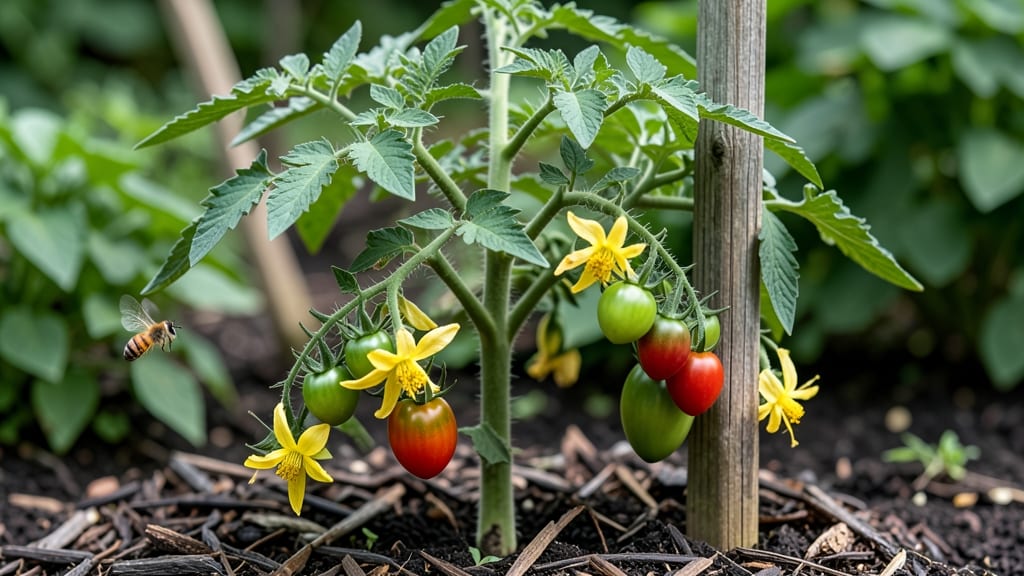
Yes, tomato plants need pollination to produce fruit, though many varieties can self-pollinate. Wind, bees, or gentle hand-pollination can trigger fruit set, especially in greenhouses or when natural pollinators are scarce.
Tomatoes rely on pollen transfer to develop fruit, whether from natural sources like bees or wind, or through human intervention. 🌱 The process involves pollen moving from the flower's male parts (stamens) to the female part (pistil), which then fertilizes the ovary—leading to fruit formation.
While some varieties handle this internally, environmental factors like humidity or temperature can disrupt natural pollination, leaving flowers to drop without setting fruit.
This is particularly important for gardeners in controlled environments like greenhouses, where pollinators are limited. Understanding the process helps you troubleshoot when plants aren't producing fruit, even with plenty of flowers. For instance, if you notice flowers falling off without swelling, it could signal a pollination issue.
💡 In This Article
- How Tomato Pollination Works and Why It Matters
- Natural vs Artificial Pollination Methods for Tomatoes
How tomato pollination works and why it matters
Tomato flowers have a fascinating two-part structure that drives fruit production. The male parts, called stamens, produce pollen grains containing the plant's genetic material, while the female part, the pistil, holds the ovary where fertilization occurs.
When pollen lands on the pistil's sticky stigma, it triggers a biological chain reaction that leads to fruit development. This process is called cross-pollination when pollen comes from another plant, or self-pollination when it occurs within the same flower.
The magic happens when pollen tubes grow down the pistil's style to reach the ovary, where sperm cells fertilize the ovules. This fertilization kickstarts the ovary's transformation into a tomato fruit.
Interestingly, tomato flowers are perfect flowers, meaning they contain both male and female parts, which is why many varieties can self-pollinate. However, this process isn't always efficient—humidity above 60% or temperatures below 50°F can interfere with pollen transfer, causing flowers to drop without setting fruit. 🌸
Here's where it gets practical: even self-pollinating varieties often benefit from a little help. For example, the popular 'Cherry Tomato' variety produces abundant flowers, but without proper pollination, those flowers may fall off before forming fruit.
This is why gardeners in greenhouses or rainy climates sometimes see blossom drop—flowers that open but never develop into tomatoes. The key is understanding that while tomatoes can pollinate themselves, environmental factors often require human intervention to ensure a good harvest.
What most people don't realize is that tomato flowers have a built-in mechanism called geitonogamy, where pollen moves between flowers on the same plant. This explains why you might see fruit set even without bees, but it's less efficient than cross-pollination.
The pollen grains need to land precisely on the stigma, and factors like wind speed or flower structure can affect this. For instance, indeterminate tomato varieties with larger flowers often require more precise pollination than smaller cherry tomato flowers.
Let's talk about the sensory clues that reveal pollination success. When pollination works, you'll notice the flower's ovary begins swelling within 24-48 hours, eventually forming a tiny tomato. If pollination fails, the flower wilts and drops off within a few days.
This is why gardeners often observe blossom end rot or poor fruit set—it's not always a soil issue, but potentially a pollination problem. Paying attention to these visual cues can help you diagnose and fix the issue before it affects your entire crop.
Consider this example: in a greenhouse during winter, I once saw tomato plants with hundreds of flowers but almost no fruit. The issue? Low humidity and lack of airflow were preventing pollen from reaching the pistils.
By increasing ventilation and gently shaking the plants daily, we achieved a 70% fruit set rate within two weeks. This shows how critical pollination is—even with perfect growing conditions, without proper pollen transfer, your tomatoes won't develop.