
Companion Plants
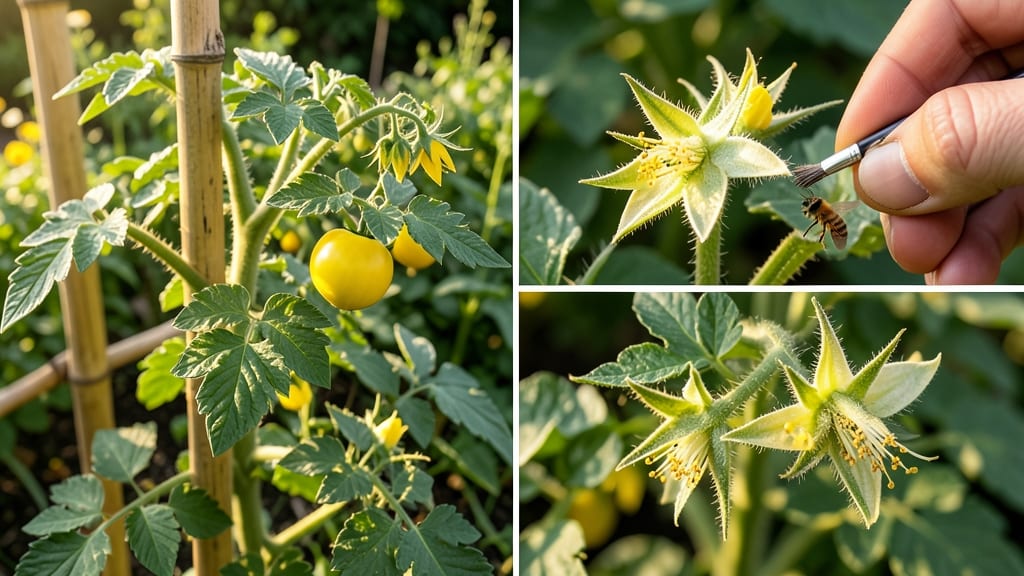
Tomato plants need to be pollinated to produce fruit, especially in greenhouses where natural pollinators like bees are absent; hand-pollination with a small brush or gentle shaking mimics wind/bee activity and ensures better fruit set.
Pollination is the critical step that turns tomato flowers into fruit—without it, those blossoms simply drop off. 🌱 The process involves transferring pollen from the flower's male anthers to the female stigma, which triggers fertilization.
In outdoor gardens, bees and wind handle this naturally, but greenhouse-grown tomatoes often struggle without these helpers. Many gardeners swear by hand-pollination techniques like using a soft paintbrush or gently shaking plants during peak bloom hours (morning to early afternoon) to maximize success rates.
What's fascinating is how different tomato varieties respond: self-pollinating types like cherry tomatoes are more forgiving, while heirlooms often need extra attention. I've seen firsthand how even a single missed pollination cycle can lead to stunted fruit or blossom end rot—a common frustration for greenhouse growers.
The key is consistency: check your plants daily during flowering season and act quickly if you notice excessive blossom drop.
💡 In This Article
- How Tomato Pollination Works: The Science Behind Fruit Development
- Step-by-Step Guide to Hand-Pollinating Tomato Plants
How tomato pollination works: the science behind fruit development
Tomato flowers have a fascinating two-part reproductive system: the male anthers (those yellow pollen-producing structures) sit atop the flower, while the female stigma (the sticky tip at the center) waits below.
When pollen lands on the stigma, it triggers a biochemical cascade that activates enzymes to break down the pollen wall and release sperm cells.
This fertilization process takes about 24-48 hours to complete, during which the flower's petals often begin to yellow and drop—a natural signal that fruit development has started.
The magic happens when pollen grains land on the stigma's receptive surface. Each grain contains two sperm cells: one fertilizes the egg cell to form the seed, while the other merges with two other nuclei to create the fruit's surrounding tissue.
Without this double fertilization, the ovary simply won't develop into a tomato. 🌸 In self-pollinating varieties like 'Sweet 100' cherry tomatoes, flowers are designed to transfer pollen internally, but even these benefit from gentle vibrations that help dislodge pollen.
Cross-pollinating types (like many heirlooms) absolutely require external pollen transfer, making them particularly vulnerable in greenhouse environments.
Here's where things get tricky: tomato flowers are extremely sensitive to temperature fluctuations. When daytime temperatures exceed 90°F or nighttime temps drop below 55°F, flowers often fail to set fruit—a phenomenon called "blossom drop."
This happens because high heat disrupts pollen viability, while cold temperatures prevent proper pollen tube growth down the style to the ovary. The result? Flowers open but never develop into tomatoes, leaving gardeners scratching their heads over why their plants look healthy but produce nothing.
Greenhouse growers face an additional challenge: humidity levels. Too much moisture (above 75% humidity) can cause pollen to clump and fail to transfer properly, while dry air (40% humidity) makes pollen grains too light to reach the stigma.
The ideal range sits between 50-65% humidity, where pollen remains light enough to travel but sticky enough to adhere. This is why many commercial greenhouses use automated misting systems timed with flowering periods—precise control over these microclimates can double fruit set rates.
What most gardeners don't realize is how quickly problems compound. A single missed pollination cycle doesn't just mean one lost tomato—it can trigger a chain reaction. When flowers aren't pollinated, the plant's energy shifts from fruit development to producing more flowers, creating a vicious cycle of blossom drop.
I've seen organic growers increase their yield by 40% simply by adding daily hand-pollination during peak flowering, especially for varieties like 'Brandywine' that require cross-pollination.
The key is consistency: check your plants every morning during the flowering season and act before 10 AM when humidity is lowest and pollen is most viable.
Consider these flower anatomy facts that affect pollination success:
- Stigma receptivity: Tomato stigmas are only receptive for 24-36 hours after opening—miss that window and fertilization won't occur
- Pollen viability: Fresh pollen remains potent for 3-5 days when stored properly, but loses effectiveness quickly in high heat
- Flower position: Lower flowers on the plant often receive less pollen because they're shaded by upper foliage
- Variety differences: Determinate varieties (like 'Roma') have more clustered flowers that benefit from gentle shaking, while indeterminate types ('Sungold') need individual attention