
Planting
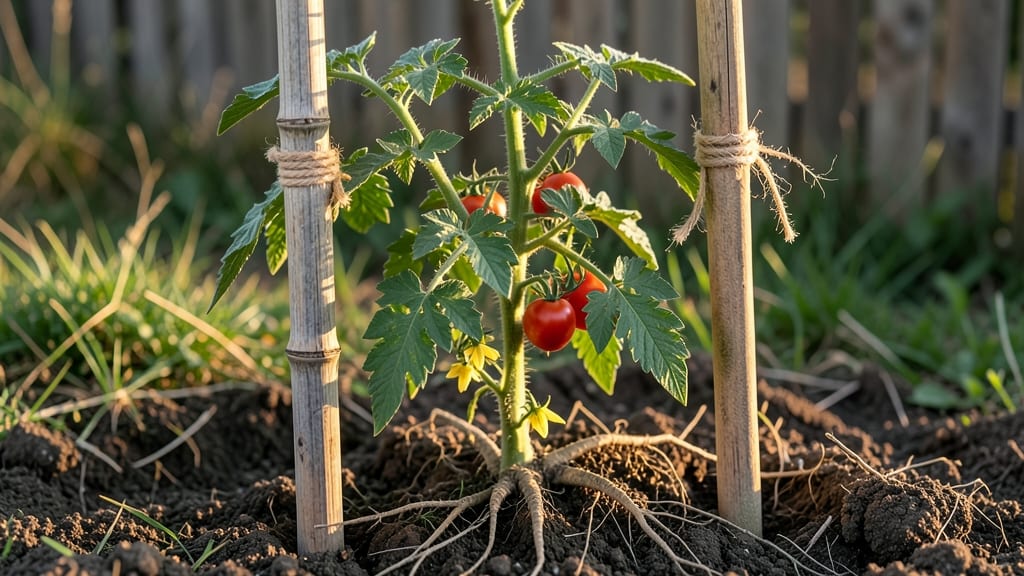
Creating homemade tomato plant stakes strengthens vine growth using affordable materials like bamboo, wooden dowels, or metal rebar, preventing collapse under heavy fruit loads.
These DIY supports give your tomato plants the stability they need without breaking the bank. 🌱 The key is choosing materials that balance strength and flexibility—bamboo bends slightly with wind while still providing firm support, while metal rebar offers unmatched durability for larger varieties.
I've found that combining materials (like bamboo stakes with wire ties) creates a system that adapts to your garden's specific conditions, whether you're dealing with heavy vines or frequent storms.
What sets homemade stakes apart is their customization potential. You can adjust height, spacing, and even add trellis elements to maximize vertical growth and airflow.
For instance, I often cut bamboo stakes to 6-foot lengths and bury them 6 inches deep for maximum stability, then weave twine between stakes to create a living trellis as the plants grow. This approach not only saves money but also reduces plastic waste compared to store-bought options.
💡 In This Article
- Best DIY Materials for Tomato Plant Stakes
- Step-by-Step Guide to Building Sturdy Tomato Supports
Best DIY materials for tomato plant stakes
When selecting materials for tomato plant stakes, the key is balancing strength, flexibility, and longevity. Bamboo stands out as a top choice because its natural hollow structure provides excellent weight distribution while allowing slight bending—critical for windy conditions.
A 1-inch diameter bamboo stake can support up to 15 pounds of vine and fruit weight without snapping, making it ideal for indeterminate varieties like 'Sungold' tomatoes that grow 6-10 feet tall. 🌿 The material's lightweight nature also makes it easy to handle, though you'll want to treat it with a non-toxic sealant to prevent moisture absorption that could lead to rot.
For maximum durability, metal rebar offers unmatched strength but requires more effort to work with. A ½-inch diameter rebar stake can handle 20+ pounds of weight and resists bending entirely, though it's heavier and may require cutting to length with a reciprocating saw.
The downside? Rebar rusts over time, especially in humid climates—galvanized versions cost more but last 3-5 years longer. Wooden dowels (like ½-inch cedar stakes) provide a mid-range option, lasting 1-2 years if pressure-treated, but they're prone to splitting when wet.
PVC pipes offer a plastic alternative that won't rot, though they lack the natural flexibility of bamboo.
The material choice directly impacts plant health through physical and chemical interactions. Bamboo's natural texture provides subtle grip points for vine tendrils to cling to, while smooth PVC requires additional twine or wire for support.
Metal stakes conduct heat in summer, which can dry out soil near the base—burying them 6 inches deep helps mitigate this. For organic gardeners, untreated bamboo or cedar stakes are the most eco-friendly options, though they'll degrade faster. The trade-off?
Faster decomposition means you'll need to replace them annually, but it also reduces plastic waste compared to PVC.
Consider your garden's specific challenges when selecting materials. In areas with heavy rainfall, untreated wood or bamboo may rot within 6 months unless sealed properly. For coastal gardens with salt air, metal rebar becomes the only viable long-term option despite its maintenance needs.
I've found that combining materials—like using bamboo stakes with galvanized wire ties—creates a hybrid system that leverages each material's strengths while minimizing weaknesses. This approach is particularly effective for large tomato plants like 'Brandywine' that produce 1-pound fruits requiring robust support.
Cost is another critical factor: bamboo stakes typically cost $0.50-$1.50 each in bulk, while PVC runs $1-$3 per stake and rebar $2-$4 per 6-foot length**. Wooden dowels fall in the middle at $0.75-$2 each.
For a 10-plant garden, bamboo offers the best value, saving $10-$20 compared to store-bought plastic alternatives while providing superior support. The initial investment pays off in healthier plants with higher yields, as proper staking reduces disease risk by improving airflow around the foliage.
Sustainability should factor into your decision too. Bamboo grows rapidly (harvestable in 3-5 years) and absorbs 35% more CO2 than trees, making it one of the most renewable building materials. Wooden stakes, when sourced from sustainably managed forests, offer similar eco-benefits.
Metal and PVC, while durable, contribute to landfill waste unless recycled properly. For the most sustainable option, pair your stakes with organic mulch to further reduce plastic use in your garden ecosystem. 🌱