
Planting
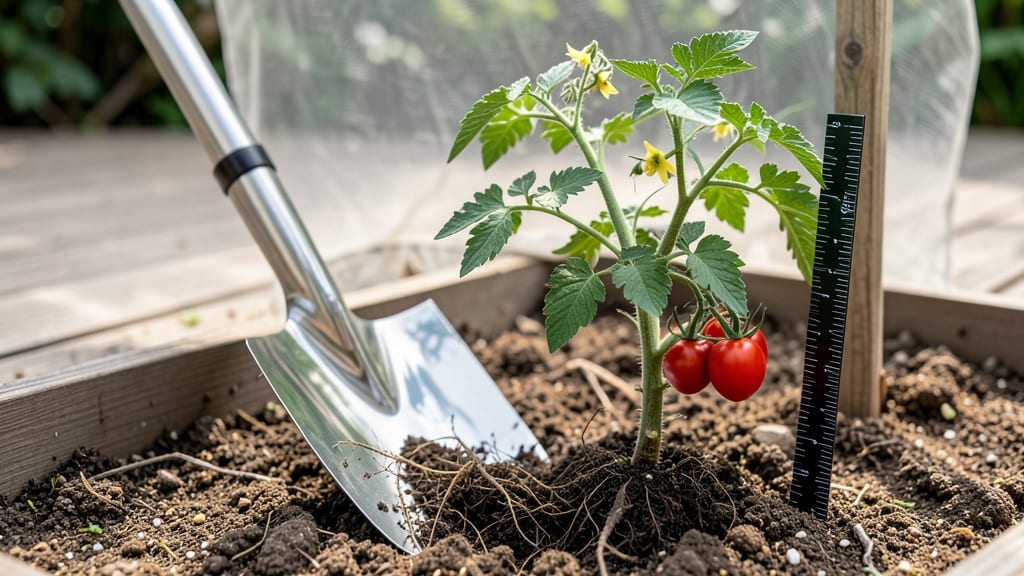
Tomato roots typically grow 12 to 18 inches deep—deep enough to anchor your plant and access moisture, but planting too shallow or too deep can sabotage your harvest.
Picture this: you’ve just transplanted your 🍅 seedlings, staked them, and watered them in—only to watch them flop over or produce sparse fruit. The issue might be right under your feet.
Roots that aren’t given the right depth struggle to stabilize the plant, absorb nutrients, or even thrive during heatwaves.
In this guide, I’ll break down exactly how deep tomato roots need to go based on your soil type, whether you’re growing in containers or in the ground, and how to tell if you’ve planted them just right.
You’ll also learn the one simple trick to encourage deeper roots from day one.
By the end, you’ll know how to plant tomatoes for stronger stems, bigger yields, and fewer headaches—no guesswork required. Let’s dig in!
Tomato root depth by variety: how deep do determinate vs indeterminate roots grow?
Tomato roots aren’t just hidden beneath the soil—they’re the foundation of your plant’s strength and productivity. Determinate and indeterminate varieties develop completely different root systems, directly impacting how deep they grow and how well they support your harvest.
Understanding these differences helps you choose the right variety for your space and planting method.
Determinate tomatoes—like the Roma or Celebrity varieties—develop shallow, wide-spreading roots that typically reach 12-18 inches deep but spread 2-3 feet outward. Their compact growth habit means they’re perfect for containers or small gardens, but their roots need loose, well-aerated soil to thrive.
Indeterminate varieties, such as Sungold or Beefsteak, send roots 3-5 feet deep or more, seeking moisture and nutrients in the subsoil.
Here’s how root depth varies by variety, along with key insights on how it affects your garden’s success.
The root depth of your tomato variety directly influences its stability and nutrient uptake. Determinate types, with their shallow roots, are more prone to toppling in wind or heavy fruit loads.
That’s why they thrive in containers with deep sides (at least 12 inches deep) or when staked early. Indeterminate varieties, with their deep-reaching roots, anchor themselves better but need well-draining soil to prevent root rot in heavy clay.
Soil type plays a huge role here. In sandy soil, roots grow deeper faster to reach moisture, while clay soil can restrict root growth unless amended with compost.
For container-grown tomatoes, choose varieties with shorter root depths (like Tiny Tim) and use 5-gallon pots or larger to accommodate their root spread. The deeper the pot, the better the plant’s ability to access water and nutrients.
Another critical factor is transplanting depth. When moving seedlings, bury 1/3 of the stem to encourage new root growth along the buried portion. This technique—called hill planting—boosts root mass and stability, especially for indeterminate varieties.
Avoid planting too deep, though; stem rot can occur if the stem is buried beyond 2 inches.
Root depth also affects watering needs. Shallow-rooted determinate varieties dry out faster and need frequent, shallow watering, while deep-rooted indeterminates can handle infrequent deep watering. Mulching with straw or wood chips helps retain moisture and encourages roots to spread wider rather than deeper.
For indeterminate types, focus on slow-release fertilizers to feed those deep roots over time.
If you’re growing tomatoes in urban settings with limited space, consider dwarf or bush varieties. Their shorter root zones make them ideal for raised beds or vertical planters, where you can control soil quality and moisture.
For larger gardens, indeterminate varieties reward you with continuous harvests thanks to their deep, resilient roots that tap into subsoil nutrients.
Pro tip: If your tomatoes start wilting midday despite regular watering, it’s often a sign of shallow roots. Try deep watering (1-2 inches per week) and add compost to encourage root expansion.
For indeterminate types, a 5-foot trellis paired with a deep soil bed (18+ inches) will give their roots the room they need to thrive.
Understanding your tomato’s root depth isn’t just about planting—it’s about long-term plant health. Whether you’re growing bushy determinates or tall indeterminates, matching the variety to your soil and space sets the stage
Optimal planting depth for tomato roots: step-by-step guide to prevent stunted growth
Getting the planting depth right for your tomatoes is one of the most overlooked factors in growing healthy, productive plants. Too shallow, and your tomatoes won't anchor properly; too deep, and you risk stem rot or stunted growth.
The ideal depth creates a stable base while allowing roots to expand freely. For most tomato varieties, aim to plant seedlings so that 1/3 of the stem is buried below soil level—typically 2-3 inches deep—while leaving the top leaves above ground.
Container-grown tomatoes need slightly different treatment. In pots, bury the stem only up to the first set of leaves since roots can't spread as deeply. Always use well-draining soil with added compost to encourage strong root development from the start.
Remember, proper depth isn't just about where you plant—it's also about how you'll stake and mulch afterward to support that root system as it grows.
Dig a hole twice as wide as the root ball but only 2-3 inches deep. Loosen the sides to encourage root spread.
Gently take your tomato seedling from its container, loosening any circling roots with your fingers. Shake off excess soil to inspect the root system.
Place the seedling in the hole so that 1/3 of the stem (about 2-3 inches) is below soil level. The top leaves should remain above ground.
Fill the hole with soil, pressing gently to remove air pockets. Leave a small depression around the base for watering.
Install a stake or cage right after planting to prevent stem damage. Tie the main stem loosely with soft plant ties.
Apply 3-4 inches of mulch around the base (keep it away from the stem) to retain moisture and encourage deeper root growth.
For grafted tomatoes, follow the same depth guidelines but handle with extra care. The graft union should end up just above soil level—never buried—to prevent rot. If you notice the graft line turning dark or mushy after planting, it's a sign of over-planting or poor drainage.
In this case, gently expose the graft by removing excess soil and adjust your mulching to keep the area dry.
One common mistake is planting too deep when using container gardening. In pots, roots can't spread as deeply, so limit burial to 1-2 inches maximum. Always choose containers with drainage holes and use lightweight potting mix to prevent waterlogging.
Remember, the goal is to create an environment where roots can expand horizontally and vertically without restriction.
After planting, monitor your tomatoes for signs of stress. Yellowing leaves or wilting can indicate either shallow roots or over-planting. If you suspect improper depth, gently dig around the base (being careful not to damage roots) and adjust the soil level.
With proper depth and care, your tomato plants will develop strong root systems capable of supporting heavy fruit loads all season long. 🌱