
Companion Plants
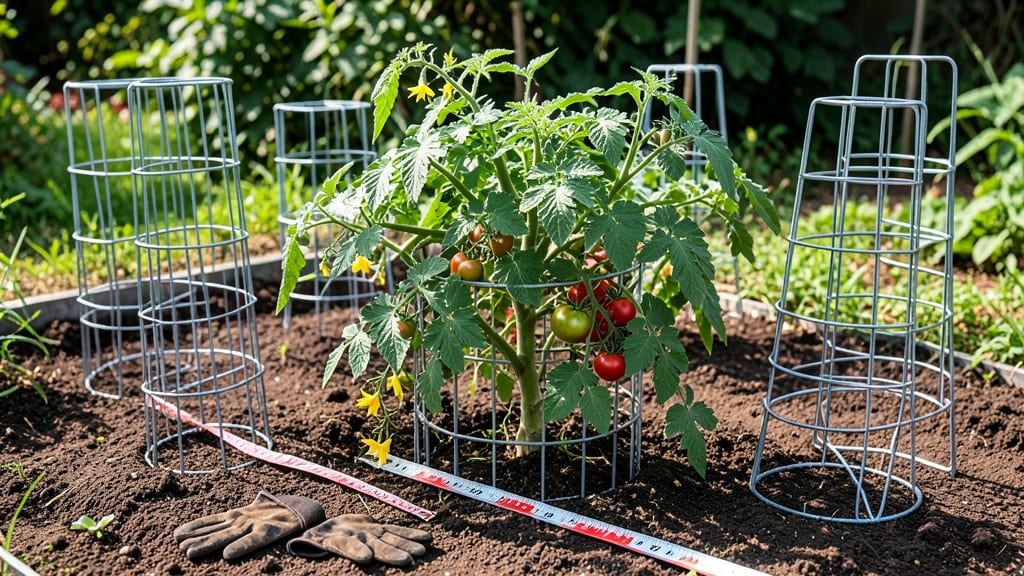
Placing the right number of tomato plants per cage determines whether you’ll end up with a bountiful harvest or a struggle for space—and your plants will thank you for getting it right.
Struggling to fit more 🍅 into your garden without sacrificing growth? The answer lies in understanding your cage size, tomato variety, and spacing needs. Too many plants crowd the cage, inviting disease and stunted vines, while too few leave space—and yield—on the table.
Determinate tomatoes (bush types) thrive with one plant per 4-foot cage, while indeterminate vining varieties can handle two in a 5-foot cage. But that’s just the starting point—cage height, pruning, and even your climate play a role in maximizing every square foot.
In this guide, I’ll break down the science-backed ratios, spacing tricks, and common mistakes to avoid. By the end, you’ll know exactly how many tomato plants to tuck into each cage for a healthier, higher-yielding garden.
Optimal tomato plant spacing by cage type (indeterminate vs determinate varieties)
Choosing the right number of tomato plants per cage depends on whether you're growing indeterminate (vining) or determinate (bush) varieties. Indeterminate types like Sungold or Brandywine grow continuously, while determinate varieties like Roma or Celebrity produce all fruit at once.
This difference dramatically impacts how many plants fit in a single cage.
For 4'x4' cages, most gardeners stick to 1 indeterminate plant due to their sprawling growth habit. Determinate varieties, however, can handle 2-3 plants per cage because they stay compact. The key is balancing plant maturity and yield expectations—overcrowding leads to poor airflow, disease, and smaller fruit.
Here’s how cage size and tomato type interact to determine the ideal number of plants:
When using 5'x5' cages, indeterminate varieties like Sungold can sometimes accommodate 2 plants if you prune aggressively and stake them vertically. However, this requires weekly pruning to remove suckers and ensure airflow.
For determinate tomatoes, 3-4 plants per 5'x5' cage is ideal—they produce all fruit at once, making them perfect for canning or sauces.
For tall cages (6'+), indeterminate varieties thrive with 1 plant per cage. Their vertical growth habit allows them to reach heights of 8-10 feet with proper support. Prune suckers regularly to direct energy to fruit production.
Determinate types in tall cages can handle 2 plants, but avoid overcrowding to prevent blossom end rot or fungal diseases.
One common mistake is assuming more plants equal more tomatoes. Overcrowding reduces air circulation, increasing humidity and inviting pests like hornworms or aphids. Always prioritize plant health over quantity—healthy plants yield better fruit.
If you’re short on space, consider pruning techniques or vertical trellising instead of cramming in extra plants.
Pro tip: Use companion plants like basil or marigolds around your cages to improve airflow and deter pests naturally. These plants also mark your garden layout, making maintenance easier. Always monitor your tomatoes for signs of stress, such as yellowing leaves or stunted growth, which may indicate overcrowding.
Experiment with spacing in your first year to see what works best for your climate. In hotter zones, indeterminate varieties may need more space due to rapid vine growth, while cooler regions can sometimes fit extra determinate plants.
Adjust based on your yield goals—whether you prioritize quantity or larger fruit size.
Remember, the goal is maximum yield without sacrificing plant health. A well-spaced tomato cage ensures your plants thrive, producing flavorful tomatoes all season long. Happy gardening! 🌱🍅
How to maximize yield without overcrowding: proven plant ratios
Getting the most tomatoes from your cages without sacrificing plant health starts with the right plant-to-cage ratio. Too many plants compete for nutrients and sunlight, while too few leave space wasted.
The key is balancing growth potential with cage dimensions—and pruning strategically to redirect energy toward fruit production.
For 4'x4' cages, most gardeners agree that 1 indeterminate tomato plant (the vining type) is ideal. These plants can grow 6-8 feet tall, and a single vine will fill the space without overcrowding.
If you're growing determinate varieties (bush types), you can fit 2-3 plants per cage since they stay compact at 3-4 feet tall.
Yield varies dramatically based on spacing. A well-spaced indeterminate plant in a 4'x4' cage can produce 20-30 lbs of tomatoes, while overcrowding that same space with 2 plants might yield only 10-15 lbs total due to competition. The difference comes down to airflow and disease prevention—crowded plants develop more fungal issues like blight.
Watch for warning signs of overcrowding like yellowing leaves or excessive wilting, which signal plants are struggling for resources. Another red flag is pest attraction—crowded cages create humid microclimates where aphids and whiteflies thrive.
If you notice stunted growth or small, misshapen tomatoes, it's time to thin or upgrade your cage size.
To optimize space further, prune your indeterminate tomatoes by removing suckers (the small shoots in the leaf axils). This redirects energy to fruit production instead of leaf growth. For determinate varieties, focus on removing lower leaves to improve airflow and reduce disease risk.
With the right ratio and care, you'll enjoy a bountiful harvest without the stress of overcrowding.