
Fertilization
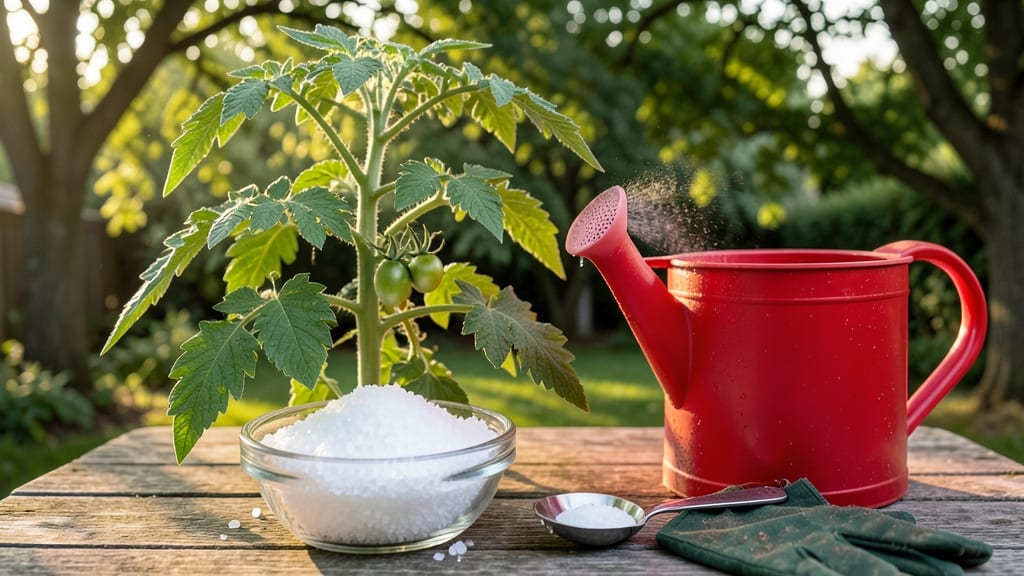
Using the right amount of Epsom salts for tomato plants 🍅 can transform weak growth into strong, productive vines—but one wrong move risks burning your plants instead.
Picture this: You’ve spent weeks nurturing your tomato seedlings, only to watch them develop yellowing leaves or stunted fruit. That’s often a sign of magnesium or sulfur deficiency, and Epsom salt is the quick fix many gardeners swear by. But how much is too much?
In this guide, I’ll break down the exact dosage for each growth stage—from seedlings to fruiting—plus how to apply it safely without overloading your soil. You’ll also learn the warning signs of overuse and organic alternatives to keep your tomatoes thriving all season.
Whether you’re a first-time gardener or a seasoned pro, these simple, science-backed tips will help you avoid costly mistakes and maximize your harvest.
Epsom salt dosage chart for tomato plants by growth stage
Tomatoes are heavy feeders, and magnesium and sulfur—two nutrients found in Epsom salt—play critical roles in their growth. Too little can stunt development, while too much can harm roots. The key is precision timing and dosage based on your plant's growth stage.
Whether you're nurturing seedlings or supporting fruit production, these science-backed ratios will help you avoid common mistakes and maximize yields.
Epsom salt (magnesium sulfate) works best when applied at specific stages. For seedlings, focus on root development; during flowering, boost energy for blooms; and in fruiting, support fruit quality.
Always use food-grade Epsom salt and apply it to moist soil or as a foliar spray in the early morning to prevent leaf burn. Let’s dive into the exact amounts and frequencies tailored to each stage.
⚠️ Critical Note: Never exceed the recommended doses. Overuse can lead to salt buildup in soil, which harms beneficial microbes and roots. Always flush the soil with water after application to prevent toxicity.
Below is a stage-by-stage dosage chart that includes water volume and frequency guidelines. Use this as your go-to reference for healthy, productive tomato plants.
For seedlings, start with a gentle 1 teaspoon per gallon to avoid overwhelming their delicate roots. As your plants mature, increase the dosage to 1 tablespoon per gallon during the vegetative stage to support leafy growth.
This gradual approach mimics natural nutrient availability and prevents shock. Always mix Epsom salt with water and apply it directly to the soil’s surface, followed by a thorough watering to help it penetrate.
When your tomatoes enter the flowering stage, double the dose to 2 tablespoons per gallon. This boost of magnesium helps prevent blossom-end rot and supports energy production for flower development. Apply as a foliar spray in the early morning to avoid leaf burn from afternoon sun.
Spray the undersides of leaves where pests are less likely to hide, and always use a fine mist setting on your sprayer.
During the fruiting stage, return to 1 tablespoon per gallon but increase the frequency slightly to every 3-4 weeks. This maintains magnesium levels without overloading the soil. If you notice yellowing leaves with green veins (a classic sign of magnesium deficiency), switch to foliar applications immediately.
This method delivers nutrients directly to the leaves, where they’re absorbed faster than through the roots.
Monitor your plants closely for signs of overuse, such as crispy leaf edges or stunted growth. If you suspect toxicity, flush the soil with plenty of water and avoid further applications until symptoms improve.
Remember, Epsom salt is a supplement, not a replacement for balanced fertilization. Pair it with compost or organic fertilizer for the best results.
🌱 Pro Tip: Keep a garden journal to track your Epsom salt applications alongside your tomato plants' growth stages. Note any changes in leaf color, fruit development, or overall vigor. Over time, you’ll fine-tune your approach to match your specific soil conditions and climate.
When and how to apply Epsom salt for maximum tomato plant benefits
Epsom salt—magnesium sulfate—isn’t just for soaking sore feet. When used correctly, it can transform your tomato plants by boosting magnesium and sulfur levels, which are critical for vibrant foliage and robust fruit production. But timing and application matter.
Too little won’t help, and too much can burn roots or leaves. Let’s break down the best practices for applying Epsom salt to your tomato plants for healthier growth and bigger harvests.
First, understand that Epsom salt works best when applied directly to the soil or as a foliar spray. The key is consistency and proper dosage.
For most gardeners, a 1 tablespoon of Epsom salt per gallon of water is a safe starting point, but how you use it depends on your tomato plants’ current stage.
Early in the season, focus on soil application to encourage root development, while later in the season, a foliar spray can help with fruit development and prevent blossom-end rot.
⚠️ CALLOUT-WARNING
⚠️ Warning: Overdoing Epsom Salt Can Harm Your Tomatoes
Never exceed 2 tablespoons per gallon of water—this can cause magnesium toxicity, leading to yellowing leaves, stunted growth, or even plant death. Test soil pH first (ideal: 6.2–6.8); acidic soils may not need extra magnesium. Foliar sprays should be done in the morning to prevent leaf burn from evaporation. Stop applications 2 weeks before harvest to avoid residue.
For soil application, mix 1 tablespoon of Epsom salt per foot of plant height into the top 2–3 inches of soil. Water thoroughly after application to help the magnesium dissolve and reach the roots.
This method is ideal during the seedling and flowering stages, when plants need extra magnesium for chlorophyll production and flower development. For example, if your tomato plant is 3 feet tall, use 3 tablespoons of Epsom salt dissolved in a gallon of water and pour it around the base.
When your tomato plants are in the fruiting stage, switch to a foliar spray for faster results. Mix 1 tablespoon of Epsom salt per gallon of water and spray the solution evenly on the upper and lower leaf surfaces in the early morning.
This method helps prevent blossom-end rot by ensuring calcium and magnesium work together. Avoid spraying in the evening, as wet foliage overnight can encourage fungal diseases like early blight.
To maximize benefits, combine Epsom salt with other organic nutrients like compost or a balanced fertilizer. For instance, mix Epsom salt with fish emulsion or worm castings to provide a broader range of nutrients.
However, avoid combining it with chemical fertilizers that contain high levels of magnesium or sulfur, as this can lead to nutrient imbalances. Always water your plants well before and after applying Epsom salt to prevent root burn.
Common mistakes to avoid include applying Epsom salt too frequently (once every 2–4 weeks is sufficient) or using it as a substitute for proper soil amendments. Epsom salt is a supplement, not a cure-all.
If your tomato plants show signs of yellowing between leaf veins (a classic magnesium deficiency symptom), that’s your cue to act. But if the leaves turn yellow and crispy, you may be overdoing it. Always observe your plants’ response and adjust accordingly.
With the right approach, Epsom salt can be a game-changer for your tomato garden. Start with small doses, monitor your plants closely, and enjoy the rewards of healthier foliage, stronger stems, and sweeter fruits. Happy gardening! 🌱