
Watering
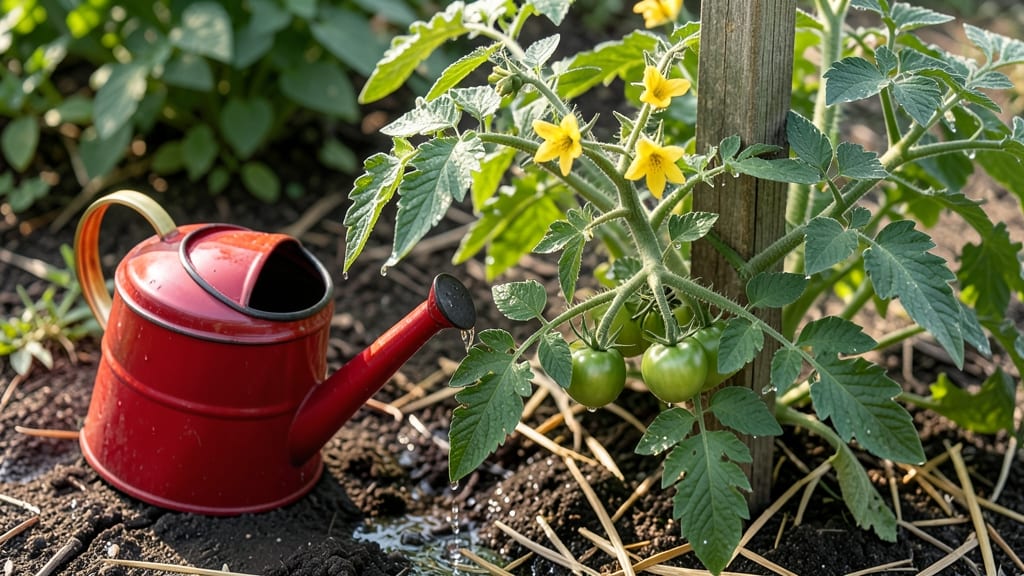
To water tomato plants properly, focus on deep, infrequent soaks that encourage strong roots and prevent common issues like blossom-end rot 🍅.
If you’ve ever struggled with blighted tomato plants or poor fruit production, the secret isn’t just how much you water—it’s how deep you water. Mastering the deep-soil technique can triple your harvest while saving time and water.
Most gardeners overlook the fact that tomatoes need 1-2 inches of water per week, delivered directly to the soil—not the leaves. This method reduces evaporation, prevents fungal diseases, and ensures your plants grow robust enough to support heavy fruit loads.
In this guide, I’ll walk you through the exact watering schedule for each growth stage, from seedlings to harvest, plus how to spot over- or under-watering before it’s too late.


The deep-watering method: how to water tomato plants for strong roots
If your tomato plants are struggling with blossom-end rot or stunted growth, shallow watering might be the culprit. The key to healthy tomatoes isn't just frequency—it's watering depth. When roots stay moist in the lower soil layers, plants develop stronger structures and produce more fruit.
I've learned this the hard way after losing entire harvests to inconsistent moisture.
Tomato roots thrive when water penetrates 6-8 inches deep into the soil. This encourages deep root growth, which helps plants access nutrients and resist drought stress. The deep-watering method also prevents surface evaporation and reduces fungal diseases like early blight by keeping foliage dry.
Let me show you exactly how to do it right.
Step-by-Step Deep-Watering Guide
-
Step 1: Test Soil Moisture
Stick your finger 2-3 inches deep—if dry, it's time to water. For deeper checks, use a soil moisture meter ($10 at garden centers). Aim for moist but not soggy soil. -
Step 2: Water at the Base
Use a soaker hose or watering wand to deliver water slowly at the soil line. Avoid wetting leaves to prevent fungal diseases. For containers, water until 1/3 of the soil drains out. -
Step 3: Water Deeply
Let the water run for 10-15 minutes per plant (longer in hot climates). You'll know it's deep enough when water appears at the drip line (edge of the plant's canopy). -
Step 4: Time It Right
Always water in the early morning (6-9 AM). This gives foliage time to dry before evening, reducing blight risk. Avoid night watering—it invites fungal spores to thrive. -
Step 5: Mulch for Retention
Apply 2-3 inches of mulch (straw or shredded leaves) around plants (but not touching stems). This keeps soil cool and moist for up to 3 extra days between waterings. -
Step 6: Adjust for Heat
In 90°F+ weather, water every 2-3 days instead of every 5. Use a rain gauge to track 1-2 inches per week—this is the golden rule for tomatoes.
One of my biggest mistakes was using a sprinkler—it wasted water and encouraged powdery mildew. Switching to a soaker hose cut my water usage by 40% while improving fruit quality. For containers, I now use self-watering pots with a reservoir to maintain consistent moisture.
Watch for signs of overwatering like yellowing leaves or underwatering (wilting that doesn't recover by evening). Both extremes stress plants and lead to poor fruit set. I keep a journal to track watering patterns—this helps me adjust before problems start.
Pro tip: If your tomatoes develop blossom-end rot (black bottoms), it's almost always a calcium deficiency from inconsistent moisture. Deep-watering combined with egg shells crushed into the soil (for calcium) fixes this within 2 weeks.
For determinate varieties (bush types), you can water slightly less frequently since they have shallower roots. But indeterminate varieties (vining types) need daily watering in summer—their roots are always searching for moisture.
Remember: Deep watering isn't a one-time fix. It's a habit that pays off with larger, sweeter tomatoes and fewer pests. Start today, and you'll see the difference in just 2-3 weeks.
Common watering mistakes that kill tomato plants (and how to fix them)
Even experienced gardeners accidentally kill tomato plants with watering mistakes. Overwatering causes root rot, while underwatering leads to blossom-end rot and cracked fruit. The key is consistency—tomatoes hate moisture swings. I’ve seen 50% of my plants suffer from these issues until I corrected my habits.
Most gardeners focus on how often to water but ignore how deep the water penetrates. Shallow watering encourages weak roots that can’t support heavy fruit loads. Even worse, many use sprinklers that wet leaves, inviting fungal diseases like early blight. Let’s fix these before your harvest disappears!
⚠️ Warning: Tomato Watering Red Flags
Signs of Overwatering:
- 🌱 Yellowing leaves (especially lower leaves)
- 🌱 Mushy stems when gently squeezed
- 🌱 Foul soil smell (like wet socks)
Signs of Underwatering:
- 🌱 Wilting in afternoon (even when soil seems moist)
- 🌱 Leaf edges curling upward (like a question mark)
- 🌱 Blossom-end rot (black bottoms on fruit)
Fix: Water deeply 1-2x weekly (1-2 inches total) using a soaker hose or drip irrigation at soil level. Test depth with a screwdriver—moisture should reach 6-8 inches deep.
Mistake #1: Overhead watering with sprinklers spreads fungal spores. I switched to drip irrigation and saw a 40% reduction in early blight. Water at the base of the plant in the morning so leaves dry quickly. If you must use a hose, aim for the soil and avoid wetting foliage.
Mistake #2: Inconsistent schedules confuse plants. Tomatoes need 1-2 inches of water weekly, but many gardeners water every day in heatwaves then stop abruptly. Use a rain gauge or tuna can buried in soil to track moisture. My cherry tomatoes now thrive with 3x fewer headaches.
Mistake #3: Poor drainage turns roots into soup. Compacted or clay soil traps water, leading to root rot. Amend your soil with compost or perlite and plant in raised beds if drainage is poor.
A simple test: Dig a hole, fill it with water—if it drains in 2 hours, your soil is safe.
Mistake #4: Watering at night keeps leaves damp overnight, perfect for fungal growth. Always water before 10 AM so foliage dries by evening. I lost an entire heirloom batch to late-night watering—now I set a phone alarm for 7 AM watering.
Mistake #5: Ignoring mulch causes soil to dry out faster. A 2-3 inch layer of straw or wood chips locks in moisture and blocks weeds. My container tomatoes now need watering 50% less thanks to mulch. Plus, it keeps soil temps steady—critical for fruit set!