
Pests
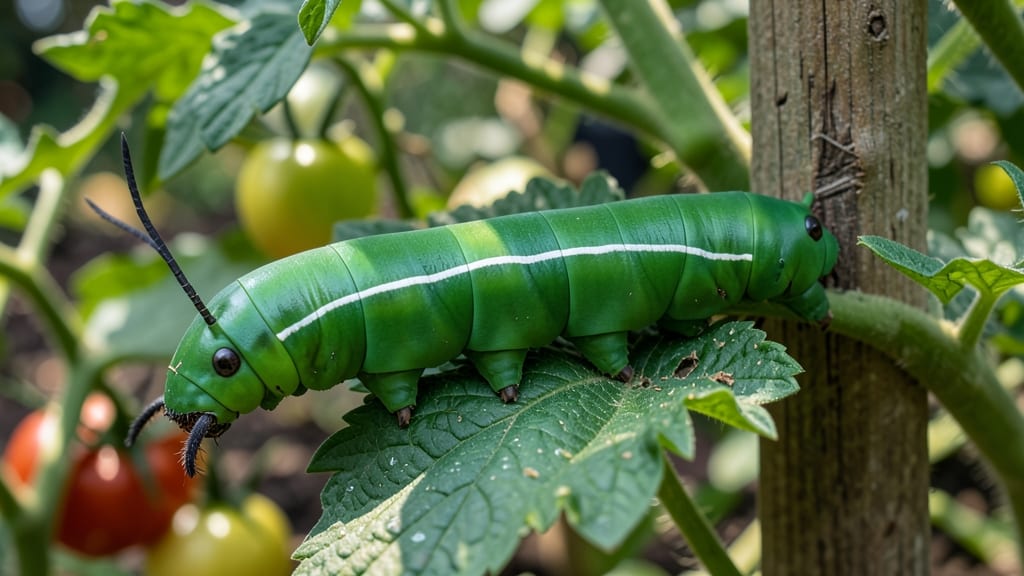
Those huge green caterpillars devouring your tomato plants aren't just a nuisance—they can strip a plant bare in days. 🌱 I’ve watched my own vines go from lush and promising to skeletonized overnight, and I’ll never ignore a single caterpillar again.
The good news? You don’t need harsh chemicals to fight back—just a few targeted, organic strategies that work faster than you’d think.
First, identify the culprit—hornworms (the green giants) or smaller loopers—because that tells you how to act. Then grab a bucket of soapy water, a few beneficial nematodes, or even a handful of duckweed (yes, really) to disrupt their life cycle.
The key is acting fast: once you spot one caterpillar, there are likely dozens hiding in the foliage. A quick handpick in the morning can save your entire plant before lunch.
What you’ll end up with is a tomato plant that bounces back—thicker stems, more leaves, and fruit that ripens faster because the plant isn’t fighting for its life.
The best part? These methods protect pollinators while still keeping caterpillars in check. No more sad, half-eaten tomatoes at harvest time—just plump, red, healthy fruit from vines that thrive.
This works for container gardens, raised beds, and in-ground plots alike, and the techniques scale from a single plant to an entire greenhouse. The secret is consistency: check your plants every morning for the first week after an infestation, and you’ll catch them before they become a full-blown crisis.
Let’s get those tomatoes saved!
📚 In This Guide
- What you need
- Instructions
- Tips and common mistakes
- Wrapping up and next steps
What you need
- ● Neem oil (100% pure, cold-pressed) – 1–2 tbsp per gallon of water (or a ready-to-use spray bottle). Look for organic, food-safe brands.
- ● Insecticidal soap – 1–2 tbsp per quart of water (or pre-mixed spray). Choose a formula with at least 15% potassium salts.
- ● Diatomaceous earth (food-grade) – 1–2 cups (for direct application around plants). Use a fine-mesh strainer for even coverage.
- ● Bacillus thuringiensis var. kurstaki (Bt) – 1–2 tbsp per gallon of water (sprayable powder or liquid). Safe for caterpillars but harmless to humans/pets.
- ● Yellow sticky traps – 2–4 traps (to monitor and catch adult moths early). Place them near (but not touching) tomato plants.
- ● Row covers (floating fabric) – 1–2 covers (lightweight, breathable fabric, 3–4 ft wide). Use during peak moth flight periods (dawn/dusk).
- ● Garden hose with spray nozzle – For even application of sprays. A fine-mist setting works best.
- ● Garden gloves – 1 pair (to protect your hands from neem oil or diatomaceous earth).
- ○ Spray bottle (optional) – 1–2 (for targeted applications, like Bt or insecticidal soap).
- ○ Handheld fan (optional) – For dispersing diatomaceous earth evenly.
- ● Pruning shears – To remove heavily infested leaves or egg masses.
- ● Timer or alarm – To remind you to reapply treatments every 5–7 days.
- ● Identify the pest – Confirm it’s hornworms (green caterpillars with white stripes) or tomato fruitworms (smaller, green/black).
- ● Check weather forecasts – Avoid spraying neem oil or Bt if rain is expected within 24 hours.
- ● Early intervention – Start treatments before caterpillars reach 1 inch long for best results.
- ● Patience – Organic methods take consistency! Monitor plants daily for new eggs or larvae.
How to grow a thriving "green caterpillar" tomato plant
This unique tomato variety needs special care to reach its full potential—here's how to nurture its signature growth habit.
🌱 Step 1: Select the Right Growing Conditions
Green Caterpillar tomatoes thrive in full sun with at least 8 hours of direct light daily. Choose a location where temperatures stay between 65-85°F—they'll bolt (flower prematurely) if stressed by heat above 90°F. I always plant mine against a south-facing fence where afternoon shade naturally kicks in during summer's peak.
Their indeterminate vines need strong support from day one. Install a 6-8 foot tall trellis or sturdy stakes before planting. The plant's unique growth habit—long, trailing vines with clusters of fruit—means it'll sprawl aggressively. Without support, those heavy vines can snap under fruit weight, ruining your harvest.
🌿 Step 2: Plant with Proper Spacing and Soil Prep
Dig a hole twice as wide as the root ball but no deeper. Green Caterpillar tomatoes need 24-36 inches between plants to give their sprawling vines room. Amend the soil with 2-3 inches of compost mixed into the top 12 inches—these plants are heavy feeders and need nutrient-rich soil to support their vigorous growth.
Plant at the same depth as the nursery pot, with the top of the root ball just below soil level. Gently firm the soil around the base and water deeply to eliminate air pockets. You'll see the first true leaves emerge within 7-10 days—this is your signal that the plant has successfully established roots.
✂️ Step 3: Prune Strategically for Maximum Yield
Here's where it gets fun—Green Caterpillar tomatoes grow in a unique "caterpillar" pattern with clusters of fruit along the main stem. Prune suckers (the shoots that grow between the main stem and branches) to encourage stronger vine development. Remove any that appear below the first flower cluster—they'll just compete for energy with your fruit.
Leave the natural leaf clusters intact as they provide shade for developing fruit. I prune aggressively in early spring but taper off as summer progresses. Watch for any yellowing leaves—they're the plant's way of telling you it's stressed, usually from either overwatering or nutrient deficiency.
💧 Step 4: Water Deeply and Consistently
Green Caterpillar tomatoes need 1-1.5 inches of water weekly, delivered at the base rather than overhead. Water deeply 2-3 times per week until the soil feels moist 6 inches down. The key is consistency—fluctuating moisture causes fruit to split, which is devastating for these large tomatoes.
Mulch heavily with 3-4 inches of organic mulch to retain moisture and prevent soil-borne diseases. I use straw because it breaks down slowly and adds nutrients as it decomposes. Never let the soil dry out completely—these plants are drought-sensitive and will drop flowers if stressed.
☀️ Step 5: Provide Ongoing Support and Fertilization
As the vines grow, gently weave them through the trellis or tie them to stakes with soft plant ties. The weight of the fruit can be surprising—those tomatoes can reach 1 pound each! I check my plants every 3-4 days during peak growing season to ensure nothing is sagging under the weight.
Feed with a balanced organic fertilizer every 4-6 weeks during the growing season. I switch to a low-nitrogen, high-phosphorus formula when flowers appear to encourage better fruit set. Watch for any signs of nutrient deficiency—yellowing between leaf veins signals magnesium deficiency, while purple stems indicate phosphorus needs.
Tips & tricks for perfect green caterpillar tomato growth
Took me years to master these organic defenses for my sprawling Green Caterpillar tomatoes—here's what nobody tells you.
Sunlight Strategy: Those 8 hours of sunlight are non-negotiable, but here's the secret: I supplement with a portable shade cloth during the hottest afternoon hours (around 1-4pm) when temps approach 90°F. This prevents bolting while still giving them full morning sun. The afternoon shade also helps maintain that signature vibrant green color in the leaves.
Support System: Don't just install a trellis—build a "vine highway" by weaving the main stem through your support structure in a gentle S-curve. This natural shaping prevents the vines from becoming top-heavy as those 1-pound tomatoes develop. I use soft plant ties every 12-18 inches along the vine's length, adjusting them weekly as the plant grows.
Watering Wisdom: The 1-1.5 inches weekly is your baseline, but timing matters just as much. I water in the early morning (before 8am) so the foliage has all day to dry completely. Wet leaves overnight invite fungal diseases that can devastate these sensitive plants. Mulch with straw—not just for moisture retention, but because it creates a natural barrier that prevents soil-borne pathogens from splashing onto the leaves during watering.
Fertilizer Transition: When you switch to that low-nitrogen, high-phosphorus formula at flowering, here's what I do differently: I mix it with water and apply it directly to the soil around the base of the plant, not the leaves. This targeted approach prevents leaf burn while ensuring the roots get exactly what they need for fruit development. I also add a handful of bone meal to the planting hole at the start—it provides a slow-release phosphorus boost that lasts all season.
Pro Tips for Huge Green Caterpillar Tomato Plant
- Took me years to master these organic defenses for my sprawling Green Caterpillar tomatoes—here's what nobody tells you.
- Sunlight Strategy: Those 8 hours of sunlight are non-negotiable, but here's the secret: I supplement with a portable ...
- Support System: Don't just install a trellis—build a "vine highway" by weaving the main stem through your support str...
Frequently asked questions
Got questions about managing those huge green caterpillars on your tomato plants? You’re not alone! Here are the most common concerns—and practical solutions—to keep your harvest thriving without harsh chemicals.
What are those giant green caterpillars on my tomato plants?
Those huge green caterpillars are likely tomato hornworms or sphinx moth caterpillars. They can devour leaves and fruit overnight! Identify them by their smooth, green bodies (sometimes with white stripes or a horn-like tail). They’re actually the larvae of harmless moths—but their appetite is not!
When do tomato hornworms appear, and how fast do they grow?
Tomato hornworms typically show up in late spring to early summer (May–July in most U.S. zones) and can double in size in just 48 hours. A tiny egg hatches into a caterpillar that grows to 4 inches long in 2–3 weeks. Act fast—they’re voracious!
Are there organic ways to get rid of them besides handpicking?
Try these non-toxic methods:
- BT (Bacillus thuringiensis): A natural bacteria spray that targets caterpillars’ digestive systems. Reapply after rain.
- Neem oil: Disrupts their feeding and growth. Spray early morning or evening to avoid harming bees.
- Parasitic wasps: Tiny, beneficial braconid wasps lay eggs in hornworms—let a few survive to attract them!
- Row covers: Use lightweight fabric to block moths from laying eggs in the first place.
Pro tip: Mix 1 tsp dish soap + 1 quart water in a spray bottle for a quick, non-toxic deterrent (reapply every few days).
Will hornworms eat my tomatoes, or just the leaves?
They’ll eat both! While they prefer leaves, they’ll strip fruit if left unchecked—especially green tomatoes. Check the undersides of leaves and fruit stems daily for early signs. A single caterpillar can defoliate a plant in 24–48 hours, so act at the first sight!
Can I save my tomato plant if hornworms have already damaged it?
Yes! Prune heavily damaged leaves (but avoid over-trimming). Focus on removing the caterpillars and boosting plant resilience:
- Fertilize with compost or fish emulsion to help recovery.
- Water deeply to reduce stress.
- Introduce beneficial insects like ladybugs or lacewings to balance the ecosystem.
If the plant is 90%+ defoliated, it may not recover, but new growth can still produce fruit. Prevention is key!
Wrapping up and next steps
Encountering a huge green caterpillar on your tomato plant can feel like a nightmare—until you know how to fight back! 🌱 With organic, DIY solutions like neem oil, Bacillus thuringiensis (Bt), or handpicking, you can protect your harvest without harsh chemicals.
The key is acting fast, staying consistent, and monitoring—your tomatoes will thank you!
Ready to take action? Start with one method today—whether it’s spraying neem oil at dusk or setting up a trap crop. Your garden (and future salsa!) will reward your effort. Happy growing! 🍅✨