
Neem Oil
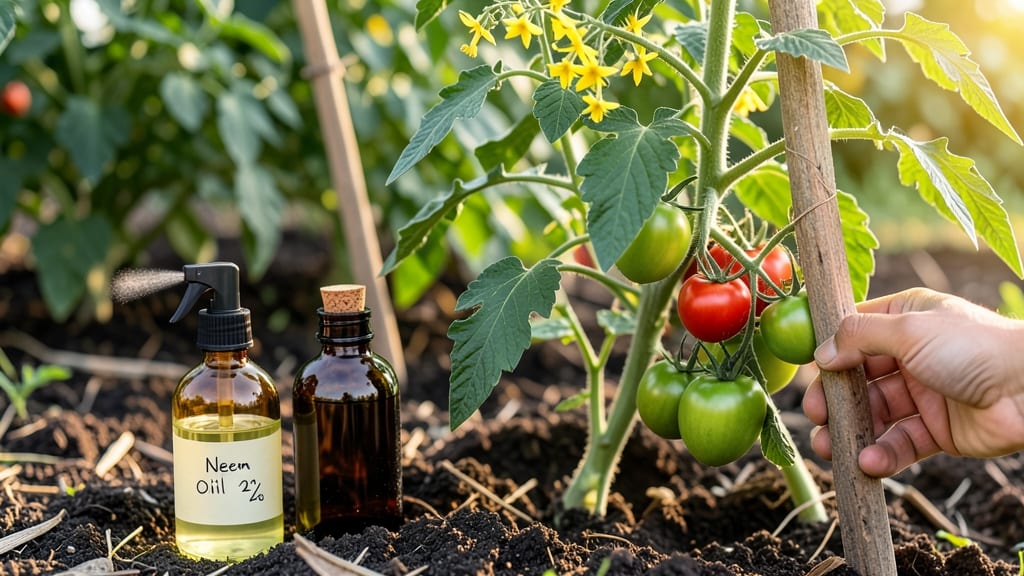
Neem oil is safe for tomato plants when used correctly as an organic pesticide, but it can harm plants if overapplied or used during flowering/fruiting stages. Always dilute properly and apply in early morning or evening to avoid leaf burn.
Neem oil's safety for tomato plants depends entirely on proper application—it's a powerful natural compound that disrupts insect life cycles while also containing antifungal properties. 🌱 The key is dilution (1-2 teaspoons per gallon of water) and timing; applying it during active growth stages (before flowering) prevents damage to developing fruit.
Many gardeners swear by it for controlling aphids and powdery mildew, but even then, you should never exceed weekly applications.
What sets neem oil apart is its dual-action mechanism: it smothers soft-bodied pests while also interfering with their reproductive cycles. However, this same potency means you must avoid spraying during hot afternoons, as the oil can concentrate on leaves and cause burn spots.
I've found that a simple spray bottle with the diluted solution works best—just be sure to cover both leaf surfaces thoroughly.
💡 In This Article
- How Neem Oil Works on Tomato Plant Pests and Diseases
- Safe Application Guidelines for Tomato Plants
How neem oil works on tomato plant pests and diseases
Neem oil's effectiveness as a natural pesticide comes from its active compound, azadirachtin, which disrupts insect feeding and reproduction. This compound interferes with pests' hormonal systems, preventing them from molting properly and eventually killing larvae within 3-5 days.
For tomato plants, this means neem oil is particularly effective against soft-bodied insects like aphids and whiteflies, which can devastate tomato foliage by sucking plant sap and transmitting viruses.
The oil also contains triterpenoids and salannin, which have antifungal properties that combat common tomato diseases like powdery mildew and early blight. These compounds create a protective film on leaves that inhibits spore germination.
However, the oil's potency means it must be applied precisely—too much can overwhelm the plant's natural defenses, especially during sensitive growth phases. 🌿 The antifungal action works best when applied preventatively, before symptoms appear, rather than as a cure for advanced infections.
Timing is critical because tomato plants have distinct growth stages where they're most vulnerable. During the vegetative stage (before flowering), plants can handle neem oil applications better since their leaves are fully developed and less sensitive.
But once flowers appear, the oil can interfere with pollination by coating delicate petals, reducing fruit set. This is why gardeners should avoid spraying during flowering and fruiting stages—even though the oil breaks down quickly, the risk of stunted growth or deformed tomatoes isn't worth taking.
What's fascinating is how neem oil's mechanism differs from chemical pesticides. Instead of killing pests outright, it disrupts their life cycles, which means repeated applications are often needed to see full results. For example, treating aphids requires 7-14 days between applications to break their reproductive cycle completely.
The oil also has a repellent effect—many insects avoid plants treated with neem due to its bitter taste, which is why you'll often see fewer pests returning after initial treatment.
Another key factor is how neem oil interacts with tomato plant physiology. While it targets pests, the oil can also stimulate the plant's natural defenses by increasing phenolic compounds—antioxidants that help tomatoes resist stress.
This dual action makes neem oil a favorite among organic gardeners who want both pest control and plant health benefits. However, the plant's ability to metabolize the oil depends on its overall vigor—stressed or nutrient-deficient tomatoes may react poorly even to proper applications.
Consider this comparison: chemical pesticides like pyrethrin kill pests instantly but leave no residual protection, while neem oil provides 3-5 days of protection per application. The trade-off is that neem requires more frequent, careful applications to be effective.
For tomato plants, this means planning your spray schedule around the plant's growth cycle rather than treating it as a one-time solution.