
Plants
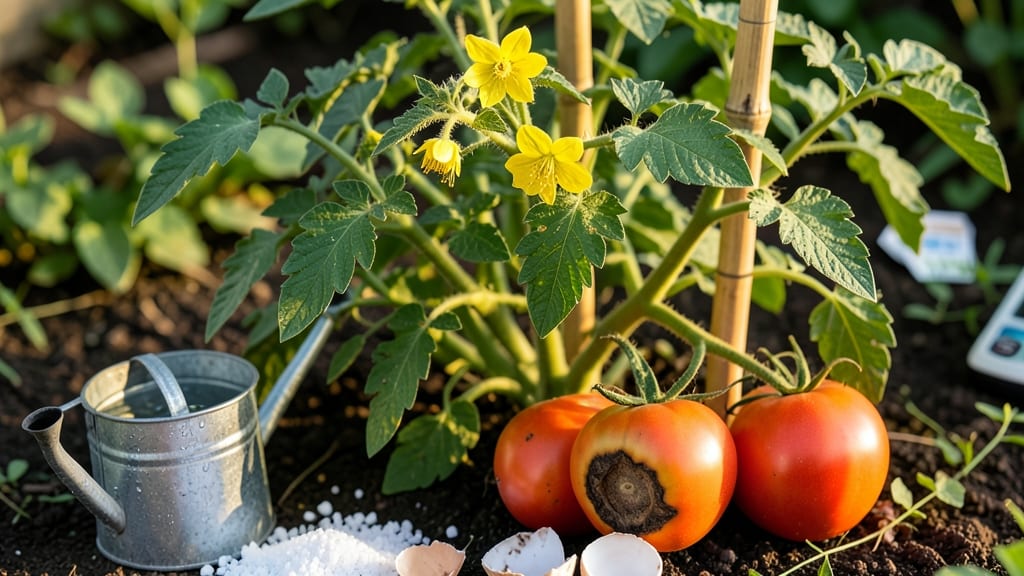
Prevent blossom end rot in tomato plants by mastering the simple secrets of calcium, water consistency, and smart garden habits—before your harvest turns into a sad, leathery mess. 🌱 I’ve lost entire harvests to this stubborn problem, but the fix is simpler than you’d think—it’s all about calcium, water consistency, and a few smart garden habits.
This guide cuts through the confusion: why it happens (hint: it’s not just calcium), how to spot it early, and the foolproof fixes that actually work. You’ll learn to adjust your watering, boost calcium without fancy products, and keep your plants thriving—no more wasted fruits or guesswork.
The payoff? Perfectly shaped, crack-free tomatoes that taste like summer should. No more throwing away misshapen fruit or watching your plants struggle. By the time your next harvest rolls around, you’ll spot the warning signs before they start.
Works for container gardens, raised beds, or in-ground plots—no matter your setup. Let’s get those tomatoes back to their best, once and for all.
Root Causes of Blossom End Rot
Blossom end rot may look like a mysterious curse, but it’s actually a calcium deficiency—or more precisely, a functional calcium deficiency—triggered by a few key factors. Understanding these causes is the first step to stopping the problem before it ruins your harvest.
Let’s break down the science behind why your tomatoes develop those ugly, sunken black spots.
Tomatoes need calcium (Ca) to build strong cell walls, especially in rapidly growing fruit. But even if your soil has enough calcium, your plants might not absorb it efficiently due to:
- Water Stress 💧 - Calcium moves through plant tissues via water. If the soil is too dry, roots struggle to absorb water (and calcium) fast enough to keep up with fruit growth.
This creates a "starvation" effect in the fastest-growing areas—like the blossom end of tomatoes. - Fun fact: Even brief droughts (like skipping watering for 2–3 days) can trigger rot, even if the soil later gets wet again.
- Uneven Watering 📉 - Fluctuating moisture levels (e.g., deep watering one day, then neglect the next) cause root pressure imbalances.
Roots can’t consistently supply calcium to the fruit, leading to weak spots. - Pro tip: Use drip irrigation or soaker hoses to deliver water slowly and evenly, keeping soil moisture stable.
- Compacted or Poor Soil 🏗️ - Dense, clay-heavy, or poorly aerated soil restricts root growth, limiting the plant’s ability to access calcium.
Roots need oxygen and space to expand and absorb nutrients efficiently. - Fix it: Amend soil with compost, perlite, or vermiculite to improve drainage and root health.
Even with enough calcium in the soil, fast-growing tomatoes can outpace the plant’s ability to deliver it to the fruit. This happens because:
- Over-Fertilizing with Nitrogen (N) 💥 - Too much nitrogen (common in synthetic fertilizers) fuels leafy growth at the expense of fruit development.
While lush foliage looks great, it diverts calcium away from the blossom end. - Balance it: Use a low-nitrogen, high-potassium (5-10-10 or 2-3-1 ratio) fertilizer to support fruiting without overfeeding greens.
- High Temperatures 🌡️
- Heat speeds up transpiration (water loss through leaves), but it also reduces calcium uptake through roots. On days above 85°F (29°C), roots become less efficient at absorbing calcium.
- Beat the heat: Provide shade cloth or mulch to keep soil cooler and reduce stress.
- Large Fruit Varieties 🍅 - Heirloom or beefsteak tomatoes grow faster than cherry or Roma varieties, increasing the demand for calcium.
If the plant can’t keep up, the blossom end becomes the weak link. - Solution: Space plants properly (18–24 inches apart) and prune suckers to redirect energy to fewer, manageable fruits.
Calcium is most available to plants when soil pH is between 6.0 and 7.0. Outside this range:
- Too Acidic (pH < 5.5) 📉 - Excess hydrogen ions compete with calcium for root uptake sites, locking calcium out even if it’s present. - Too Alkaline (pH > 7.5) 📈 - High pH reduces calcium solubility, making it harder for roots to absorb.
It also increases magnesium and potassium competition, further limiting calcium availability.
- Test it: Use a soil pH kit or send a sample to a lab. Adjust with:
- Lime (calcium carbonate) to raise pH (for acidic soil).
- Elemental sulfur to lower pH (for alkaline soil).
Physical or biological stress on roots can severely limit calcium uptake, even if the soil is rich in it:
- Root Rot (Fungal/Bacterial) 🍄
- Overwatering or poor drainage leads to Phytophthora or Pythium, which rot roots and reduce their ability to absorb nutrients.
- Injured Roots ⚔️
- Rough handling during transplanting or cultivating too close to stems can damage roots, slowing calcium transport.
- Pests (Grubs, Nematodes) 🐜
- Underground pests chew roots, creating entry points for disease and reducing absorption surface area.
- Prevent it: Avoid overwatering, use resistant varieties (like ‘Mountain Merit’ tomatoes), and rotate crops to break disease cycles.
Some tomato varieties are more susceptible to blossom end rot due to:
- Thin cell walls in the blossom end.
- Fast early fruiting (e.g., cherry tomatoes like ‘Sungold’).
- Sensitivity to calcium transport issues.
- Workaround: Choose rot-resistant varieties (e.g., ‘Celebrity’, ‘Better Boy’) or supplement calcium proactively (see next section).
Blossom end rot isn’t just a calcium deficiency—it’s a calcium delivery failure caused by water stress, nutrient imbalances, root problems, or environmental factors. The good news? Most causes are preventable with the right growing habits. Next, we’ll cover how to fix it before your next harvest. 🚀
How to solve it
Blossom end rot might look like a death sentence for your tomato plants, but with the right fixes, you can nurse them back to health—and prevent future outbreaks. The key is addressing the root cause (literally!) while giving your plants the nutrients they crave.
Here’s how to turn those mushy bottoms into plump, juicy tomatoes in no time.
💧 Watering Woes? Adjust Your Irrigation
If your tomatoes are suffering from inconsistent moisture, their calcium uptake plummets. Fix it fast:
- 🔥 Water deeply but infrequently: Aim for 1–2 inches of water per week (including rain). Use a drip irrigation system or soaker hose to deliver water directly to the soil, avoiding wetting the leaves. This keeps roots hydrated without shocking the plant.
- 🍳 Mulch like a pro: Spread 2–3 inches of organic mulch (straw, grass clippings, or wood chips) around the base of your plants. Mulch locks in moisture, regulates soil temperature, and prevents calcium-leaching fluctuations.
- ⏰ Stick to a schedule: Water in the morning so foliage has time to dry before evening. Wet leaves + humidity = fungal risks you don’t need.
💡 Prevention tip: If you’re using a sprinkler, switch to a watering wand or hose attachment with a gentle spray nozzle to minimize leaf contact.
🌡️ Soil Too Hot or Cold? Balance the Temperature
Extreme soil temps (too hot or too cold) disrupt calcium absorption. Here’s how to cool things down or warm them up safely:
- 🌿 For hot soil: Apply a thick layer of mulch (straw or grass clippings work best) to insulate the roots. Avoid dark mulches like black plastic, which can bake the soil.
- 🥶 For cold soil: Cover the soil with black plastic sheeting for a few days to warm it up before planting. Or, plant in slightly raised beds where soil heats faster.
- 📊 Test your soil: Use a soil thermometer to monitor temps—ideal range for tomatoes is 60–75°F (15–24°C). If it’s outside this zone, adjust watering or mulching accordingly.
✨ Pro move: If you’re growing in containers, move pots to a shadier spot during heatwaves or wrap them in bubble wrap for extra insulation in cold snaps.
📊 Calcium Deficiency? Feed Your Plants Right
Blossom end rot is a calcium crisis, but simply adding calcium to the soil isn’t enough—it needs to be water-soluble and available when the plant needs it. Try these fixes:
- 🍎 Quick calcium boost: Mix 1 tablespoon of crushed eggshells or 1 teaspoon of calcium chloride into the soil around the base of the plant. Water it in well. Eggshells take 2–3 weeks to break down, so do this preventively before fruit sets.
- 🥗 Liquid calcium fix: Use a calcium nitrate or gypsum fertilizer (follow package rates). For a DIY option, steep crushed eggshells in water for 24 hours, then use the liquid as a foliar spray or soil drench.
- 💪 Prevent long-term deficiency: Amend your soil with compost or well-rotted manure before planting. Healthy soil = better calcium availability.
🔥 Warning: Avoid overdoing calcium—too much can lock out other nutrients like magnesium. Balance it with a balanced fertilizer (10-10-10) every 4–6 weeks.
👨🍳 Prune and Protect for Future Fruit
If your plants are already struggling, give them a fighting chance with these care tweaks:
- 🔪 Trim damaged fruit: Snip off severely rotted tomatoes to redirect the plant’s energy to healthier fruit. This also reduces the risk of fungal infections.
- 🍅 Support heavy vines: Use tomato cages or stakes to keep plants upright. Stress from flopping can worsen rot.
- 🌱 Thin out suckers: Remove aggressive suckers (side shoots) to improve airflow and reduce competition for nutrients.
🎯 Long-term strategy: Plant calcium-loving companions like basil, marigolds, or borage near your tomatoes. These plants can improve soil health and calcium uptake.
⏰ When All Else Fails: Start Over (If Needed)
If your tomato plant is heavily infected with blossom end rot and other signs of decline (yellowing leaves, stunted growth), it may be time to replace it. Here’s how:
- 🌱 Transplant a healthy seedling: If you have extra space, pop in a new tomato plant nearby. Choose a determinate variety (bush type) for earlier harvests if space is tight.
- 🍅 Save the soil: Before removing the old plant, amend the soil with compost and calcium to prevent future issues in the same spot.
- 📝 Learn from the loss: Keep a plant care journal to track watering, soil temps, and fertilizer use. Next season, you’ll be a blossom end rot pro!
💡 Silver lining: Even if this plant’s harvest is small, you’ve gained invaluable experience for your next batch of perfectly plump tomatoes!
Frequently asked questions about blossom end rot in tomatoes
Why do my tomato fruits develop black, sunken spots at the blossom end?
Those spots are classic signs of blossom end rot, caused by a calcium deficiency—or more accurately, the plant's inability to deliver calcium to rapidly growing fruit. Even if your soil has enough calcium, uneven watering, extreme heat, or poor root health can block its transport to the blossom end.
Can I save tomatoes already showing blossom end rot?
Unfortunately, once the dark spots appear, the fruit won't recover. However, you can prune off severely affected tomatoes to redirect the plant's energy to healthier fruit. Focus on preventing new cases by improving water consistency and calcium availability.
How often should I water tomato plants to prevent blossom end rot?
Water deeply 1-2 inches per week (including rain), keeping soil consistently moist but not soggy. Use drip irrigation or soaker hoses to deliver water directly to the roots, avoiding leaf wetting. Morning watering helps prevent evening moisture that can promote disease.
Are crushed eggshells really effective for preventing blossom end rot?
Yes! Eggshells provide a natural calcium source when crushed and worked into the soil. For best results, crush 1 tablespoon per plant and mix it into the top 2 inches of soil before fruit sets. You can also steep eggshells in water for 24 hours to create a calcium-rich foliar spray.
Will mulching help prevent blossom end rot?
Organic mulch like straw or grass clippings retains soil moisture and regulates temperature, both critical for calcium uptake. Apply a 2-3 inch layer around plants (keeping it away from stems) to create stable growing conditions that prevent the moisture fluctuations causing rot.