
Pruning
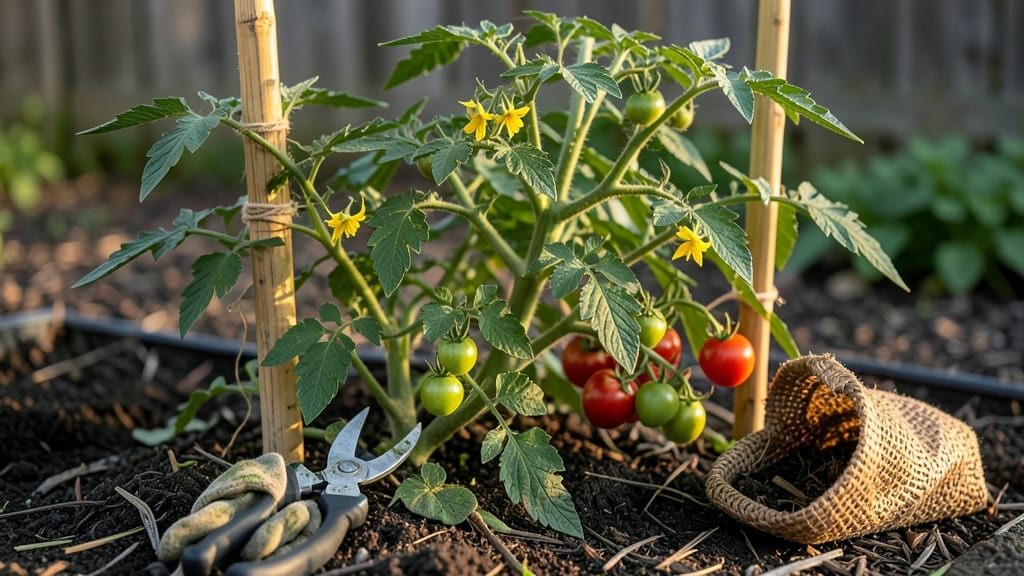
Proper tomato pruning isn't about hacking branches—it's about directing energy to where it matters most. ✂️ I learned the hard way that skipping this step means smaller fruit, more disease, and plants that flop over by August.
The right cuts turn leggy, struggling bushes into sturdy producers with jewel-toned fruit that rivals the grocery store—except you get to pick it fresh off the vine.
Here's the secret: pruning isn't one-size-fits-all. Determinate tomatoes (the bush types) barely need it, while indeterminate varieties (the vining giants) thrive when you remove suckers—those little shoots in the leaf axils—and open up airflow.
You'll work with 3 simple tools: sharp pruners, gloves, and a spray bottle for cleaning cuts. The goal? Stronger stems, more sunlight to the fruit, and plants that keep producing until frost.
Start when plants hit 12-18 inches tall, and you'll see the difference immediately—fewer leaves shading fruit, fewer hiding spots for pests. Within 2-3 weeks, you'll notice thicker stems and heavier clusters.
The best part? Your harvest timeline stretches 2-4 weeks longer than unpruned plants, and the fruit stays firmer and sweeter.
Works for backyard gardens, containers, or even balcony setups—just adjust the support structure. The key is consistency: once a week during peak growth, then taper off as summer cools. Here's how to do it without turning your tomatoes into a tangled mess.
📚 In This Guide
- What you need
- Instructions
- Tips and common mistakes
- Wrapping up and next steps
What you need
- ● Pruning shears or bypass pruners – Choose sharp, sterilized shears with bypass blades (4-6" length) to avoid crushing stems. Pro tip: Clean with rubbing alcohol between plants to prevent disease spread! 💡
- ● Gloves – Wear gardening gloves (nitrile or leather) to protect against thorns and blisters. Opt for cut-resistant if your tomato variety is spiky! 🛡️
- ● Disinfectant solution – Mix 1 part bleach to 9 parts water (or use 70% isopropyl alcohol) to sterilize tools between cuts. Critical for disease prevention! ⚠️
- ○ Garden twine or soft plant ties – 3-4 feet per plant of jute or cotton twine (avoid plastic) to secure stems to stakes or cages. Optional: Use Velcro plant ties for easy adjustments. 🌿
- ● Stakes or cages – Stakes: 5-7 foot bamboo or wooden stakes (1 per plant) for indeterminate tomatoes.
- ● Cages: 5-6 foot tall cages (2-3 per plant for large varieties) made of galvanized wire or sturdy plastic.
- ○ Mulch (optional but recommended) – Spread 2-3 inches of organic mulch (straw, wood chips, or grass clippings) around the base to retain moisture and deter weeds. 🌱
- ● Hand pruners – For smaller cuts or hard-to-reach areas.
- ● Loppers – If dealing with thick, woody stems (e.g., heirloom varieties).
- ● Plant growth regulator – Spray like Seaweed Extract (1 tsp/gallon) to encourage bushier growth post-pruning. ✨
- ● Notebook & pen – To track pruning dates, plant responses, and harvest progress!
Step-by-step guide to proper tomato pruning
Here’s how I transform leggy, weak tomato plants into sturdy, high-yielding vines—using just your hands and a sharp pair of pruners.
✂️ Step 1: Identify and Remove Suckers Early
Suckers are the small shoots that form in the leaf axils between the main stem and branches. These compete with your fruit for energy, so I remove them as soon as they’re pea-sized—never let them grow more than 2 inches. Use your thumb and forefinger to gently pinch them off at the base, or cut with clean pruners just above a leaf node to avoid leaving stubs.
I start pruning when plants hit 18-24 inches tall—that’s when suckers appear most aggressively. Wait too long, and you’ll lose precious energy to unnecessary growth. Focus on the lower third of the plant first, where suckers drain resources that could go to root development and early fruit.
🌿 Step 2: Prune for Airflow and Light Penetration
Once your main stem reaches your trellis or cage height (5-6 feet), I prune the top to encourage bushier growth. Cut just above a leaf node with at least two leaves—this signals the plant to branch out rather than grow taller. Remove any branches growing inward or crossing others, as these block sunlight and airflow, creating ideal conditions for fungal diseases like early blight.
Here’s the thing—never remove more than 25% of the plant’s foliage at once. You’ll shock the plant into stress, and it’ll drop flowers or even fruit. Instead, space pruning sessions 7-10 days apart, always checking for new suckers before making cuts. Healthy plants will bounce back with thicker stems and more robust growth.
☀️ Step 3: Balance Pruning with Fruit Load
When tomatoes start setting fruit, I shift focus to preserving the plant’s energy. Remove suckers only if they’re larger than 1 inch, and avoid pruning branches bearing fruit. Instead, trim leaves below the lowest fruit cluster to improve airflow and reduce disease risk, but leave 6-8 inches of foliage above each fruit to support photosynthesis.
Watch for overloaded branches—if a stem bends under the weight of too many tomatoes, prune back some of the fruit to 2-3 per cluster. This prevents stem breakage and ensures the remaining tomatoes grow larger. I also remove any yellowing or diseased leaves immediately, using sterilized pruners to prevent spreading pathogens.
Tips & tricks for perfect tomato pruning
Tomato pruning might seem intimidating, but these key strategies will help you avoid common pitfalls and maximize your harvest.
Timing is Everything: Start pruning when plants reach 18-24 inches—this is when suckers become most aggressive. I've learned that waiting too long means those little shoots will drain energy from your fruit development. Focus first on the lower third of the plant, where suckers sap resources from root growth and early fruit production.
Visual Cues for Pruning: When removing suckers, look for the pea-sized stage—this is the ideal time to act. For larger suckers (over 1 inch), use clean pruners to cut just above a leaf node. I always check for new suckers 7-10 days after each session, as they grow surprisingly fast in warm conditions. A quick morning inspection becomes part of my routine.
Stress Prevention: Never remove more than 25% of foliage at once—this shocks the plant and can cause it to drop flowers or fruit. Instead, spread pruning sessions over time, always leaving 6-8 inches of leaves above each fruit cluster. This balance ensures photosynthesis continues while improving airflow to prevent disease.
Equipment Matters: Sterilize your pruners between cuts with rubbing alcohol to prevent spreading pathogens like early blight. I keep a small bottle in my gardening toolbox for quick sanitizing. For stubborn suckers, I use my thumb and forefinger to pinch them off cleanly—no stubs left behind that could rot.
Pro Tips for Proper Tomato Pruning
- Tomato pruning might seem intimidating, but these key strategies will help you avoid common pitfalls and maximize your harvest.
- Timing is Everything: Start pruning when plants reach 18-24 inches—this is when suckers become most aggressive.
- Visual Cues for Pruning: When removing suckers, look for the pea-sized stage—this is the ideal time to act.
Frequently asked questions
Got questions about tomato pruning? You’re not alone—even seasoned gardeners have moments of uncertainty. Here are answers to the most common FAQs to help you prune like a pro and maximize your harvest!
When is the best time to start pruning tomatoes?
Begin pruning once your tomato plants are about 12–18 inches tall and have a few sets of true leaves. For indeterminate varieties (like cherry tomatoes), prune regularly throughout the growing season to encourage upward growth and fruit production. Determinate tomatoes (bush types) usually don’t need pruning—focus on removing diseased leaves instead.
How much should I prune off my tomato plant?
Remove no more than 1/3 of the plant’s foliage at a time to avoid stress. For indeterminate tomatoes, trim suckers (side shoots in leaf axils) and lower leaves touching the soil. Leave 3–5 main stems (for staked plants) or prune to open the canopy for airflow. Over-pruning can reduce fruit yield, so less is often more!
What if I see yellow or diseased leaves after pruning?
Yellow leaves can signal over-pruning, nutrient deficiency, or disease. If leaves are healthy but yellowing, they’re likely just aging—remove them. For diseased leaves (spots, mold, wilting), prune 1–2 inches below the damage with sterilized shears. Disinfect tools with rubbing alcohol between cuts to prevent spreading pathogens.
Can I prune tomatoes too late in the season?
Yes! Pruning too late (within 4–6 weeks of first frost) can stress the plant and stunt fruit ripening. However, if you spot diseased or pest-ridden leaves, remove them anytime to protect the rest of the plant. Focus on harvesting ripe tomatoes and letting green ones ripen indoors before calling it a season.
What’s an easy alternative if I hate pruning?
If pruning feels tedious, try cage-growing determinate tomatoes (like Roma or Celebrity) or letting indeterminate varieties grow wild—just remove only diseased leaves. For cherry tomatoes, prune minimally (just suckers) and let the plant focus energy on fruit. Mulch heavily to reduce soil-borne diseases, and use balanced fertilizer to compensate for less pruning.
Wrapping up and next steps
Mastering proper tomato pruning is your secret weapon for a thriving garden! 🌱 By removing suckers, supporting stems, and maintaining airflow, you’ll reward yourself with healthier plants and bigger, juicier tomatoes all season long. Every snip is an investment in your harvest—so grab those pruners and get growing!
Ready to take it further? Experiment with different pruning techniques or try growing heirloom varieties for unique flavors. Your next harvest is just a trim away—happy pruning! 🍅✨