
Pruning
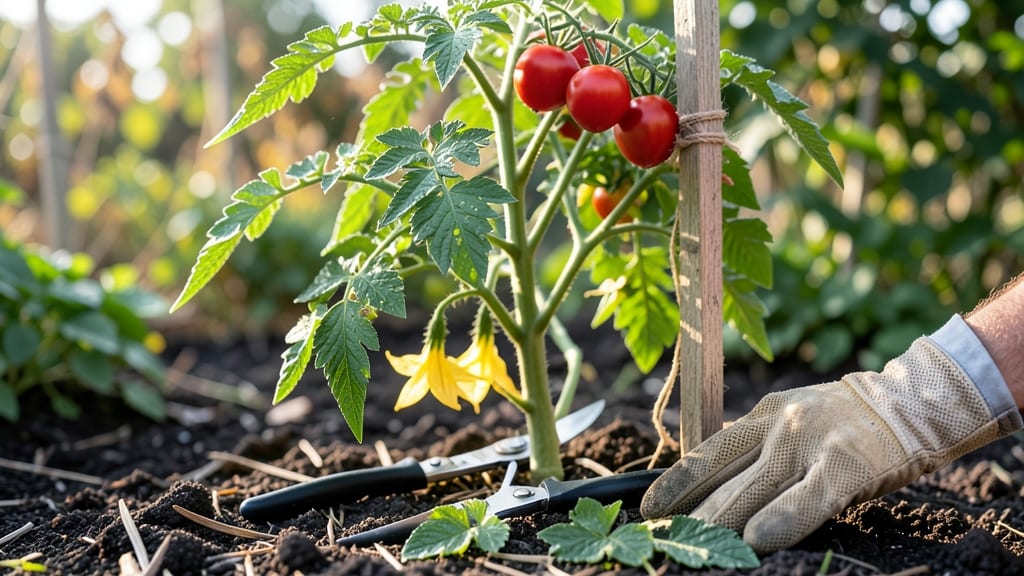
Pruning tomato leaves isn't just about trimming—it's the secret to bushier vines and heavier fruit all season. 🌱 I used to overlook it until my indeterminate tomatoes grew leggy and produced tiny, green fruits. The right cuts redirect energy where it matters most: to blossoms and fruit development.
Start by removing the bottom leaves first—they touch the soil and attract disease. Then focus on yellow or diseased leaves and any that block sunlight from the lower stems. A clean cut with sharp pruners prevents damage and speeds up healing.
The goal is to open up the plant for better air circulation and sunlight penetration. You'll notice a difference within 2-3 weeks: thicker stems, more blossoms, and fruit that ripens faster. The plants become more compact, making harvesting easier and reducing the risk of cracking from overloaded branches.
Even my black thumb can't mess this up once I learned the basics. For organic gardeners, this method also helps prevent fungal issues like blight. Just avoid cutting into the main stem—always leave a small leaf or side shoot.
If you prune too aggressively, the plant may struggle to recover, so start conservatively and adjust as you go.
📚 In This Guide
- What you need
- Instructions
- Tips and common mistakes
- Wrapping up and next steps
What you need
- ● Sharp pruning shears or bypass pruners – Choose sterilized, stainless steel blades (4-6 inch length) to avoid damaging stems or spreading disease. (Avoid anvil pruners—they crush stems!)
- ● Clean, sharp scissors or garden knife – For trimming smaller leaves or suckers (blades should be disinfected with rubbing alcohol or bleach solution).
- ○ Gloves (optional but recommended) – Wear nitrile or cotton gloves to protect against thorns and blisters. (Avoid powdered gloves near edible plants!)
- ● Disinfectant solution – Mix 1 part bleach to 9 parts water (or use 70% isopropyl alcohol) to sterilize tools between cuts. Prevents fungal/bacterial spread!
- ● Garden twine or plant ties – 10-15 feet of soft, stretchable twine (e.g., jute or plastic-coated) to support pruned vines if needed.
- ● Compost bin or trash bag – For removing pruned leaves/suckers. Avoid composting diseased foliage.
- ● Hand lens or magnifying glass – Helps spot early signs of pests/disease on leaves.
- ● Spray bottle with water – Keeps tools clean and prevents sap buildup.
- ● Labeling tags – If pruning different tomato varieties, mark stems to track growth patterns.
- ● Sun hat & sunscreen – Because pruning sessions can get hot and lengthy! 🌞
Instructions for pruning tomato leaves like a pro
Here's how I transform leggy tomato plants into sturdy, fruit-laden vines with just a few strategic cuts.
✂️ Step 1: Time Your First Pruning Perfectly
Wait until your tomato plants have 5-7 true leaves and are at least 12 inches tall before making your first cuts. This ensures the plant has enough energy to recover and continue growing. I always prune in the early morning when the plants are turgid and less stressed—this gives them time to heal before the heat of the day.
Use clean, sharp pruners (or even scissors) to make precise cuts at a 45-degree angle, about ¼ inch above a leaf node. This angle helps water run off the cut and prevents rot. Avoid tearing the stem—rough cuts invite disease. If you're working with heirloom or indeterminate varieties, you'll want to prune more aggressively than with determinate types.
🌿 Step 2: Remove Suckers for Stronger Growth
Suckers are the small shoots that grow in the V-shaped junction between the main stem and a branch. These compete with your fruit for energy, so I remove them weekly once the plant starts flowering. Pinch them off with your fingers if they're small, or cut just above the node if they're larger than 2 inches.
Here's the thing—don't go overboard. Leave 1-2 suckers near the top of the plant if you're growing indeterminate tomatoes. These will eventually become fruit-bearing branches. Watch for yellowing or wilting after pruning; if you see this, you've removed too much foliage too quickly. The plant should still have plenty of leaves to photosynthesize and support the fruit.
☀️ Step 3: Thin Leaves for Better Airflow and Sunlight
Once your plant is in full flower, focus on removing leaves below the first flower cluster. These lower leaves block sunlight and airflow, creating a humid environment that encourages blossom end rot and fungal diseases. I strip leaves gently but firmly, twisting them off rather than cutting to avoid damaging the stem.
Leave 3-4 leaves above each fruit cluster to support photosynthesis. If your plant looks stressed after pruning, it's a sign you've removed too much foliage. You'll know you've done it right when the remaining leaves are bright green and upright, and new growth appears within 5-7 days. This is the plant's way of telling you it's happy and ready to focus on fruit production.
⏰ Step 4: Maintain Through the Season
Continue pruning every 1-2 weeks throughout the growing season, focusing on removing diseased or yellowing leaves immediately. These are magnets for pests and pathogens. I also check for shoots growing from the base of the plant—these are called "suckers" too, and they need to go. Use your fingers to pinch them off early, or they'll steal energy from your fruit.
By late summer, when your tomatoes are nearly ripe, stop all pruning. The plant needs every leaf it has left to ripen the fruit. If you see green shoulders on red tomatoes, that's a sign the plant is struggling to mature the fruit—back off on pruning and focus on even watering instead. You'll know you've pruned correctly when your plant is covered in fruit and new leaves are emerging regularly.
Tips & tricks for perfect tomato pruning
These precision-focused tips will help you transform leggy tomato plants into productive powerhouses without stressing your vines.
Timing is Everything: The early morning timing in Step 1 isn't just about convenience—it's about giving plants time to heal before afternoon heat stress. I've seen plants recover beautifully when pruned at dawn, while midday cuts often lead to wilting. For container-grown tomatoes, this timing is even more critical since they have less root mass to recover from pruning shocks.
The 45-Degree Angle Secret: That precise 45-degree cut in Step 1 isn't arbitrary—it creates a natural water runoff channel that prevents rot. I learned this the hard way after seeing several pruned stems develop fungal issues. For stubborn stems that resist clean cuts, use a small serrated knife to make the angled cut after your initial snip. This works especially well for thick indeterminate tomato stems.
Sucker Management Strategy: When removing suckers in Step 2, focus on size over frequency. Small suckers (under 2 inches) can be pinched off with your fingers, but larger ones need clean cuts. Here's what nobody tells you—leave the top 2-3 suckers on indeterminate varieties to become future fruit-bearing branches. These will develop into strong lateral stems that support more tomatoes.
Seasonal Transition Tip: The late-summer pruning pause in Step 4 is crucial for fruit ripening. I've noticed that plants pruned too aggressively in August often produce tomatoes with green shoulders. If you must prune during this time, limit yourself to removing only diseased leaves—never more than 10% of the foliage at once. The plant's energy needs to focus entirely on ripening existing fruit, not growing new leaves.
Pro Tips for Pruning Tomato Leaves
- These precision-focused tips will help you transform leggy tomato plants into productive powerhouses without stressin...
- Timing is Everything: The early morning timing in Step 1 isn't just about convenience—it's about giving plants time t...
- The 45-Degree Angle Secret: That precise 45-degree cut in Step 1 isn't arbitrary—it creates a natural water runoff ch...
Frequently asked questions
Got questions about pruning tomato leaves? You’re not alone—even seasoned gardeners need a refresher now and then! Below, we tackle the most common concerns to help you prune like a pro and maximize your harvest.
When is the best time to prune tomato leaves?
Prune indeterminate tomatoes throughout the growing season, starting when they’re about 12 inches tall. Focus on removing suckers (side shoots) and lower leaves after flowering to redirect energy to fruit production. For determinate varieties, minimal pruning is needed—just remove damaged or diseased leaves. Morning pruning is ideal to avoid stressing plants in hot afternoons.
How much of my tomato plant should I prune?
For indeterminate tomatoes, aim to prune 1/3 of the foliage by removing suckers and lower leaves. Leave enough leaves to shade developing fruit but avoid overcrowding. Determinate varieties need little to no pruning—just trim dead or yellowing leaves. Never prune more than 20% of the plant at once to prevent shock.
Can I prune tomato leaves in hot or cold weather?
Avoid pruning during extreme heat (above 90°F) or cold snaps (below 50°F), as this stresses plants. Ideal conditions are mild days (60–80°F) with humidity control to prevent disease. If you must prune in heat, do it early morning or late evening and water thoroughly afterward.
What if my tomato leaves turn yellow after pruning?
Yellowing leaves post-pruning are often normal as the plant adjusts. However, if large patches yellow rapidly, check for:
- Over-pruning: You may have removed too much foliage.
- Nutrient deficiency: Add compost or balanced fertilizer.
- Disease (e.g., early blight): Remove affected leaves and treat with copper spray.
Are there alternatives to pruning tomato leaves?
If pruning feels overwhelming, try these low-maintenance alternatives:
- Thinning vines: Gently spread vines outward to improve airflow (no cutting needed).
- Mulching: Use straw or grass clippings to retain moisture and reduce leaf diseases.
- Cage/trellis support: Elevate plants to prevent soil-borne diseases and improve light exposure.
- Variety selection: Choose determinate tomatoes (e.g., Roma, Celebrity) for minimal pruning needs.
Wrapping up and next steps
Pruning tomato leaves isn’t just about trimming—it’s about unlocking your plants’ full potential! By removing suckers, thinning foliage, and focusing energy on fruit production, you’ll enjoy bushier vines, heavier harvests, and healthier tomatoes.
Remember, consistency is key, so grab those shears and make pruning a regular part of your garden routine.
Ready to transform your tomato game? Start with just one plant this season, observe the changes, and let your success inspire bigger pruning projects next year. Happy gardening! 🌱✂️