
Planting
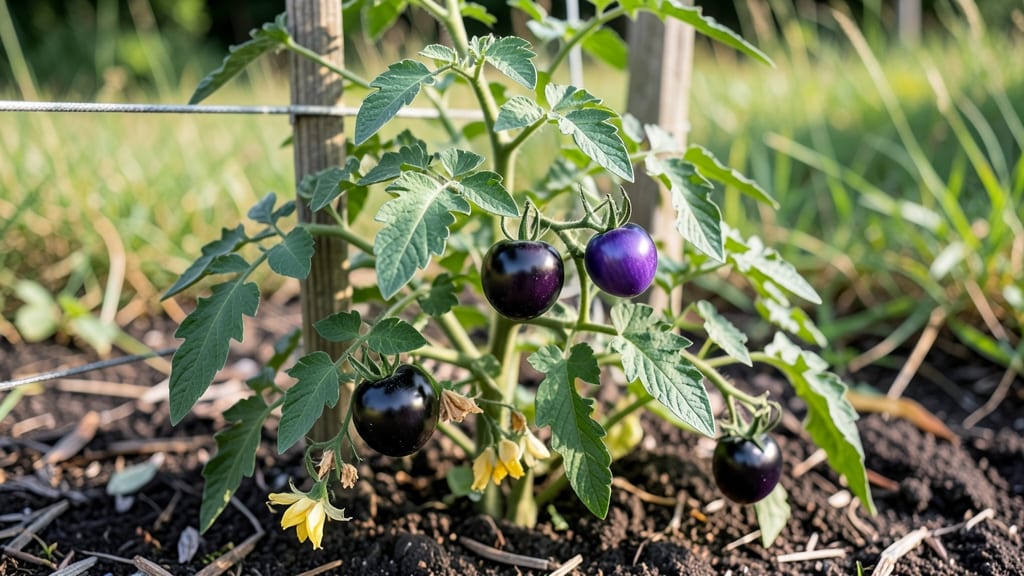
Growing purple tomato plants turns your garden into a living work of art. 🌿 These deep-hued beauties aren't just stunning—they pack a flavor punch that rivals traditional red tomatoes. The 'Indigo Rose' and 'Black Krim' varieties are my go-to picks, offering rich, smoky-sweet fruit perfect for sauces or fresh slicing.
The secret to their success? Full sun, fertile soil, and consistent moisture—they thrive in containers or garden beds alike. Purple tomatoes need slightly more water than red varieties to prevent cracking, but they reward you with vibrant, antioxidant-rich fruit that's a conversation starter at dinner parties.
Once established, these plants grow vigorously, producing 20-30 pounds of fruit per plant in a good season. Prune regularly to encourage airflow and focus energy on fruit production, and watch as your garden becomes a purple paradise by midsummer.
Whether you're growing in pots or a raised bed, purple tomatoes adapt beautifully. The key is patience—they take slightly longer to ripen than red varieties, but the wait is worth it for that first taste of deep, purple perfection.
📚 In This Guide
- What you need
- Instructions
- Tips and common mistakes
- Wrapping up and next steps
What you need
- ● Purple tomato seeds or seedlings: Choose heirloom varieties like Black Krim or Indigo Rose for deep purple hues.
- ● Containers or garden plot: Containers: 5-gallon pots or larger (minimum 12" diameter) with drainage holes.
- ● Garden beds: Well-draining soil with full sun exposure (6+ hours daily).
- ● High-quality potting mix: 5-10 lbs of organic, well-aerated soil (add compost for nutrients).
- ● Fertilizer: Balanced organic fertilizer (e.g., 5-5-5 or tomato-specific blend) or compost tea.
- ● Support system: Cages, stakes, or trellises (for indeterminate varieties).
- ● Gloves & hand trowel: For planting and soil prep.
- ● Watering can or hose with nozzle: Gentle watering avoids root stress.
- ○ Mulch (optional): Straw or shredded leaves to retain moisture.
- ○ Pruning shears (optional): For trimming suckers and shaping plants.
- ○ pH test kit (optional): Aim for soil pH 6.0–6.8 for optimal growth.
Step-by-Step instructions for growing purple tomato plants
Here's how to cultivate these stunning heirlooms—whether in pots or garden beds—with vibrant results.
🌱 Step 1: Select the Right Variety and Start Seeds Indoors
Choose a purple tomato variety like 'Purple Cherokee' or 'Black Krim'—both thrive in containers or gardens. Start seeds 6-8 weeks before last frost using a seed-starting mix in 2-3 inch deep pots. I like to use biodegradable peat pots to avoid root disturbance later.
Press the mix firmly but gently to remove air pockets, then plant 2 seeds per pot at ¼ inch depth. Cover lightly with more mix and mist until evenly moist. Place in a warm spot (75-85°F) with a humidity dome or plastic wrap. You'll see sprouts in 7-14 days—watch for the first true leaves to appear before thinning.
☀️ Step 2: Provide Optimal Light and Harden Off Seedlings
Purple tomatoes need 14-16 hours of light daily from day one. A south-facing window works, but most homes lack sufficient intensity, so I use a full-spectrum LED grow light positioned 2-4 inches above the seedlings. Raise it as they grow to maintain that distance.
Leggy seedlings signal insufficient light—thin stems and leaves spaced far apart mean it's time to move closer. Two weeks before transplanting, begin hardening off by placing seedlings outside in partial shade for 1-2 hours. Gradually increase exposure over 10-14 days until they tolerate full sun without wilting.
🪴 Step 3: Transplant to Containers or Garden Beds
Choose a location with 6+ hours of direct sun and well-draining soil. In containers, use pots at least 12 inches deep with drainage holes—purple tomatoes need room for strong roots. Bury seedlings deeper than their original depth (up to the first true leaves) to encourage stability.
Space plants 18-24 inches apart in garden beds or use cage or stake supports immediately—these varieties grow tall and heavy with fruit. Water deeply at transplanting to settle soil around roots, then maintain 1 inch of moisture weekly (adjust for rain). Mulch with 2-3 inches of organic matter to retain moisture and prevent soil-borne diseases.
💧 Step 4: Maintain Consistent Care Through Fruiting
Purple tomatoes thrive with regular watering at the base—avoid wetting leaves to prevent disease. Feed every 2-3 weeks with a balanced fertilizer (10-10-10) until flowers appear, then switch to a low-nitrogen, high-phosphorus formula (5-10-10) to boost fruiting. Prune suckers (side shoots) weekly to direct energy to fruit production.
Watch for yellowing leaves—a sign of overwatering or nutrient deficiency. Purple tomatoes also need calcium for cell wall strength; side-dress with crushed eggshells or use a calcium supplement if leaves develop brown edges. Harvest when fully colored and slightly soft to the touch—typically 70-85 days after transplanting.
Tips & tricks for growing stunning purple tomato plants
These game-changing strategies will help you cultivate vibrant, productive purple tomato plants that rival the pros.
Lighting Strategy: The 14-16 hours of daily light requirement is non-negotiable for purple tomatoes. If you're using a grow light, position it just 2-3 inches above seedlings initially, then raise it as they grow—this mimics natural sunlight intensity. I've found that seedlings under grow lights develop stronger stems and deeper purple hues compared to those relying solely on windows. For maximum efficiency, use a timer to automate light cycles and ensure consistency.
Seedling Care: In Step 1, when planting your 2 seeds per pot at ¼-inch depth, don't be tempted to plant deeper to save seed-starting mix. The shallow planting encourages faster germination and prevents damping off disease. Once sprouts appear in 7-14 days, thin to the strongest seedling per pot. The remaining seedling can be transplanted to a new pot or used as a snack for your compost bin—no waste!
Transplanting Technique: When transplanting in Step 3, burying seedlings deeper than their original depth (up to the first true leaves) might seem counterintuitive, but it works wonders. This method encourages root growth along the buried stem, creating a more robust plant. Just be sure to water deeply immediately after transplanting to help settle the soil around those newly buried stems and reduce transplant shock.
Nutrient Timing: The switch from balanced fertilizer (10-10-10) to low-nitrogen, high-phosphorus (5-10-10) in Step 4 is crucial for fruiting. I recommend making this switch when you first notice flower buds forming. The phosphorus boost helps develop strong root systems and fruit development. Don't forget to pair this with your weekly calcium supplement—those crushed eggshells work beautifully when mixed into the soil around plants.
Pro Tips for Purple Tomato Plant
- These game-changing strategies will help you cultivate vibrant, productive purple tomato plants that rival the pros.
- Lighting Strategy: The 14-16 hours of daily light requirement is non-negotiable for purple tomatoes.
- Seedling Care: In Step 1, when planting your 2 seeds per pot at ¼-inch depth, don't be tempted to plant deeper to save seed-starting mix.
Frequently asked questions
Got questions about growing purple tomato plants? You’re not alone! Here are answers to the most common queries to help you cultivate these stunning (and delicious!) varieties with confidence.
How long does it take for purple tomato plants to produce fruit?
Purple tomato plants typically take 60–85 days from transplanting to harvest, depending on the variety. Early varieties like 'Purple Cherry' may fruit sooner (around 55–60 days), while larger heirlooms like 'Black Krim' can take closer to 90 days. Warm temperatures and consistent care speed up production!
Can purple tomatoes survive frost? What’s the best way to protect them?
Purple tomatoes are not frost-tolerant—even young plants can’t handle temps below 50°F (10°C). To protect them, use row covers, cloches, or move pots indoors during cold snaps. If frost is expected, harvest ripe fruit first and let unripe tomatoes ripen indoors. Pro tip: Start seeds indoors 6–8 weeks before your last frost date!
Are purple tomatoes sweeter or more nutritious than red tomatoes?
Yes! Purple tomatoes are packed with anthocyanins (the same antioxidants found in blueberries), which give them their deep color and boost their disease-fighting properties. Flavor-wise, they’re often sweeter and more complex than red varieties, with hints of berry or plum. Plus, their vibrant hue makes salads and salsas visually stunning!
Can I grow purple tomatoes in containers? What’s the best pot size?
Purple tomatoes thrive in containers, especially determinate (bush) varieties like 'Purple Roma'. Use pots at least 12–18 inches deep with drainage holes and a high-quality potting mix. For indeterminate types (vining), go for 20+ gallons and add a sturdy trellis. Pro tip: Add a time-release fertilizer to keep them fed!
Why are my purple tomato leaves turning yellow or spotted?
Yellowing or spotted leaves are often caused by overwatering, nutrient deficiencies, or pests. Check for:
- Fungal issues (early blight): Remove affected leaves and space plants for airflow.
- Pests (aphids, spider mites): Spray with neem oil or insecticidal soap.
- Nitrogen deficiency: Feed with a balanced fertilizer (10-10-10).
- Blossom end rot: Ensure consistent moisture and add calcium.
Rotate plants if soil-borne diseases are suspected.
What’s a good alternative if I can’t grow purple tomatoes?
If purple tomatoes don’t thrive in your climate, try these vibrant alternatives:
- 'Black Beauty' eggplant – Deep purple, rich flavor, and easy to grow.
- 'Purple Majesty' sweet potato – Edible purple leaves + orange tubers!
- 'Purple Basilic' (herb) – Adds color to pesto and salads.
- 'Indigo Rose' snapdragons – Stunning purple blooms for pollinators.
Each brings a pop of color while being just as low-maintenance!
Wrapping up and next steps
Growing purple tomato plants is a rewarding journey that adds a splash of color and unique flavor to your garden or container! Whether you're drawn to their striking appearance or their rich, sweet taste, these vibrant varieties are perfect for both beginners and seasoned gardeners. 🌱
Now that you’re equipped with the right knowledge, take the next step—plant those seeds or seedlings and watch your garden transform! With a little patience and care, you’ll soon be harvesting delicious, antioxidant-packed tomatoes that’ll impress everyone. Happy growing! 🌟