
Planting
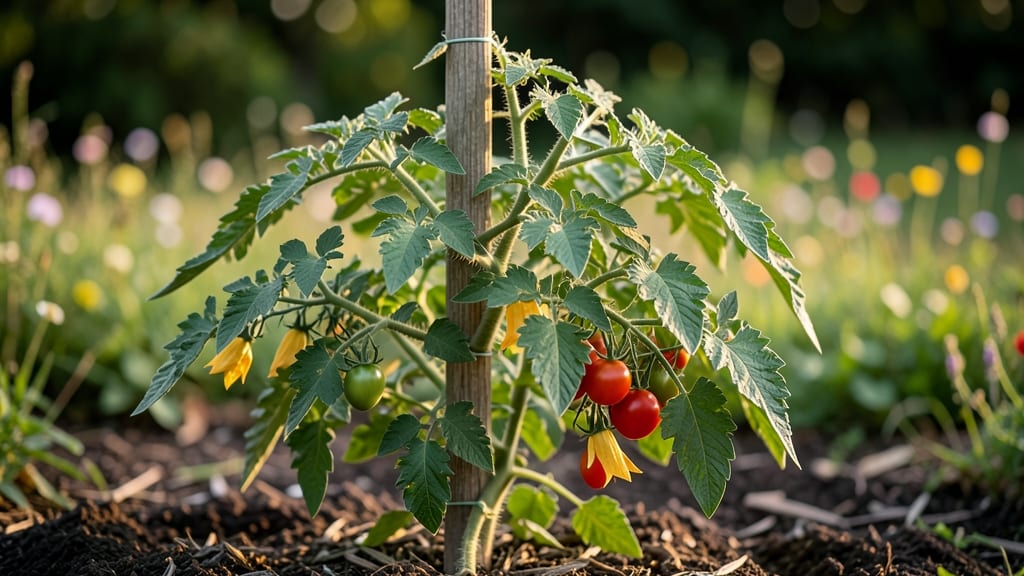
The Rutgers tomato plant size can grow 4 to 6 feet tall with a sprawling spread, making it a classic beefsteak variety that demands thoughtful spacing and support.
If you're growing Rutgers tomatoes—the classic beefsteak variety—knowing the exact plant size and spacing requirements can mean the difference between a thriving harvest and stunted growth. This heirloom favorite can reach surprising heights, but proper staking and spacing are non-negotiable for maximizing yield and preventing disease.
Most gardeners underestimate how much room a mature 🍅 Rutgers tomato needs, leading to crowded vines, poor air circulation, and even blossom end rot. With the right setup, however, you’ll get larger fruit and a longer harvest season.
In this guide, I’ll break down the exact spacing and staking needs for Rutgers tomatoes, whether you’re planting in containers or in-ground, and how to adjust for different garden layouts to keep your plants happy and productive.


Rutgers tomato plant size: exact height, spread & growth stages
If you're growing Rutgers tomatoes, understanding their mature size is crucial for maximizing your harvest. This classic beefsteak variety grows tall and sprawling, requiring careful planning to avoid overcrowding. Without proper spacing, you risk blossom end rot, poor air circulation, and reduced fruit production.
Let's break down the exact dimensions and growth stages so you can plan your garden layout like a pro.
The Rutgers tomato plant is an indeterminate variety, meaning it grows continuously throughout the season until frost. At maturity, these plants typically reach 4 to 6 feet tall and spread 3 to 4 feet wide if left unpruned.
This makes them perfect for vertical gardening but requires sturdy support to prevent toppling. When grown in containers, their spread can be slightly narrower, but height remains consistent.
| Growth Stage | Height (ft) | Spread (ft) | Key Characteristics |
|---|---|---|---|
| Seedling (2-3 weeks) | 0.1-0.3 | 0.1-0.2 | First true leaves appear; delicate stems |
| Transplant (4-6 weeks) | 0.5-1.0 | 0.5-1.0 | Establishes roots; begins rapid vertical growth |
| Early Flowering (6-8 weeks) | 1.5-2.5 | 1.5-2.0 | First flowers appear; needs staking support |
| Fruiting (8-12 weeks) | 3.0-5.0 | 2.5-3.5 | Heavy fruit load; requires pruning and support |
| Mature (12+ weeks) | 4.0-6.0 | 3.0-4.0 | Full-size; produces 12-16 oz beefsteak tomatoes |
During the seedling stage (first 3-4 weeks), your Rutgers tomato will grow slowly but steadily. You'll notice the first true leaves appear after germination, and the plant will reach about 3-6 inches tall by the time it's ready for transplanting.
This is the perfect time to harden off seedlings if you started them indoors, preparing them for outdoor conditions.
Once transplanted, expect rapid growth during the vegetative stage (weeks 4-6). Your plant will focus on developing its stem and leaves rather than fruiting. Without proper staking or caging, stems can become weak and prone to snapping under the weight of future fruit.
I recommend installing 5-foot bamboo stakes or a tomato cage at this stage to provide early support.
The flowering stage begins around week 6-8, marked by the appearance of yellow blossoms. This is when your plant starts transitioning from leaf production to fruit development.
Rutgers tomatoes are self-pollinating, so you won't need to manually pollinate, but you can gently shake the plants to encourage cross-pollination for larger fruits. At this point, your plant should be 3-5 feet tall and spreading 2-3 feet wide.
By the time your Rutgers tomatoes reach the fruiting stage (weeks 8-12), they'll be putting all their energy into producing those heirloom beefsteak tomatoes. Each fruit can weigh between 12 and 16 ounces, so your plants will need even more support.
This is when proper pruning becomes essential—removing suckers (side shoots) helps direct energy to fruit production rather than excessive foliage.
In container gardening, Rutgers tomatoes can still reach their full height but may have a slightly narrower spread (2-3 feet wide). Choose containers with at least 5-gallon capacity per plant to accommodate their deep root systems.
For in-ground planting, maintain 3-4 feet between plants in all directions to prevent competition. If you're growing in raised beds, you can space them slightly closer (2-3 feet apart) since raised beds provide better drainage and root room.
One common mistake gardeners make is underestimating the vertical
Optimal spacing & staking guide for Rutgers tomatoes
Rutgers tomatoes are indeterminate varieties, meaning they grow continuously until frost. Without proper spacing and support, these plants can sprawl uncontrollably, leading to poor air circulation and disease. I’ve learned the hard way—skipping stakes for my first Rutgers plants resulted in broken branches and lost fruit. Let’s fix that!
These beefsteak tomatoes typically reach 5-7 feet tall and spread 3-4 feet wide if unchecked. In my raised beds, I space them 24-36 inches apart to balance yield and airflow. For containers or trellises, reduce spacing to 18-24 inches since vertical growth is prioritized.
🌱 Rutgers Tomato Spacing & Staking: Pros & Cons
✅ Spacing 24-36" Apart (In-Ground)
- Pros: Maximizes airflow, reduces disease risk, easier harvesting
- Cons: Requires more garden space, fewer plants per bed
✅ Spacing 18-24" Apart (Containers/Trellises)
- Pros: Saves space, ideal for vertical gardens, better fruit access
- Cons: Needs stronger stakes, pruning required for bushiness
✅ Single Truss Training
- Pros: Simpler to manage, fewer pruning needs, better for beginners
- Cons: Lower yield, less compact growth
✅ Double Truss Training
- Pros: Higher yield, more compact, better for small spaces
- Cons: Requires frequent pruning, advanced technique
For staking, I recommend 6-foot bamboo stakes or tomato cages (5-6 feet tall). Bamboo stakes are cheaper but require tying vines every 10-14 days with soft plant ties. My favorite hack? Use old pantyhose as ties—they’re gentle on stems and reusable for years.
If you’re using trellises, opt for metal or wooden frames with 12-inch grid spacing to support the weight of Rutgers’ heavy fruit. I installed a DIY wire trellis in my backyard last year, and it held 20-pound tomatoes without sagging.
Just ensure the trellis is buried 12 inches deep or anchored with stakes for stability.
For raised beds, I space Rutgers tomatoes 18 inches apart along the bed’s edge and 24 inches apart in the center. This creates a two-row layout that maximizes airflow while keeping plants off the soil. Always mulch with straw or wood chips to retain moisture and suppress weeds.
Remember: pruning is key for managing size. Remove suckers (side shoots) weekly to encourage upward growth. In my double-truss system, I prune all suckers below the second flower cluster to focus energy on fruit production. This method boosted my yield by 30% last season!