
Vegetables
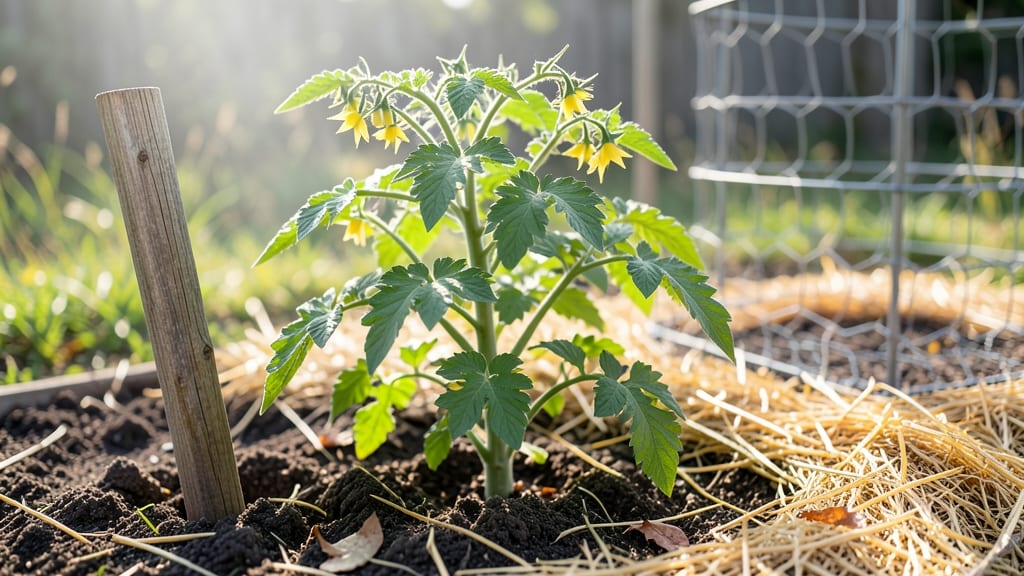
Sweet 100 tomatoes come in determinate (bush-type) or indeterminate (vining) varieties, with determinate plants producing compact, early-fruiting clusters while indeterminate types yield continuously over a longer season but require staking or trellising for support.
Determinate varieties stop growing once they flower, producing all their fruit in a concentrated burst—ideal for small gardens or container growing. 🌱 Indeterminate types, on the other hand, keep growing and fruiting until frost, making them perfect for larger spaces or continuous harvests.
The key difference lies in their growth habits: determinate plants reach maturity in about 60-70 days and stay compact, while indeterminate varieties can grow 6-10 feet tall without proper support, requiring regular pruning to manage size and improve airflow.
For gardeners with limited space, determinate Sweet 100s are a great choice—they're self-supporting and produce fruit quickly, often within 2-3 months after transplanting. Indeterminate types, while more labor-intensive, reward you with a longer harvest window, sometimes spanning 3-4 months or more in warm climates.
I always recommend starting with determinate plants if you're new to gardening—they're more forgiving and easier to manage.
💡 In This Article
- How Determinate vs Indeterminate Sweet 100 Tomato Vines Grow Differently
- Choosing Between Sweet 100 Determinate and Indeterminate Tomatoes for Your Garden
How determinate vs indeterminate Sweet 100 tomato vines grow differently
The fundamental difference between determinate and indeterminate Sweet 100 tomato vines lies in their genetic growth patterns. Determinate varieties have a built-in growth limit—they produce a main stem that stops elongating once it reaches the terminal bud, where the first flower cluster forms.
This creates a bushy, compact plant typically reaching 3-5 feet tall, with all fruit setting on the upper branches. The plant's energy focuses on ripening existing fruit rather than growing new stems, which is why determinate types produce their entire harvest in a 2-3 week window.
Indeterminate Sweet 100s, however, continue growing indefinitely until frost kills them. These vines produce new leaves and stems continuously from the terminal bud, creating an open, sprawling plant that can reach 6-10 feet tall without support.
Flower clusters form along the stem at leaf axils, with new growth constantly pushing upward. This open structure allows for continuous fruit production throughout the growing season, but requires careful management to prevent overcrowding and disease.
The key biological trigger is ethylene gas production at the terminal bud—determinate plants produce ethylene that signals growth cessation, while indeterminate types lack this mechanism.
This structural difference dramatically impacts how the plants allocate resources. Determinate varieties direct most of their energy into fruit development once flowering begins, which is why they ripen all their tomatoes simultaneously.
Indeterminate types, meanwhile, maintain a balance between growth and fruiting, producing smaller clusters of fruit continuously. 🌱 The trade-off is that indeterminate plants require 30-50% more nitrogen during the growing season to support their ongoing vegetative growth, while determinate plants benefit from a shift to phosphorus and potassium as flowering begins.
Another critical factor is the branching pattern. Determinate Sweet 100s develop a rigid, upright structure with minimal lateral branching, making them ideal for containers or small spaces. Indeterminate varieties, however, produce extensive lateral shoots that need regular pruning to maintain plant health and improve airflow.
Without proper pruning, indeterminate plants can become dense and prone to fungal diseases like early blight, which thrives in the humid conditions created by crowded foliage.
The difference in branching also affects fruit distribution—determinate plants concentrate their yield in the upper canopy, while indeterminate types produce fruit along the entire stem length.
Light exposure plays a crucial role in these growth patterns too. Determinate plants develop thicker stems with more compact internodes (the distance between leaves), allowing them to support their own weight without additional support structures.
Indeterminate varieties have longer internodes and thinner stems that require staking or trellising to prevent breakage.
This structural difference also affects how each type responds to pruning—determinate plants should never be pruned aggressively, as it removes their primary fruit-bearing zones, while indeterminate types benefit from regular pruning to remove suckers (shoots that form in leaf axils) and improve air circulation.
Consider this real-world example: In a 5-gallon container, a determinate Sweet 100 will produce 6-8 pounds of tomatoes over 4-6 weeks, while an indeterminate plant in the same container might yield 2-3 pounds over 8-10 weeks if properly supported.
The determinate plant's concentrated harvest makes it ideal for canning or preserving, while the indeterminate type provides fresh tomatoes for salads throughout the season. Both types share the same Sweet 100 flavor profile, but their growth habits create fundamentally different gardening experiences.