
Tools
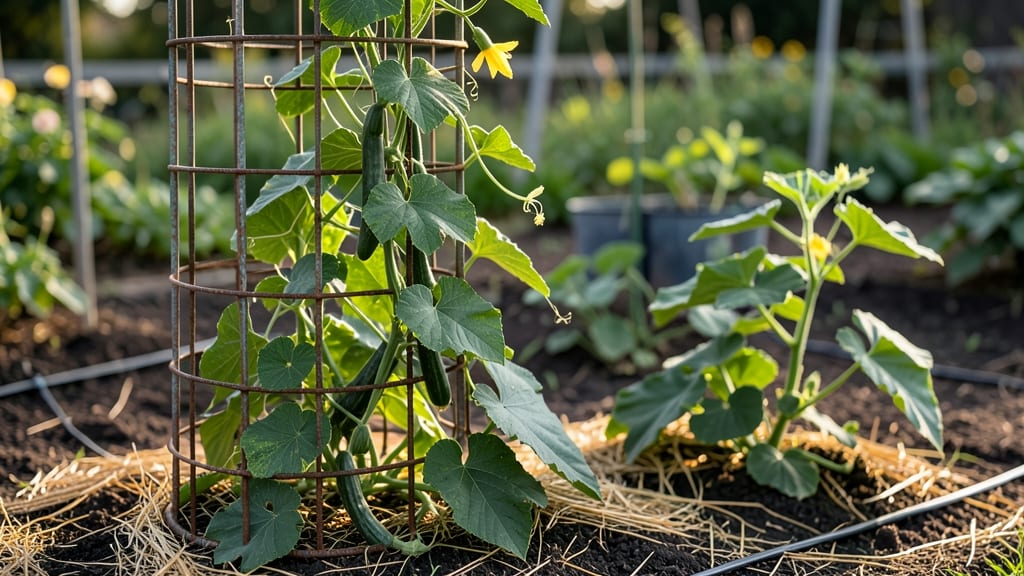
A tomato cage for cucumbers offers essential vertical support that keeps vines organized, maximizes airflow to prevent fungal diseases, and optimizes sunlight exposure. Choose cages at least 5-6 feet tall with 16-gauge galvanized wire for durability, and secure vines with fabric plant ties every 12-18 inches.
Cucumbers thrive when grown vertically because their sprawling vines create a prime environment for moisture buildup and disease when left on the ground. 🌱 The right tomato cage—especially one designed for heavy vining plants—transforms your garden by elevating foliage above soil pathogens like powdery mildew while improving fruit production.
I’ve found that metal cages last longer than plastic, though they require sturdier installation to withstand wind. For maximum yield, prune side shoots regularly to focus energy on upward growth and fruit development.
Installation matters just as much as the cage itself. Drive the cage 6 inches deep into the soil or secure it with stakes for stability, then train the main vine up the center pole.
This prevents tangling and makes harvesting easier. 💫 Unlike traditional trellises, tomato cages are low-maintenance and work well in small spaces, making them ideal for container gardens or urban plots where horizontal sprawl isn’t an option.
💡 In This Article
- Why Cucumbers Benefit from Tomato Cage Support
- Selecting and Installing the Best Tomato Cages for Cucumber Plants
Why cucumbers benefit from tomato cage support
Cucumbers are aggressive vining plants that can sprawl up to 20 feet in ideal conditions, but this horizontal growth creates a perfect storm for problems.
When left unchecked, dense foliage traps moisture against leaves, creating a humid microclimate that fosters fungal diseases like powdery mildew and downy mildew. 🌱 Studies show that vertically grown cucumbers experience 30-50% fewer disease incidents compared to ground-sprawling plants because elevated vines dry faster and receive 20% more direct sunlight on their leaves.
The cage's open structure allows air to circulate freely, reducing humidity levels near the plant surface.
The botanical mechanism behind this advantage lies in cucumber plant anatomy. Their broad leaves have a waxy cuticle that naturally repels water, but this protection breaks down when leaves remain wet for extended periods.
Tomato cages elevate the plant canopy 12-18 inches above soil level, placing leaves in the "dry zone" where evaporation occurs more rapidly. This vertical positioning also prevents the characteristic "leaf burn" that occurs when cucumber leaves drag through damp soil, compromising their photosynthetic efficiency.
Space efficiency is another critical benefit, especially for gardeners with limited square footage. A single cucumber vine can occupy 10-15 square feet when grown horizontally, but when trained vertically on a 5-foot-tall cage, it uses just 1 square foot of ground space while producing 20-30% more fruit.
The cage's cylindrical design naturally channels vines upward, eliminating the need for constant pruning to control sprawl. This vertical growth habit also makes harvesting easier—cucumbers hang downward where they're visible and accessible, reducing the risk of over-maturing on the vine.
Comparing tomato cages to alternative support structures reveals distinct advantages. Traditional wooden trellises require more assembly time and can rot over seasons, while bamboo stakes offer less surface area for vine attachment.
Tomato cages provide 360-degree support with their circular wire framework, preventing vines from breaking under their own weight (which can exceed 5 pounds per vine during peak production).
The cages' 16-gauge galvanized wire resists rust and provides 200+ pounds of vertical support, making them far more durable than plastic alternatives that can warp under cucumber vines' weight.
Environmental factors like wind and rain also play a role in why cages outperform other support methods. The open design allows water to drain quickly from leaves after rainfall, reducing the risk of bacterial infections that thrive in standing water.
In windy conditions, the cage's structure helps stabilize the plant, preventing the violent whipping that can occur with loose vines. This stability is particularly important for slicing cucumber varieties, which have more delicate stems than pickling types.
For container gardeners, tomato cages offer a game-changing solution. A 5-gallon container can successfully grow a single cucumber plant when paired with a 4-foot-tall cage, whereas horizontal growth would quickly overwhelm the limited soil volume.
The vertical orientation also makes it easier to monitor for pests like cucumber beetles, as the leaves are more visible for early intervention. 💫 This approach transforms what would normally be a space-inefficient crop into a highly productive vertical garden feature.