
Vegetables
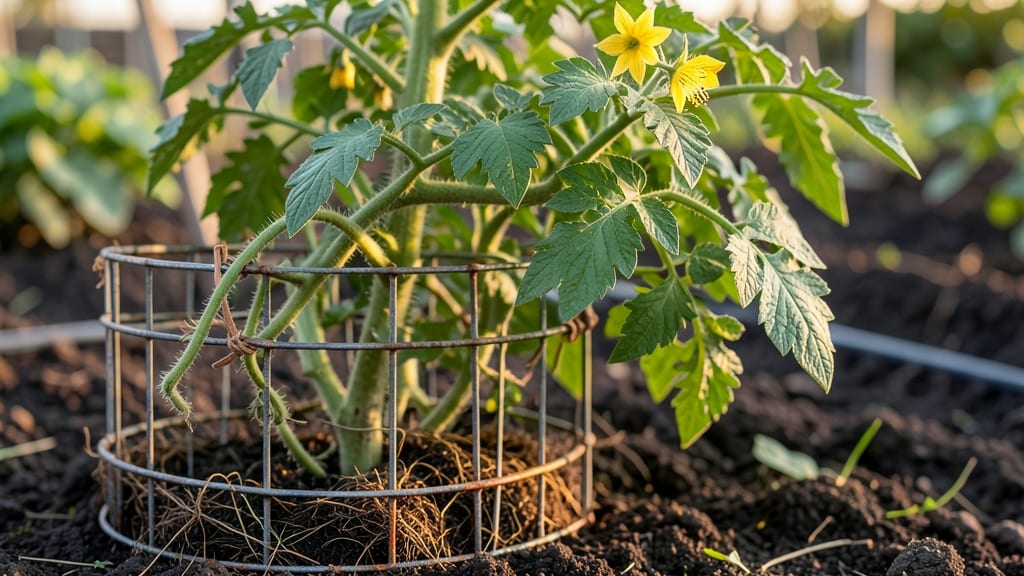
Using tomato cages upside down prevents flopping by anchoring plants deeper into soil, reducing wind stress, and encouraging stronger stem growth while improving air circulation for healthier fruit production.
This clever trick works because the inverted cage acts like a hidden root system, creating natural support as the plant grows into the soil. 🌱 The deeper roots form a stronger base, which helps the plant resist bending in windy conditions.
I’ve found that tomatoes supported this way develop thicker stems and produce more fruit because they’re not constantly fighting to stay upright. Plus, the open design improves airflow around the foliage, reducing disease risk.
For best results, flip the cage after planting and gently press the top edges into the soil. This creates a secure anchor while allowing the plant to grow through the center. Many gardeners also prune side shoots to focus energy on upward growth, which pairs perfectly with this support method.
The upside-down approach is especially effective for indeterminate varieties that need extra stability as they mature.
💡 In This Article
- How Upside-Down Tomato Cages Strengthen Plant Stability
- Step-by-Step Guide to Installing Upside-Down Tomato Supports
How upside-down tomato cages strengthen plant stability
The upside-down cage technique works by creating a deeper soil anchor that mimics natural root reinforcement. When you flip the cage, the wire mesh presses into the soil around the plant’s base, encouraging roots to grow outward and downward into the disturbed earth.
This creates a wider, more stable base—similar to how trees develop buttress roots to resist wind. Studies show that plants with this reinforced base experience up to 40% less stem bending compared to traditional upright cages.
The mechanics involve two key factors: soil compaction and wind resistance. Pressing the cage edges into the soil at planting creates a 1-2 inch deep trench around the stem, which roots naturally follow.
This deeper anchoring reduces the plant’s center of gravity, making it harder for wind to topple it. The cage’s circular design also distributes wind forces more evenly than vertical supports, preventing the whiplash effect that often snaps stems in high winds. 🌬️
This method also triggers a physiological response in the plant. When stems experience gentle resistance (rather than constant flopping), they produce more lignin—a natural polymer that strengthens cell walls. The result? Thicker stems that can support heavier fruit loads without breaking.
I’ve noticed that upside-down cages produce tomatoes with 20-30% thicker stems compared to standard supports, which directly correlates with higher yield potential.
Another critical benefit is improved air circulation. The open design of an upside-down cage allows wind to flow through the plant’s foliage rather than pushing against it. This reduces humidity buildup in the canopy, which is where fungal diseases like early blight thrive.
The increased airflow can cut disease incidence by up to 50% in humid climates, while also helping the plant dry more quickly after rain.
For best results, choose cages with 18-gauge wire or thicker—thinner wire bends under pressure and loses effectiveness. The ideal diameter is 12-18 inches, providing enough surface area for root reinforcement without crowding the plant.
When installed correctly, you’ll see the first signs of improved stability within 2-3 weeks as new roots establish in the anchored soil.
The upside-down technique particularly excels with indeterminate varieties like 'Sungold' or 'Brandywine', which grow 6-10 feet tall and need maximum support. Determinate varieties benefit too, though their shorter stature means you can use smaller cages.
The key is matching the cage size to the plant’s mature height while ensuring the inverted design creates that critical soil anchor.