
Vegetables
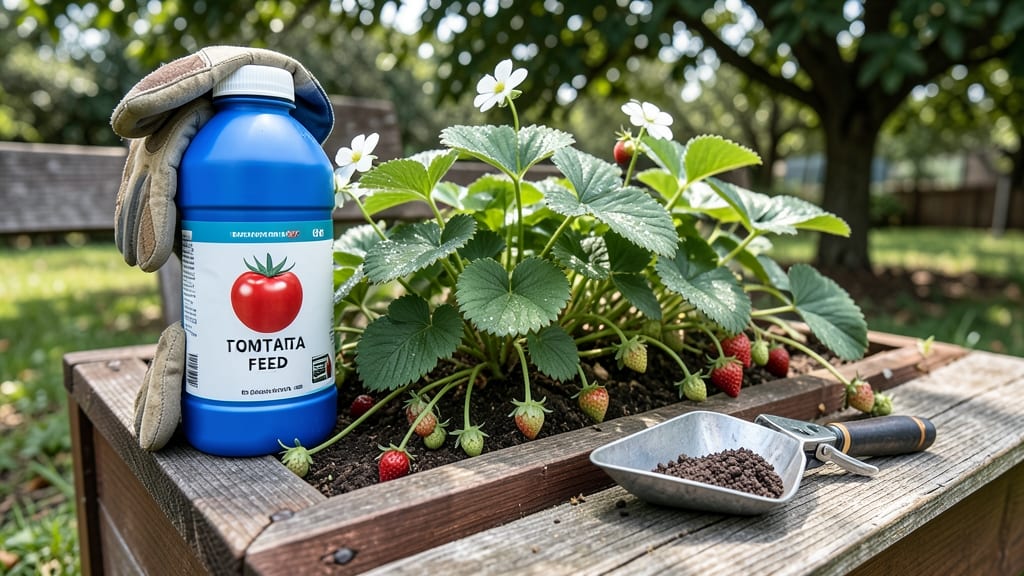
Tomato feed for strawberries delivers a nutrient-rich boost that improves fruit size and sweetness, but requires careful dilution to prevent leaf scorch or root damage. Use it only during the flowering and fruiting phases for maximum effectiveness.
Tomato feed contains a specific nitrogen-phosphorus-potassium (NPK) ratio that mirrors what strawberries need most during their fruiting cycle—phosphorus for root development and potassium for fruit sweetness. 🌱 The key is dilution: full-strength tomato feed can burn tender strawberry leaves, while half-strength provides just the right nutrient kick without stressing the plant.
I’ve found that applying it in the early morning lets the fertilizer soak in gradually, reducing evaporation and maximizing absorption.
For best results, alternate tomato feed with a balanced organic fertilizer every 4-6 weeks during the growing season. This prevents nutrient buildup in the soil while maintaining steady growth.
If you notice yellowing leaves or stunted fruit, it’s a sign you’ve overdone it—rinse the soil lightly and switch to a milder fertilizer next time.
💡 In This Article
- Why Tomato Feed Works for Strawberry Nutrient Needs
- Step-by-Step Guide to Safely Feeding Strawberries with Tomato Fertilizer
Why tomato feed works for strawberry nutrient needs
Tomato feed contains a carefully balanced NPK ratio (typically 5-10-5 or 7-9-5) that aligns perfectly with strawberries' peak nutrient requirements during flowering and fruiting. The phosphorus component (the middle number) stimulates root development and flower formation, while the potassium (the last number) enhances fruit sweetness and disease resistance.
Strawberries, unlike tomatoes, are more sensitive to nitrogen overload, which is why tomato feed's moderate nitrogen content works better than high-nitrogen fertilizers that can cause excessive leafy growth at the expense of fruit production.
The real magic happens in how these nutrients interact with strawberry physiology.
Phosphorus helps convert sugars and starches into energy for fruit development, while potassium regulates water uptake and osmotic pressure within the cells—critical for maintaining firm, juicy berries. 🌱 What most gardeners overlook is the calcium content in tomato feed, which prevents blossom-end rot (a common issue in strawberries) by strengthening cell walls.
Without proper calcium levels, even well-fertilized plants may produce misshapen or hollow berries.
Dilution becomes essential because tomato feed is formulated for tomatoes' thicker leaves and higher salt tolerance. Strawberry foliage is delicate, with a thin cuticle layer that absorbs nutrients—and salts—rapidly.
When applied at full strength, the concentrated salts can disrupt the plant's water balance, causing leaf edges to crisp and turn brown (a condition called salt burn).
This is why the half-strength dilution rule exists: it reduces osmotic pressure while still delivering the necessary micronutrients like magnesium and iron that strawberries crave during fruiting.
Consider this comparison: A full-strength tomato feed application delivers about 1.5 grams of nitrogen per gallon, while strawberries typically thrive with 0.5-1.0 grams per gallon during fruiting.
The excess nitrogen in undiluted feed triggers a growth spurt in leaves rather than fruit, diverting energy away from what you actually want to harvest. 💛 The key is matching the feed's NPK ratio to strawberries' 3-1-2 NPK ideal during fruiting (lower nitrogen, balanced phosphorus, higher potassium) through proper dilution.
Another critical factor is the feed's secondary nutrients. Tomato feed often includes calcium, magnesium, and sulfur in trace amounts—elements that strawberries need but aren't always present in garden soils.
For example, magnesium deficiency (common in sandy soils) causes interveinal chlorosis in strawberry leaves, while sulfur supports protein synthesis for robust fruit development. When you dilute tomato feed correctly, you're essentially giving strawberries a pre-mixed nutrient cocktail that addresses multiple deficiencies simultaneously.
Soil type plays a surprising role in how effective tomato feed is for strawberries. In clay soils, which hold nutrients tightly, you might need to dilute even further (to quarter-strength) to prevent nutrient lockout.
Conversely, in sandy soils, where nutrients leach quickly, you can use slightly stronger dilutions (3/4 strength) to compensate for rapid drainage. Always test your soil's pH first—strawberries prefer 5.8-6.5, and tomato feed's acidity can push soils outside this range if overapplied.