
Vegetables
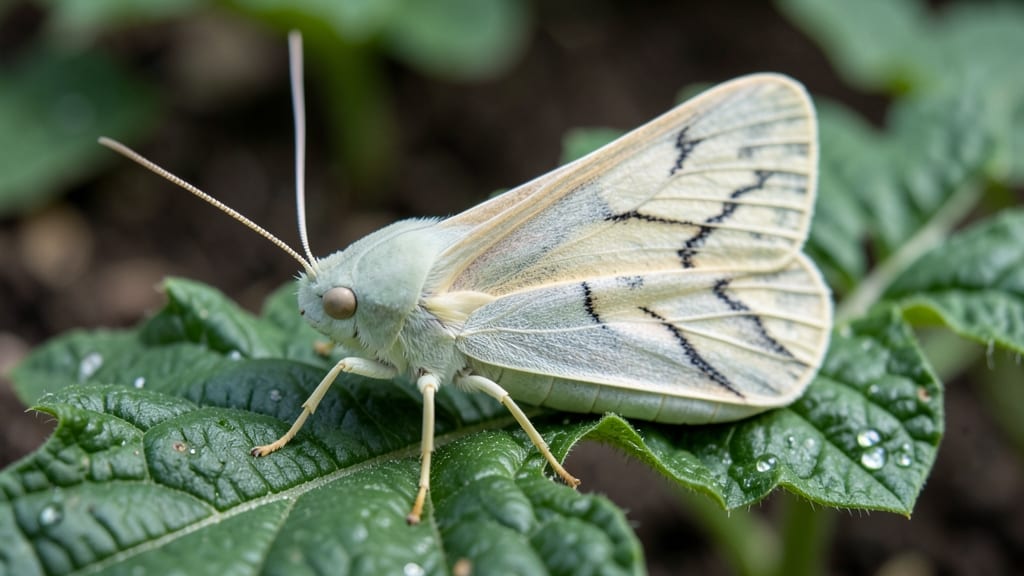
The tomato hornworm moth's size varies dramatically by life stage: its adult form spans 3 to 4 inches in wingspan, while the caterpillar stage can grow up to 4 inches long, complete with a distinctive horn-like tail spike.
The tomato hornworm moth's size differences between its caterpillar and adult stages make it one of the most visually striking garden pests. 🌱 During its larval phase, these caterpillars can devour entire tomato plants in days, growing rapidly from just 1 inch to their full 4-inch length.
The adult moths, while smaller, are equally distinctive with their greenish-gray wings and white striped abdomens, though they're less destructive. Understanding these size variations helps gardeners target the right control methods at each life stage—whether it's handpicking caterpillars or using pheromone traps for adult moths.
What's fascinating is how quickly these insects transform. The caterpillar stage is the most destructive, but it only lasts about 5-6 weeks before pupating into a chrysalis. Once emerged, adult moths live just 1-2 weeks, focusing solely on reproduction rather than feeding.
This short adult lifespan explains why gardeners often see sudden infestations during peak growing seasons when tomato plants are most vulnerable.
💡 In This Article
- How Tomato Hornworm Moth Size Varies by Life Stage
- Identifying Tomato Hornworm Moths in Your Garden
How tomato hornworm moth size varies by life stage
The tomato hornworm moth undergoes one of nature's most dramatic transformations, with size shifts that reflect each life stage's purpose. The journey begins with eggs—tiny, pale green ovals just 0.06 inches long—that hatch into larvae measuring a mere 0.25 inches.
Within days, these caterpillars enter their first growth spurt, molting their exoskeletons to accommodate rapid expansion. 🌱 By the time they reach the final larval stage, they've ballooned to 3-4 inches, their bodies segmented with V-shaped white stripes that serve as camouflage against tomato leaves.
What's particularly striking is the caterpillar's tail spike—a hollow, black-tipped "horn" that can grow up to 1 inch long. This isn't just for show; it's a defensive weapon that secretes a foul-tasting fluid when threatened, deterring predators like birds.
The adult moth, by contrast, emerges with a 3-4 inch wingspan but a completely different body plan: its greenish-gray wings are adorned with white diagonal stripes along the abdomen, mimicking the bark of trees where it rests during the day.
The moth's size is optimized for flight rather than feeding, as adults don't consume anything—their sole purpose is reproduction.
The transformation doesn't happen overnight. The caterpillar stage lasts about 5-6 weeks, during which it can consume up to 20 times its body weight in foliage daily.
This rapid growth is fueled by a diet rich in nitrogen from tomato leaves, which the caterpillar stores as fat for its upcoming pupal stage. Once full-grown, it forms a 2-inch-long green chrysalis, where metamorphosis occurs over 2 weeks.
The adult emerges lighter and more streamlined, with wings designed for short, swift flights between plants rather than the caterpillar's ground-level foraging.
Here's where gardeners often miss the connection: the adult moth's size might seem less threatening, but its role in the life cycle is critical. A single female can lay up to 2,000 eggs during her 1-2 week lifespan, ensuring the next generation of caterpillars will return.
The moth's wingspan allows it to cover up to 1 mile per night, dispersing eggs across multiple garden plots. This mobility explains why infestations can appear suddenly and spread rapidly during warm summer nights when moths are most active.
Visual differences between stages extend beyond size. The caterpillar's body is cylindrical and segmented, while the adult's is more elongated with delicate, veined wings. The moth's antennae are feathery and twice as long as its body, perfect for detecting pheromones from potential mates.
These anatomical adaptations highlight how each stage evolves for survival: the caterpillar for consumption, the pupa for transformation, and the adult for reproduction.
Understanding these distinctions helps gardeners implement targeted control measures at the right time—like removing caterpillars before they pupate or using light traps to catch adult moths before they lay eggs.
The most surprising size variation occurs during the pupal stage. While the chrysalis itself measures just 2 inches, the transformation inside is monumental. The caterpillar's entire body is broken down and rebuilt into the adult form, with wings developing from tiny buds.
This process requires precise hormonal regulation, where the insect's body temperature can rise 10-15°F above ambient temperatures to accelerate development. The result is an adult that, while smaller in wingspan than its caterpillar predecessor, plays a disproportionately large role in continuing the cycle.