
Companion Plants
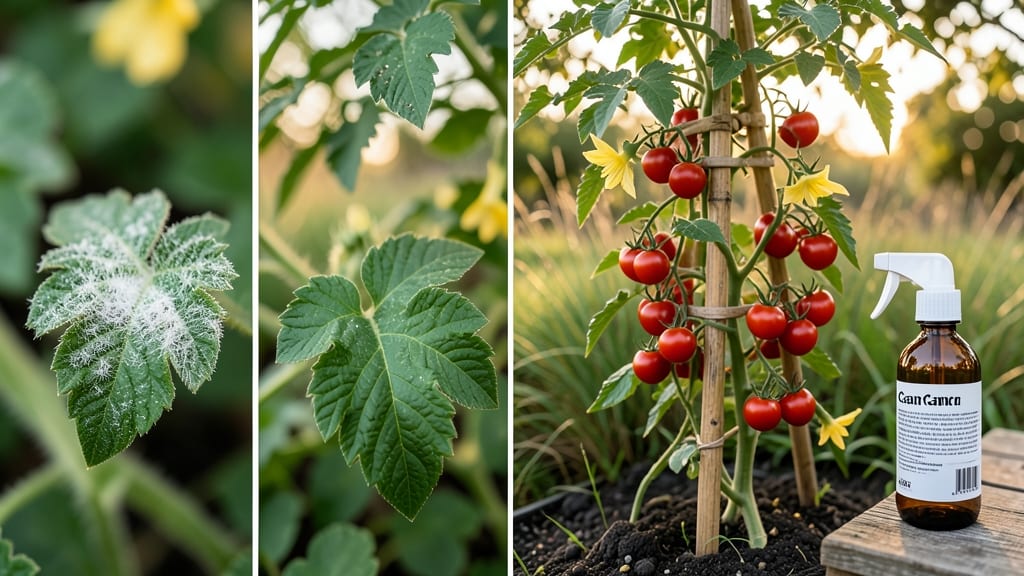
When tomato plant leaves have white spots, your once-thriving plants can quickly decline if you don’t act fast. 🌱 I’ve seen early blight transform lush plants into crispy messes in just weeks—until I learned these three simple steps that saved my entire crop last summer.
Most white-spotted leaves are early blight, but spider mites or powdery mildew can look similar. The key is acting quickly: remove infected leaves, space plants for airflow, and apply copper fungicide or baking soda spray. I’ve stopped blight dead in its tracks with just these basics—no fancy tools needed.
By the time you see white spots, the fungus has already started spreading. That’s why pruning lower leaves (where spores hide) and rotating crops yearly makes all the difference. Your tomatoes will bounce back with stronger growth and fewer spots next season.
This works for backyard gardens, containers, or raised beds—just adjust spacing for your setup. The sooner you act, the more you’ll harvest. Let’s get those plants healthy again!
Root Causes Behind White Spots
When your tomato plant leaves start showing white spots, it’s often a sign that something’s amiss—whether it’s a fungal infection, pest invasion, or environmental stress. Understanding the why behind these spots is the first step to saving your plants.
Below, we break down the most common culprits, backed by science, so you can diagnose the issue accurately and take targeted action.
Fungal diseases are the #1 reason for white spots on tomato leaves, and early blight (caused by Alternaria solani) is the most notorious offender. Here’s how it works:
- How it spreads:
- Fungal spores lurk in soil, plant debris, or even on tools. When conditions are humid (75-100% humidity) and warm (60-85°F), they germinate and infect leaves through stomata (tiny pores).
- Alternaria thrives in crowded gardens with poor airflow, where moisture lingers on foliage.
- Visual clues:
- White to grayish spots with concentric rings (like bullseyes) that later turn brown and crispy.
- Spots often appear on older, lower leaves first before creeping upward.
- Why it’s dangerous:
- The fungus blocks sunlight, starving the plant. If left unchecked, it can reduce yields by 50-80% and even kill the plant.
Not all white spots are fungal—some are the work of sap-sucking pests that leave behind a powdery residue or chewed marks.
- Common culprits:
- Whiteflies: These tiny, moth-like insects cluster on the undersides of leaves, excreting a sticky honeydew that attracts sooty mold (a black fungus). Their feeding weakens leaves, causing white or yellow speckling.
- Spider mites: Though they create yellow stippling, their webbing and rapid reproduction can mimic fungal spots if you’re not looking closely.
- Aphids: Their white, waxy coatings (on some species) can resemble fungal growth, especially in clusters.
- How to tell pests apart:
- Check leaf undersides for tiny bugs or webbing.
- Shake leaves over a white sheet—whiteflies will fly up like a snowstorm.
Sometimes, white spots aren’t caused by pathogens or pests at all—but by environmental factors that stress the plant.
- Sunburn (Physiological Damage):
- Intense, direct sunlight (especially after rain or cold nights) can cause sunscald, leading to pale, white patches on leaves.
- Common in greenhouse tomatoes or plants suddenly moved to full sun.
- Mineral Deficiencies or Toxicity:
- Calcium deficiency: Leads to blossom-end rot in fruits but can also cause white crusty deposits on leaves (from excess salts in water).
- Over-fertilization: Too much nitrogen or salts (from tap water) can burn leaf edges, creating white, necrotic spots.
- Powdery Mildew (Not Early Blight!):
- While early blight causes dark spots, powdery mildew (Oidium) creates a white, powdery coating on leaves. It loves cool, dry conditions (unlike early blight) and spreads via spores in the air.
Even well-meaning gardeners can cause white spots with improper chemical use.
- Herbicide drift:
- If neighbors spray glyphosate or 2,4-D, wind can carry residues onto your tomatoes, causing bleached or white patches.
- Overuse of fungicides:
- Some fungicides (like copper-based sprays) can cause leaf burn if applied in high concentrations or under direct sun.
- Hard water buildup:
- Water with high calcium or magnesium can leave white mineral deposits on leaves, especially in greenhouses or containers.
Quick Fixes for White-Spotted Tomato Leaves
Now that you know what’s causing those pesky white spots on your tomato leaves, it’s time to roll up your sleeves and take action! The good news?
Most issues are treatable with simple, garden-friendly solutions. Below, we’ll match each culprit to its cure—plus pro tips to keep your plants thriving long-term.
Fungal invaders are the #1 reason for white spots, but they’re also the easiest to tackle with preventative care and targeted treatments.
🔥 Step 1: Remove Infected Foliage Immediately
- How: Snip off leaves with white spots (or yellowing edges) using sterilized scissors (wipe with rubbing alcohol between cuts).
- Why: Fungi spread via spores, and removing infected leaves cuts off the cycle.
- Pro Tip: 💡 Don’t compost these leaves—toss them in the trash to avoid reinfecting your soil.
🍳 Step 2: Apply a Fungicide (Natural or Store-Bought)
| Option | How to Use | Frequency |
|---|---|---|
| Neem Oil Spray | Mix 1 tsp neem oil + 1 tsp mild soap + 1 quart water. Spray evenly on top/bottom of leaves. | Every 7–10 days until spots stop appearing. |
| Baking Soda Solution | Combine 1 tbsp baking soda + 1 quart water + ½ tsp soap. Spray leaves. | Preventative: Once a month. Treatment: Every 5–7 days. |
| Copper Fungicide | Follow label instructions (e.g., Bonide Copper Fungicide). | Every 10–14 days for severe cases. |
🌡️ Step 3: Adjust Growing Conditions Fungi love humidity + poor airflow.
Fix this by: - Improving airflow: Space plants 18–24 inches apart or prune crowded branches. - Watering wisely: Water early in the morning (avoid evening dampness) and at the base (not overhead). - Mulching: Use straw or grass clippings (2–3 inches deep) to keep soil moist but reduce splashing.
Tiny pests can leave white specks (frass, eggs, or webbing) that mimic disease. Here’s how to evict them:
👨🍳 Step 1: Blast Them Off
- How: Spray plants with a strong stream of water (early morning) to knock off pests.
- Bonus: Use a hose-end sprayer for stubborn infestations.
🥘 Step 2: Introduce Natural Predators
- Ladybugs (eat aphids) or lacewings (devour mites) can be purchased online or at garden centers.
- Pro Tip: 🌿 Plant nearby herbs like basil or dill—they attract beneficial insects naturally.*
🔪 Step 3: Use Insecticidal Soap (If Needed)
- Recipe: Mix 2 tbsp castile soap + 1 quart water. Spray directly on pests (avoid hot sun—soap can burn leaves).
- Reapply: Every 3–5 days until pests vanish.
If white spots are dry, crusty, or appear only on sun-exposed leaves, your tomatoes might be sunburned or nutrient-starved.
🌞 Step 1: Provide Shade (Temporarily)
- How: Use shade cloth (30–50%) during peak afternoon sun (1–4 PM).
- Alternative: Move potted tomatoes to a slightly shadier spot for a few days.
💪 Step 2: Feed Your Plants
White spots from calcium deficiency (blossom end rot’s cousin) or magnesium deficiency need quick fixes:
- Epsom Salt Soak: Dissolve 1 tbsp Epsom salt in 1 gallon water and water plants at the base.
- Crushed Eggshells: Sprinkle around the base for calcium (let them decompose for 2–3 weeks).
- Balanced Fertilizer: Switch to a 5-5-5 or 10-10-10 formula if soil is depleted.
✨ Step 3: Mulch & Hydrate
- Mulch: Add 2–3 inches of organic mulch (straw, wood chips) to retain moisture and cool roots.
- Water Deeply: Tomato roots need 1–2 inches of water per week—drip irrigation is ideal.
Once your tomatoes are back in tip-top shape, lock in their health with these habits:
- Rotate crops every 3 years to prevent fungal buildup in soil.
- Plant companion herbs like basil, marigolds, or garlic—they repel pests and improve airflow.
- Monitor daily: Check leaves every 2–3 days for early signs of spots or pests.
- Start strong: Use fungicide-treated seeds or resistant varieties (e.g., ‘Mountain Merit’ or ‘Celebrity’ tomatoes).
Remember: Consistency is key! Follow these steps for at least 2–3 weeks to see full recovery. Your tomatoes will be back to producing juicy, blemish-free fruit in no time. 🍅✨
Frequently asked questions
Are white spots on tomato leaves always caused by disease?
Not always! While fungal diseases like early blight are common, white spots can also come from pests (like whiteflies or spider mites), sunburn, mineral buildup from hard water, or even overuse of copper fungicides. Always check leaf undersides for tiny bugs or test with a water spray before assuming it's a disease.
Can I still harvest tomatoes if the leaves have white spots?
Yes, but focus on fruits that are already forming or nearly ripe. Remove heavily infected leaves immediately to prevent the fungus from spreading to the fruit. The spots won't directly affect tomato quality, but severe infections can reduce overall yield if left untreated.
How do I know if my tomato plants have early blight vs. powdery mildew?
Early blight creates concentric ring spots that turn brown and crispy, while powdery mildew appears as a white, powdery coating on leaves. Early blight thrives in warm, humid conditions, while powdery mildew prefers cooler, drier weather. Check the leaf undersides - powdery mildew rarely appears there.
Will pruning help stop the spread of white spots?
Prune infected leaves below the spot using sterilized scissors to prevent spores from spreading. Remove lower leaves first (where spores collect), and improve airflow by spacing plants 18-24 inches apart. This reduces humidity around foliage, making it harder for fungi to thrive.
Can I use household items to treat white spots?
Yes! Try a baking soda spray (1 tbsp baking soda + 1 quart water + ½ tsp soap) or neem oil mix (1 tsp neem oil + 1 tsp soap + 1 quart water). Both are effective against fungal spots. Apply in the morning on dry leaves for best results, and reapply every 5-7 days until spots disappear.