
Planting
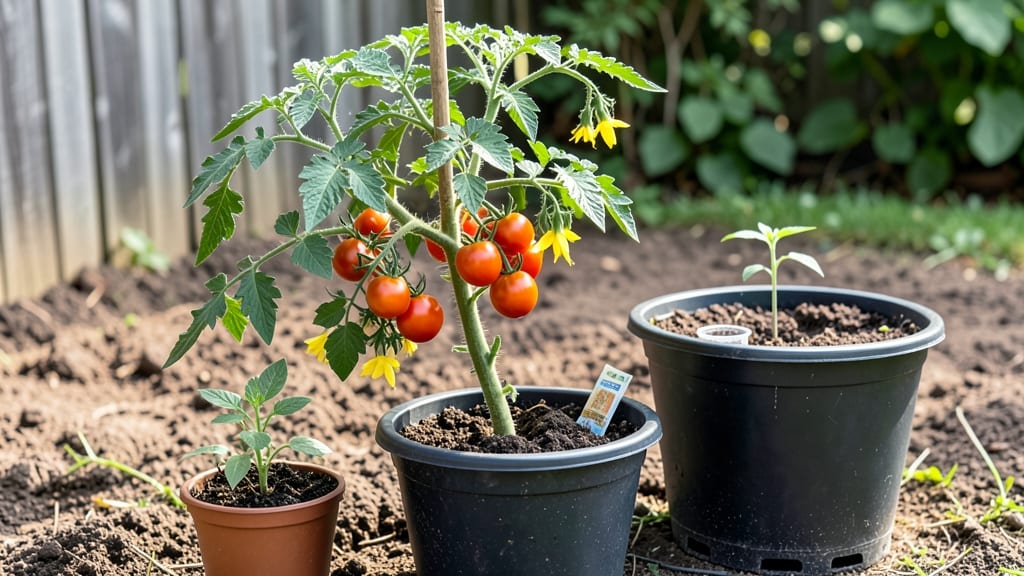
A 5-gallon tomato plant pot size is the absolute minimum for growing tomatoes that won’t struggle or collapse by midsummer. 🌱 I’ve watched tomato plants in undersized containers wilt by July, their roots circling desperately in search of space—until I learned the hard truth: bigger pots mean bigger harvests, not just bigger vines.
Determinate tomatoes (the bush types) need at least 5 gallons, but indeterminate varieties—those towering vines that keep growing—require 10-15 gallons to support their sprawling roots and heavy fruit loads.
The right pot material matters too: plastic retains moisture longer, terracotta breathes better in heat, and fabric pots let roots grow outward naturally.
You’ll notice the difference within weeks: plants in proper-sized pots send out stronger stems, set more flowers, and produce fruit that’s actually ripe—not stunted and green. The key is matching pot size to the plant’s growth habit and giving it room to thrive without crowding.
Common mistakes? Using pots that are too shallow (roots need depth) or skipping drainage holes (root rot is the silent killer). And if you’re starting with seedlings, plan to repot into larger containers by transplant time—don’t skimp on the upgrade.
📚 In This Guide
- What you need
- Instructions
- Tips and common mistakes
- Wrapping up and next steps
What you need
- ● Container: A 5-gallon or larger pot (or fabric grow bag) with drainage holes. Minimum size: 12" deep × 12" wide (bigger is better for indeterminate varieties!).
- ● Potting mix: Lightweight, well-draining blend (avoid garden soil). Look for moisture-retentive but aerated mixes labeled for vegetables or tomatoes. Quantity: 1–2 bags (depending on pot size).
- ● Tomato plant: 1 healthy seedling (choose determinate or indeterminate based on your space and goals).
- ● Support: A cage, trellis, or stakes (for indeterminate varieties; 5–6 ft tall).
- ● Trowel or small shovel (for transplanting).
- ● Gloves (to protect your hands from thorns and soil).
- ○ Mulch (straw or shredded leaves to retain moisture). [Optional]
- ● Fertilizer: Balanced liquid fertilizer (e.g., 10-10-10) [Start with half-strength].
- ○ Slow-release granules (like Osmocote) [Optional].
- ● Watering can or hose with gentle spray (avoid blasting roots).
- ○ pH test kit (to check soil acidity; tomatoes prefer 6.0–6.8). [Optional but helpful]
- ● A sunny spot with 6–8+ hours of direct sunlight daily.
- ● Access to clean water (tomatoes need consistent moisture!).
- ● Patience! Tomatoes take time to grow—plan for a 3–6 month harvest window.
Step-by-Step guide to choosing the right tomato plant pot size
Here's how to select containers that support strong roots and heavy fruit production.
🪴 Step 1: Understand the Minimum Container Requirements
Tomatoes need at least a 5-gallon pot for each plant—this ensures enough root space to support both vine growth and fruit production. Smaller containers restrict roots, leading to stunted plants and poor yields. I always double-check the pot's capacity by filling it with water and measuring the volume. A 7-10 gallon pot works better for indeterminate varieties that grow continuously.
Look for containers with drainage holes—without them, roots suffocate in soggy soil. If you find a pot without holes, drill them yourself. I use a 1/4-inch bit to create 2-3 holes near the bottom. This prevents waterlogging while allowing excess moisture to escape.
☀️ Step 2: Match Pot Size to Tomato Variety
Determinate tomatoes (bush types) like 'Roma' or 'Celebrity' thrive in 5-7 gallon pots, while indeterminate varieties like 'Sungold' or 'Brandywine' need 10+ gallons to support their sprawling vines. I always check the plant tag for growth habit—indeterminate types keep producing flowers and fruit until frost, so they demand more resources.
For 4 plants, you'll need at least 20 gallons total (5 gallons per plant). If space is tight, opt for smaller determinate varieties—they produce all their fruit in one season and don't require as much room. Just be prepared for smaller harvests compared to larger pots.
🌱 Step 3: Prioritize Depth Over Width
Tomato roots grow deep, not wide, so depth matters more than diameter. A 12-inch deep pot gives roots room to establish before hitting the bottom. Shallow pots force roots to circle, which weakens the plant and reduces fruit quality. I test depth by holding the pot against a vertical surface—if it's less than 10 inches, it's too shallow.
Wide pots (like 12-inch diameter) work better for bush varieties, while tall, narrow pots (10+ inches deep) suit indeterminate types. The key is root zone volume—a 5-gallon pot that's 12 inches deep is better than one that's 8 inches deep but 16 inches wide.
✂️ Step 4: Plan for Support and Stability
Larger pots weigh more when saturated, so place them on stable surfaces or use pot feet to prevent tipping. I always check the pot's weight by filling it with water—if it's over 20 pounds, consider a dolly for moving it. For tall indeterminate varieties, install cages or stakes at planting time to avoid disturbing roots later.
If growing in containers, prune suckers regularly to control vine size—this reduces the plant's need for excessive root space. I remove suckers (the small shoots in the leaf axils) when they're 2-3 inches long, using clean pruners to prevent disease. This keeps the plant manageable while maximizing fruit production.
💧 Step 5: Adjust Watering for Container Size
Larger pots retain moisture longer, but you'll still need to water deeply 2-3 times per week during dry spells. I check moisture by sticking my finger 2 inches into the soil—if it's dry, it's time to water. Smaller pots dry out faster, so monitor them daily in hot weather. Overwatering is just as harmful as underwatering—roots need oxygen, not soggy conditions.
Add 1-2 inches of mulch (like straw or shredded leaves) to the soil surface to slow evaporation and keep roots cool. This is especially important in 5-gallon pots, where soil dries out quickly. Mulch also prevents soil-borne diseases by reducing splash from overhead watering.
Tips & tricks for thriving tomato vines in containers
These insights will help you maximize your tomato harvest by optimizing container selection and care.
Root Zone Optimization: When evaluating pot depth, focus on the lower two-thirds of the container where roots thrive. The 12-inch depth mentioned in Step 3 creates an ideal root zone that prevents roots from circling at the bottom. For 5-gallon pots, I recommend using a deep, narrow container rather than a wide, shallow one—this mimics the natural vertical growth pattern of tomato roots and prevents stunted growth. The root zone should be at least 80% of the pot's total volume to support healthy vine development.
Drainage System Upgrade: While the instructions mention drilling 2-3 holes with a 1/4-inch bit, I've found adding a gravel layer at the bottom (about 1 inch deep) creates a secondary drainage system that prevents clogging. This is especially helpful in 5-gallon pots where water can pool quickly. Place a piece of landscape fabric over the gravel before adding soil to keep it from mixing with your growing medium. This simple upgrade can double your pot's effective drainage capacity.
Soil Volume Strategy: The 5-gallon minimum mentioned in Step 1 assumes standard potting mix, but you can increase effective root space by using a lightweight expanded clay mix (like LECA) in the bottom third of the pot. This creates air pockets while maintaining drainage. I've seen 5-gallon pots produce yields comparable to 7-gallon pots when using this technique. Just make sure to water from the top to saturate the clay mix properly.
Pro Tips for Tomato Plant Pot Size
- These insights will help you maximize your tomato harvest by optimizing container selection and care.
- Root Zone Optimization: When evaluating pot depth, focus on the lower two-thirds of the container where roots thrive.
- This is especially helpful in 5-gallon pots where water can pool quickly.
Frequently asked questions
Got questions about the perfect pot size for your tomato plants? You’re not alone! Here are some of the most common concerns—plus quick, practical answers to help you grow like a pro.
What’s the smallest pot I can use for a tomato plant?
A 5-gallon container is the absolute minimum for determinate (bush) tomatoes, while indeterminate (vining) varieties need at least 7 gallons to thrive. Smaller pots risk stunted growth, poor fruit production, and root-bound stress. If you’re short on space, opt for dwarf varieties or use fabric grow bags for better drainage.
Can I reuse last year’s tomato pot?
Yes, but only if you sterilize it first! Clean out old soil, scrub the pot with a 10% bleach solution (or soapy water), and rinse thoroughly. This prevents soil-borne diseases like blight or fusarium wilt from lingering. Pro tip: Add fresh potting mix with compost to refresh nutrients for this season’s plants.
How often should I repot a tomato plant?
Tomatoes hate being repotted—they prefer root space over frequent moves. Only repot if roots are circling the bottom or the plant is top-heavy (e.g., after a windstorm). If you must upgrade, do it early in the season (before flowering) to minimize stress. For most gardeners, one pot per season is ideal!
What if my pot doesn’t have drainage holes?
No holes? No problem—but act fast! Drill 2–4 drainage holes in the bottom (use a ½-inch drill bit) to prevent root rot. If drilling isn’t an option, place a layer of gravel or broken pottery at the bottom, then add a coffee filter to keep it in place. Just remember: Overwatering is the #1 killer of potted tomatoes!
When is the best time to plant tomatoes in pots?
Wait until after the last frost and when nighttime temps stay above 50°F (10°C). For most U.S. zones, this means late spring to early summer. Harden off seedlings (acclimate them to outdoor conditions) for 7–10 days before planting. Bonus: Use black or dark-colored pots to warm the soil faster in cooler climates!
My tomato plant looks sad—could the pot be too big?
Yes! If the pot is too large (e.g., 10+ gallons for a small variety), excess soil stays damp, inviting fungal diseases or pests. Signs of over-potting: Yellow leaves, slow growth, or roots growing in circles at the surface. Downsize to a 5–7 gallon pot and use a well-draining mix. Less is more!
Wrapping up and next steps
Choosing the right tomato plant pot size is the secret to a bountiful harvest—and you’ve got the perfect starting point! Remember, a 5-gallon minimum gives your vines the room to stretch, breathe, and thrive, while proper drainage and quality soil set the stage for success.
With the right container, you’re not just growing tomatoes—you’re cultivating confidence in your green thumb.
Now that you’re armed with knowledge, it’s time to roll up your sleeves and plant! Grab your supplies, follow your plan, and watch those seedlings transform into robust, fruit-bearing vines. Happy gardening—your future salads (and bragging rights) are waiting! 🌱🍅