
Planting
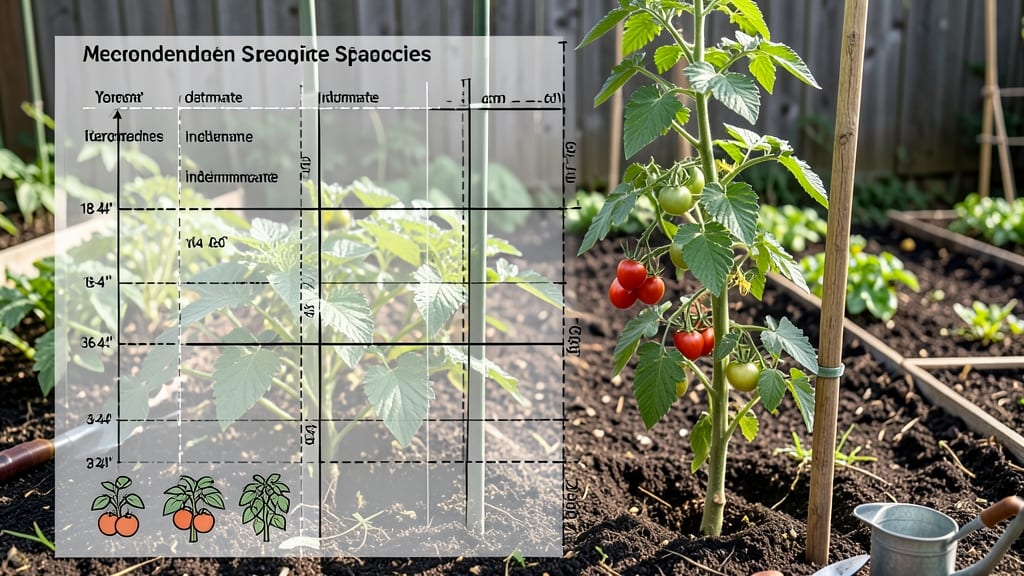
A tomato plant spacing chart is your secret weapon for a bountiful harvest—because cramming those 🍅 too close won’t just stunt growth, it turns your garden into a disease breeding ground.
Picture this: You’ve spent weeks nurturing seedlings, only to watch them fight for sunlight and air, leaving you with blight-ridden leaves and tiny, underwhelming fruits. The right spacing isn’t just about fitting more plants in—it’s about giving each tomato room to thrive, from determinate bushes to sprawling indeterminate vines.
Whether you’re working with in-ground beds, containers, or vertical trellises, this guide breaks down the exact distances for your variety, climate, and layout. We’ll cover why 18–36 inches makes all the difference and how to tweak spacing for high-density gardens or small spaces.
By the end, you’ll know exactly how to arrange your plants for maximum airflow, sunlight, and yield—no guesswork, just big, healthy tomatoes all season long.


Tomato plant spacing chart by variety type (determinate vs indeterminate)
Getting the tomato plant spacing right is the difference between a bountiful harvest and a struggling garden. Determinate and indeterminate varieties have completely different needs—crowd one type, and you’ll invite disease; space the other too widely, and you’ll waste precious garden real estate.
Let’s break down the exact distances you need for each, plus why they matter so much for your yield.
Determinate tomatoes—those bushy, compact varieties like Roma or Celebrity—produce all their fruit at once. They thrive when planted closely together (18-24 inches apart) because their growth habit is self-contained.
Indeterminate types, like Sungold or Brandywine, keep growing and producing all season, so they need wide spacing (24-36 inches) to support their vining habit and prevent shade competition.
Here’s the visual breakdown you’ve been waiting for—compare spacing needs, row distances, and even container requirements to plan your perfect tomato layout this season.
| Variety Type | Plant Spacing (inches) | Row Spacing (feet) | Container Size (gallons) | Yield Impact | Notes |
|---|---|---|---|---|---|
| Determinate (Bush) | 18-24" | 2-3 ft | 5-10 gal | High (all fruit at once) | Examples: Roma, Celebrity, Bush Early Girl |
| Determinate (Dwarf) | 12-18" | 1.5-2 ft | 3-5 gal | Moderate (compact growth) | Examples: Tiny Tim, Patio Princess |
| Indeterminate (Standard) | 24-36" | 3-4 ft | 15+ gal | Very High (continuous harvest) | Examples: Sungold, Brandywine, Cherokee Purple |
| Indeterminate (Semi-Dwarf) | 18-24" | 2.5-3 ft | 10-15 gal | High (balanced growth) | Examples: Bush Early Girl (indeterminate types), Patio |
| Cherry Tomatoes (Indeterminate) | 18-24" | 2-3 ft | 5-10 gal | Very High (prolific fruiting) | Examples: Sweet 100, Sun Gold, Super Sweet 100 |
*Spacing adjusts for container gardening or high-density layouts—see next section for details.
Why does spacing matter this much? Poor airflow between plants traps moisture, creating the perfect conditions for fungal diseases like early blight or powdery mildew. Indeterminate varieties, especially, need room to vine and sprawl—crowd them, and you’ll stunt their growth, reducing your harvest by up to 40%.
Conversely, determinate types packed too loosely won’t support each other, leading to floppy stems and missed fruit.
For container gardening, follow the chart but reduce spacing by 20-30%—containers limit root spread, so plants compete more aggressively. Use 5-gallon pots for dwarf varieties and 15+ gallons for indeterminate types. Add cage supports or trellises to maximize vertical space in small gardens.
Pro tip: If you’re growing multiple varieties, plant determinate types first (they mature faster) followed by indeterminate vines. This staggered approach ensures you get early harvests while the vining types keep producing all season.
Just be sure to leave 3 feet of clearance between rows to avoid shade issues.
One more critical factor: soil health. Overcrowded plants deplete nutrients faster, leading to blossom end rot or stunted growth. Amend your soil with compost before planting and side-dress with balanced fertilizer every 4-6 weeks to support high-yielding varieties like Sungold or Brandywine.
Now that you’ve got the spacing science down, your next challenge is climate adjustments. Hot, dry regions? Space plants even wider (up to 4 feet) to reduce competition for water. Cool, wet climates? Tighten spacing slightly (down to 18 inches
How to adjust spacing for different garden layouts and climates
Your tomato plants need custom spacing based on where you grow them—whether it's a small balcony container or a large in-ground bed. Climate also plays a huge role: hot, dry regions demand wider spacing for airflow, while cool, wet climates can handle slightly tighter arrangements.
Let’s break down how to adjust spacing for maximum yield and plant health.
For container gardening, spacing is all about the pot size. A 5-gallon container holds just 1 indeterminate tomato plant, while 7-10 gallon pots can fit 2-3 dwarf varieties.
Vertical growing systems like trellises or cages allow you to stack plants upward, saving space while still providing 18-24 inches of clearance between plants at maturity.
In high-density planting systems, like square-foot gardening, you can fit 4 tomato plants per square foot—but only if they’re dwarf or bush varieties. Use companion plants like basil or lettuce in the gaps to maximize space without sacrificing airflow.
Just avoid planting tomatoes too close to other nightshades like peppers or eggplants.
| Garden Layout | Variety Type | Spacing (inches) | Climate Adjustments |
|---|---|---|---|
| Container (5-gallon) | Indeterminate | 1 plant per container | Add trellis for vertical growth |
| Container (7-10 gallons) | Dwarf/Determinate | 2-3 plants per container | Space 12-18" apart |
| In-Ground Bed | Indeterminate | 24-36" | Wider in hot/dry climates |
| In-Ground Bed | Determinate | 18-24" | Tighter in cool/wet climates |
| Vertical Trellis | Indeterminate | 12-18" apart on trellis | Prune aggressively in humid areas |
In hot, dry climates, like the Southwest U.S., increase spacing by 20-30% to reduce competition for water. Use mulch to retain moisture and prune lower leaves to improve airflow.
In cool, wet climates, like the Pacific Northwest, you can space plants slightly closer (18-24 inches) since humidity isn’t as much of a concern—but still avoid overcrowding to prevent blight.
If you’re growing in shade or partial sun, reduce spacing by 10-15% since plants will grow slower and stay more compact. Pair tomatoes with fast-growing companions like radishes or spinach to fill gaps early in the season.
Always monitor plant health and adjust spacing mid-season if you notice yellowing leaves or stunted growth.
Pro tip: Use stake markers or a garden grid to visualize spacing before planting. This helps you avoid overcrowding mistakes and ensures every plant gets the airflow and sunlight it needs for a bountiful harvest. 🌱