
Planting
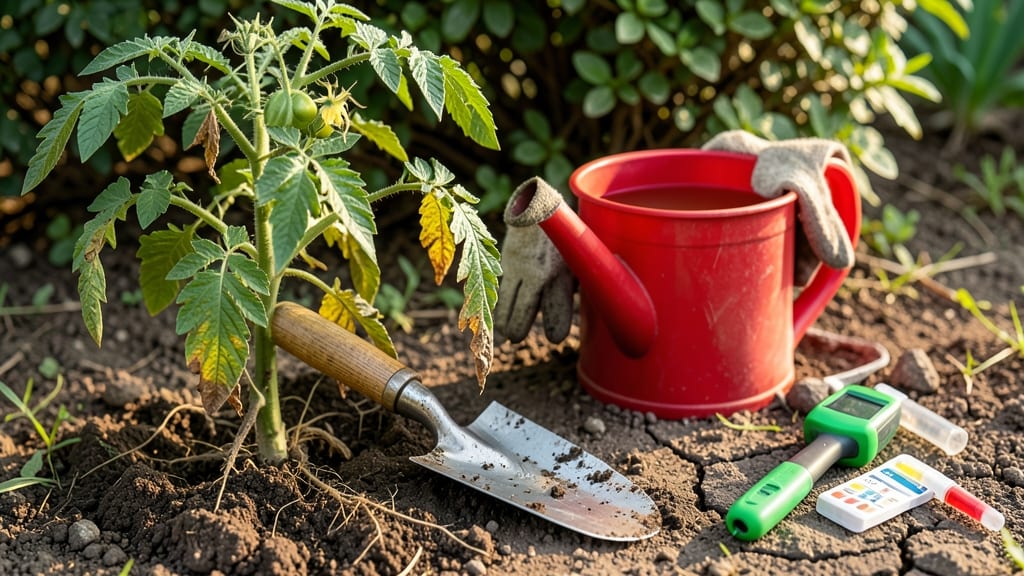
A wilted tomato plant after transplanting isn’t a death sentence—it’s a call to action. 🌱 I’ve nursed back more than a dozen plants from this exact situation, and the key is acting fast before the roots give up.
Most gardeners panic and overwater, but the real fix starts with checking the roots and soil conditions you can’t see. The problem usually boils down to two things: roots that dried out during transplant or soil that’s either too wet or too compacted.
I’ve seen plants recover in just 24 hours when you address the right issue—no fancy tools needed. Start by gently pulling back the soil to inspect the roots for dryness or rot, then adjust water and support to give them a fighting chance.
Once you’ve identified the issue, recovery becomes straightforward. A quick root soak in water, proper staking, and a shady spot for 3-5 days can turn a limp plant into a thriving one. The secret? Patience and the right care—no more guessing what went wrong.
This method works for seedlings, store-bought transplants, and even mature plants that got moved. Let’s get that tomato back on its feet before it’s too late.
Root Causes Of Transplant Shock
Transplanting tomato plants can be a delicate process, and even with the best intentions, your seedlings may end up wilted and struggling. Understanding the why behind this common issue is the first step to saving your plants.
Below, we break down the most frequent culprits—each with a clear explanation and actionable insights to prevent future problems.
When you move a tomato plant from its nursery pot or seedling tray to the garden, it experiences physical and environmental stress—a condition known as transplant shock.
This happens because: - Root disturbance: The delicate root system gets damaged during removal, even if you try to keep it intact.
Roots are responsible for water and nutrient uptake, and when they’re disrupted, the plant can’t absorb enough moisture to stay hydrated. - Osmotic imbalance: The sudden change in soil composition (e.g., switching from sterile potting mix to garden soil) can cause osmotic stress.
The plant’s roots struggle to adjust to the new environment, leading to water loss and wilting. - Temperature and humidity shifts: Moving from a controlled nursery environment to outdoor conditions—especially under hot sun or wind—can dehydrate the plant rapidly.
Transplant shock is often worse in hot, dry, or windy conditions because the plant loses water faster than it can absorb it.
Pro Tip: 💡 To minimize shock, transplant on a cloudy day or in the late afternoon when temperatures are cooler. Water the plant deeply before and after transplanting to help roots re-establish.
Ironically, too much water can be just as harmful as too little—especially right after transplanting. Here’s why: - Waterlogged roots: If the soil doesn’t drain well, excess moisture cuts off oxygen supply to the roots.
Tomato plants are sensitive to root suffocation, which leads to wilting as the roots can’t function properly. - Fungal infections: Overwatering creates a breeding ground for root rot pathogens like Phytophthora or Pythium, which attack weakened roots post-transplant.
Infected roots can’t absorb water, causing the plant to wilt despite moist soil. - Salt buildup: If you’re using tap water with high mineral content (especially in clay soils), salts can accumulate around the roots, disrupting water absorption and leading to wilting.
Actionable Fix: ✅ Test your soil’s drainage by digging a hole and filling it with water—if it doesn’t drain within 30 minutes, amend with compost or sand. ✅ Avoid overhead watering post-transplant; use a soaker hose or drip irrigation to deliver water directly to the roots.
Tomato plants are tender perennials that thrive in specific temperature ranges (ideal: 65–85°F / 18–29°C).
When transplanted under extreme conditions, they can’t regulate their water loss efficiently: - Heat stress: Under direct sunlight + high temps, the plant’s stomata (tiny pores on leaves) open wide to cool itself via transpiration—but if the roots can’t keep up with water demand, the plant wilts. - Cold stress: If nighttime temps drop below 50°F (10°C), tomato roots slow down or even stop absorbing water, leading to wilting.
Young transplants are especially vulnerable. - Wind exposure: Strong winds increase evaporation from leaves while drying out the soil surface, making it harder for roots to access moisture.
Quick Recovery Tricks: 🌿 Provide shade with a row cover or shade cloth for the first few days post-transplant. 🌿 Mulch heavily (2–3 inches of straw or wood chips) to retain soil moisture and protect roots from temperature swings.
A freshly transplanted tomato plant is highly susceptible to pests and pathogens because its root system is still recovering. Common culprits include: - Root maggots (Delia platura): These larvae chew on roots, disrupting water uptake and causing wilting.
They thrive in overwatered, compacted soil. - Fungal infections (e.g., Fusarium wilt, Verticillium wilt): These soil-borne diseases attack weakened roots, clogging xylem vessels and preventing water transport. - Nematodes: Microscopic worms that pierce roots, leading to galling (lumpy roots) and reduced function.
Prevention & Treatment: 🛡️ Inspect seedlings before transplanting for signs of pests (e.g., chewed roots, sticky residue). 🛡️ Use organic nematicides (like neem oil or beneficial nematodes) if your soil is known to have pests. 🛡️ Rotate crops—avoid planting tomatoes in the same spot where infected plants grew previously.
Tomato plants need a balanced diet of nitrogen (N), phosphorus (P), and potassium (K) to recover from transplant stress. If the soil lacks these or has imbalances, wilting can occur: - Nitrogen deficiency: Leads to weak, pale leaves and poor root development.
The plant can’t produce enough chlorophyll to support photosynthesis, causing overall weakness. - Potassium deficiency: Critical for osmotic regulation—without enough K, roots can’t absorb water efficiently, leading to wilting. - Phosphorus deficiency: Slows root growth, making it harder for the plant to re-establish itself in new soil.
Soil Test & Fix: 📊 Get a soil test to check nutrient levels. If deficient:
- Add compost (for organic matter and slow-release nutrients).
- Use a balanced fertilizer (like 5-10-10) at transplanting time.
- Avoid over-fertilizing with nitrogen—this can burn roots and worsen stress.
Even the best soil and weather can’t save a plant if it’s transplanted incorrectly. Common mistakes include: - Buried stems: Planting too deep can strangle the plant by preventing oxygen from reaching the stem.
Tomato stems should be buried only up to the first set of leaves. - Root circling: If roots are tightly coiled in the nursery pot (a sign of being root-bound), they may strangle themselves when transplanted, cutting off water flow. - Compacted soil: Packing soil too tightly around roots restricts growth and oxygen flow, leading to wilting.
Correct Transplanting Steps: 🔥 Loosen roots gently if they’re circling the pot before planting. 🔥 Dig a hole twice as wide as the root ball to encourage root spread. 🔥 Water thoroughly after planting to eliminate air pockets in the soil.
Reviving Wilted Tomatoes Fast
When your tomato plant wilts after transplanting, don’t panic—it’s often fixable with the right care. The key is identifying the root cause (literally!) and responding with targeted solutions. Below, we break down practical fixes for each scenario, plus prevention tips to keep your plants thriving.
Signs: Droopy leaves, slow recovery, but no yellowing or pests. Fix:
- 🌱 Water Deeply (But Not Too Much) – Give your tomato a slow, deep drink (1–2 gallons per plant) to rehydrate roots. Water at the base, not overhead, to avoid fungal risks.
- 🌡️ Shield from Stress – Keep plants in partial shade for 3–5 days while they adjust. Gradually reintroduce sun to avoid sunburn.
- 🌿 Support Stems – Stake or cage wilting plants immediately to prevent breakage from weak stems.
Prevention Tip: 💡 Acclimate plants before transplanting by hardening them off (exposing to outdoor conditions for 1–2 weeks).
Signs: Sudden wilting, mushy stems, or roots that look brown/black when checked. Fix:
- 🔪 Trim Damaged Roots (If Possible) – Gently remove the plant, rinse roots, and snip off any black/mushy sections with clean scissors. Replant in fresh, loose soil.
- 🌿 Use Root Stimulator – Dip roots in a natural rooting hormone (like willow water or mycorrhizal fungi) before replanting to speed recovery.
- 🚫 Avoid Overwatering – Let soil dry slightly between waterings to prevent rot. Aim for 1 inch of water per week (adjust for climate).
Prevention Tip: ✨ Dig a wider hole than the root ball and loosen soil around edges to encourage root spread.
Signs: Yellowing leaves, soggy soil, or a foul smell at the base. Fix:
- 🔥 Stop Watering Immediately – Let the soil dry out completely (3–5 days) before watering again. Check drainage by digging a hole—if water pools, improve soil.
- 🌱 Amend Soil – Mix in perlite, sand, or compost to improve aeration. For containers, ensure pots have drainage holes.
- 🌿 Prune Affected Leaves – Remove yellow/brown leaves to redirect energy to root recovery.
Prevention Tip: 🎯 Water in the morning and use drip irrigation to avoid wetting foliage (which spreads disease).
Signs: Chewed stems, wilting despite water, or white mold on soil. Fix:
- 🔍 Identify the Culprit –
- Aphids/Spider Mites? Spray with neem oil or insecticidal soap.
- Fungal Wilt (Verticillium/Fusarium)? Remove infected plants, disinfect tools, and rotate crops next season.
- Root-Knot Nematodes? Solarize soil (cover with plastic for 4–6 weeks) or plant marigolds as a natural repellent.
- 🌿 Boost Plant Immunity – Feed with compost tea or fish emulsion to strengthen recovery.
Prevention Tip: 💪 Inspect plants before transplanting and quarantine new additions for 2 weeks.
If your tomato is severely wilted but not dead, act fast:
- 🍳 Prune 1/3 of leaves to reduce water loss.
- 🌱 Bury stems deeper (up to lower leaves) to encourage new root growth.
- 🌡️ Mulch heavily (2–3 inches) to retain moisture and cool roots.
Final Pro Tip: 🌱 Patience is key—wilting after transplant is often temporary. Monitor daily and adjust care as the plant recovers. With the right fixes, your tomato should perk up in 3–7 days and reward you with juicy harvests! 🍅🔥
Frequently asked questions
Why does my tomato plant wilt immediately after transplanting?
This is classic transplant shock caused by root disturbance or sudden environmental changes. The roots get damaged during removal, and the plant struggles to absorb enough water from the new soil. Even if you watered it, the roots need 24-48 hours to adjust to their new home.
How can I tell if my wilted tomato plant has root rot or just needs water?
Check the roots—if they're black, mushy, or smell foul, it's root rot from overwatering. Healthy roots should be firm and white. For wilting from thirst, the soil will be dry 1-2 inches down, while root rot soil stays soggy. Trim damaged roots and replant in fresh soil if rot is confirmed.
Should I cut back the leaves on my wilted tomato plant?
Yes, but only if the plant is severely wilted. Prune 1/3 of the leaves to reduce water loss while the roots recover. Focus on removing the largest, healthiest leaves first—this helps the plant redirect energy to root growth. Avoid pruning if the plant is just mildly wilted from transplant shock.
Can I save a tomato plant that's been wilting for more than a week?
It depends—if the stems are still slightly green and the roots show no rot, there's hope! Try the deep-watering method (1-2 gallons at base) combined with partial shade for 5-7 days. If the plant remains limp and yellowing spreads, it's likely too far gone. Prevention is better than recovery for long-term wilting.
What's the best time of day to transplant tomatoes to prevent wilting?
Transplant in the late afternoon or on a cloudy day—this gives plants time to adjust before evening. Avoid midday heat, which causes rapid water loss. Water thoroughly before and after transplanting, and provide shade for the first 3 days to reduce stress.