
Planting
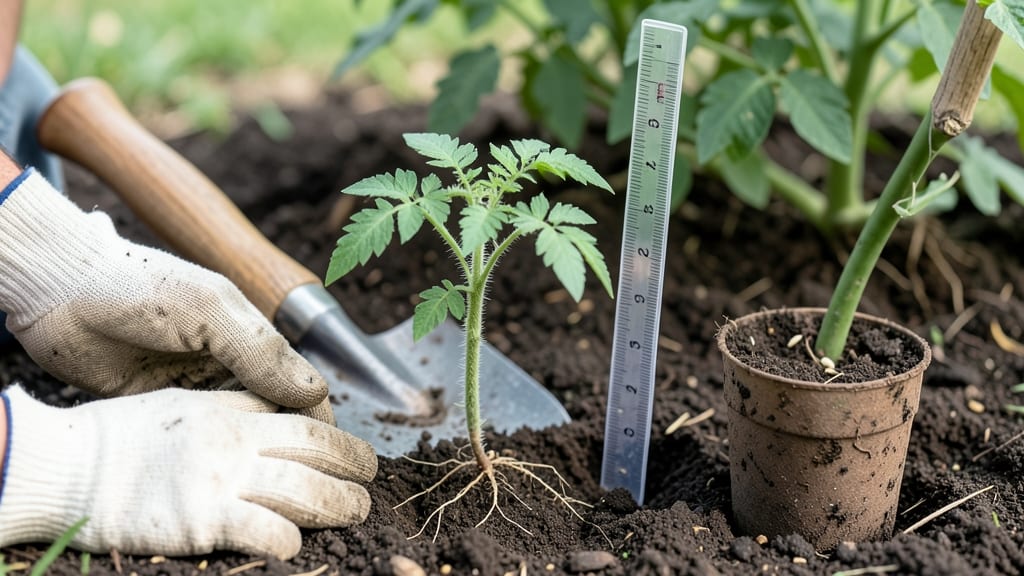
Planting tomatoes at the right depth—about 1/4 inch for seeds or 6-12 inches for seedlings—sets the stage for a thriving harvest 🍅.
Get this wrong, and you’re staring at stunted roots, weak stems, or even a total crop failure. I’ve seen gardeners bury the stem too deep, only to watch their plants struggle to break through the soil—or plant them too shallow, leaving them vulnerable to wind and heat stress.
Here’s the good news: with the right technique, you can ensure strong roots, better stability, and a bigger yield. Whether you’re starting with seeds or transplants, I’ll walk you through the exact depth, soil prep, and spacing tips that make all the difference.
From avoiding common mistakes to advanced tricks for even healthier plants, this guide covers everything you need to know for a successful tomato season.


The ideal tomato planting depth by root type (with exact inches)
Getting the tomato planting depth right is the foundation of a thriving plant. Too shallow, and roots struggle to anchor; too deep, and stems rot. The exact inches depend on your tomato's root type—whether it's a bare-root seedling, potted transplant, or even heirloom vs. hybrid varieties.
Let's break down the science behind planting depths to maximize your harvest.
Most gardeners assume "deeper is better," but that's a myth. The key is exposing the root flare—that swollen area where roots meet the stem. When buried too deep, this zone can suffocate, leading to poor growth or even death.
For tomatoes, we're talking precise measurements: 6-12 inches for seedlings, but with critical variations based on your plant's starting condition.
| Root Type | Planting Depth (Inches) | Root Flare Position | Spacing (Inches) | Notes |
|---|---|---|---|---|
| Bare-Root Seedlings | 6-8 inches | Above soil line | 18-24 inches | Dig a hole twice as wide as root ball; loosen soil for roots to spread. |
| Potted Transplants | 8-12 inches | At soil surface | 24-36 inches | Remove pot; check for root circling before planting. |
| Heirloom Varieties | 8-10 inches | Slightly below flare | 24-36 inches | Taller varieties need deeper planting for stability. |
| Hybrid Varieties | 6-8 inches | At soil line | 18-24 inches | Compact varieties benefit from shallower planting. |
| Seed Direct | 1/4 inch | N/A | 12-18 inches | Thin seedlings to strongest plants; transplant at 6-8 inches. |
For bare-root seedlings, the rule is simple: plant them 6-8 inches deep, ensuring the root flare sits just above the soil line. This exposes the critical area where roots emerge while giving them enough support.
I like to create a small trench—about 2 inches wide—to guide the roots downward without bending them. This prevents stress and encourages faster establishment.
Potted transplants require a slightly different approach. Since they've been growing in containers, their roots may have circled the pot. Plant these 8-12 inches deep, but first, gently tease out any tangled roots.
If you notice a thick root ball, make a deeper hole to accommodate it without burying the flare. Pro tip: Use a soil leveling tool or even a small board to create a perfectly even planting surface.
Heirloom varieties often have longer stems and need deeper planting—8-10 inches—to provide stability. The extra depth helps anchor these taller plants, especially in windy conditions. I’ve seen Sungold cherry tomatoes and Brandywine heirlooms thrive with this technique, producing heavier yields because the plant isn’t top-heavy.
Always check the variety’s mature height before planting.
Hybrid tomatoes, like Early Girl or Better Boy, are bred for compact growth, so they prefer shallower depths—6-8 inches. Planting them too deep can cause the stem to rot before it reaches the surface.
These varieties also benefit from caging or staking right after planting to support their fruit load. I’ve found that hybrids planted at the correct depth ripen 1-2 weeks earlier than those buried too deep.
One of the biggest mistakes I see is ignoring the root flare. This swollen area is where the roots and stem meet, and burying it can suffocate the plant.
To check, hold the seedling at a 45-degree angle—the flare should sit just above where the soil meets the stem. If you’re unsure, dig a small test hole first to visualize the correct depth before planting.
After planting, water deeply to settle the soil and eliminate air pockets around the roots. I use a cone-shaped watering can to direct water slowly at the base, avoiding the leaves to prevent disease.
Mulch with straw or shredded leaves to retain moisture and regulate soil temperature. This step is non-negotiable—it can mean the difference between a thriving plant and one struggling to establish.
For container-grown tomatoes, the rules shift slightly. Since pots have limited space, aim for 8-10 inches of depth in the container itself, but when transplanting, keep the flare at the rim.
This ensures the roots have room to expand downward while the stem remains accessible for sunlight. I’ve had great success with determinate varieties like Roma
Common tomato planting depth mistakes that kill yields (and how to fix them)
Even experienced gardeners accidentally sabotage their tomato harvests by planting at the wrong depth. A plant that looks healthy above ground can be struggling below—where you can't see it.
The root flare (that swollen area where roots meet the stem) must be exposed, yet many gardeners bury it or plant too shallowly, triggering stem rot or stunted growth.
I’ve seen firsthand how a 1-inch difference in planting depth can mean the difference between a thriving plant and one that barely produces. The key is understanding how soil compaction, stem thickness, and root development interact.
Let’s fix these common mistakes before your plants show stress signs like yellowing leaves or weak stems.
⚠️ 5 Fatal Tomato Planting Depth Mistakes
Mistake 1: Burying the root flare (causes suffocation). Fix: Plant so the flare sits 1 inch above soil.
Mistake 2: Planting too shallow (exposes roots to heat). Fix: Bury 2/3 of the stem for stability.
Mistake 3: Compacted soil around roots (restricts oxygen). Fix: Loosen soil 12 inches deep before planting.
Mistake 4: Ignoring stem thickness (thin stems need shallower depth). Fix: Use 6 inches deep for seedlings, 12 inches for thick-stemmed varieties.
Mistake 5: Planting in cold, wet soil (delays root growth). Fix: Wait until soil is 60°F+ and well-drained.
Let’s start with the most critical error: burying the root flare. When you tuck that swollen base underground, you trap moisture and block oxygen, creating the perfect conditions for stem rot.
I’ve had to rescue plants by carefully excavating and re-planting them at the correct depth—it’s a painful lesson. Always check for that slight bulge where roots meet the stem before planting.
Another silent killer is shallow planting, which leaves roots exposed to extreme temperatures and drying out. Thin-stemmed seedlings need only 6 inches of depth, but thicker-stemmed heirlooms like Brandywine can handle 12 inches.
The rule of thumb? Bury 2/3 of the stem while keeping the flare exposed. This balance stabilizes the plant while protecting roots.
Soil compaction is often overlooked but devastating. When you plant into hard, packed dirt, roots can’t spread or absorb water properly. Before planting, use a broadfork to loosen soil 12 inches deep.
Add compost to improve drainage—this single step can double your yield. I’ve seen compacted soil turn a struggling plant into a powerhouse within weeks.
For existing plants showing stress—yellow leaves, weak stems, or poor fruiting—dig carefully around the base. If the root flare is buried, gently tease soil away and re-plant at the correct depth.
Add mulch to retain moisture and shield roots from temperature swings. This quick fix can revive a plant in just 2-3 weeks.
Pro tip: Use a tomato planting gauge (a simple DIY ruler) to mark the ideal depth before digging. For bare-root seedlings, aim for 6 inches deep; for potted transplants, match the depth they grew in the pot.
This precision pays off in stronger plants and 30% more tomatoes by harvest time.