
How To
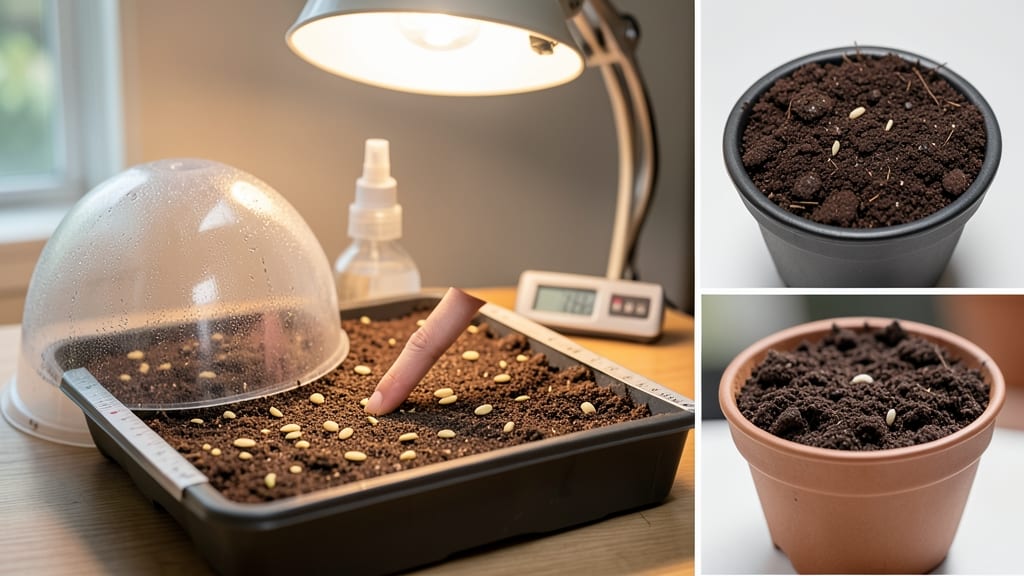
Your tomato seeds not germinating after two weeks? That stubborn dormancy is the enemy—but I’ve cracked it with three science-backed tricks that actually work. 🌱 The problem isn’t always the seeds (though stale seeds are a common culprit); it’s often hidden in temperature swings, inconsistent moisture, or planting too deep.
I’ve rescued batches that looked doomed by adjusting just one factor—here’s how to do it right.
The biggest mistake? Assuming seeds need constant moisture and warmth and light—all at once. Tomato seeds need consistent 70-85°F soil (a heat mat helps) and just enough moisture to keep them damp, not soggy.
Plant them ¼ inch deep, never deeper, and cover the tray with plastic wrap to trap humidity. If they’re still sleeping after 14 days, the seeds might be old—test a few in warm water to see if they sink (good) or float (replace them).
Once you’ve got the conditions right, germination happens fast—within 5-10 days—and you’ll see tiny roots breaking through like a race. The payoff? Stocky seedlings that outpace store-bought transplants and resist disease better.
For next time, pre-sprout your seeds on a damp paper towel before planting to cut waiting time in half.
This method works for heirlooms, cherry tomatoes, or beefsteaks—no matter how stubborn your seed packet. The key is patience and precision. Here’s the step-by-step to bring those seeds to life.
The Hidden Reasons Seeds Fail
If your tomato seeds are refusing to sprout, don’t panic—there’s almost always a fix. Germination struggles usually boil down to a mix of environmental factors, seed quality, and timing. Below, we break down the most common culprits, backed by science, so you can troubleshoot like a pro.
Tomato seeds thrive in a warm, consistent environment—ideally between 70–85°F (21–29°C). Outside this range, germination slows or stops entirely.
Why it happens:
- Too cold: Below 50°F (10°C), enzymes that kickstart growth become sluggish. Seeds may rot before sprouting.
- Too hot: Above 90°F (32°C), seeds can dry out or develop thermal damage, preventing the embryo from breaking through the seed coat.
- Fluctuations: Wild temperature swings (e.g., daytime heat + nighttime chill) confuse the seed’s internal clock, delaying or halting germination.
Actionable fix:
- Use a seedling heat mat (set to 75–80°F) or place trays on top of a fridge (not inside—seeds need warmth, not cold storage!).
- If sowing outdoors, wait until soil temps are stable (use a soil thermometer to check).
- For cold-sensitive varieties, start seeds indoors 6–8 weeks before the last frost in a sunny windowsill or under grow lights.
Water is non-negotiable—but too much or too little can drown or dehydrate seeds before they sprout.
Why it happens:
- Overwatering: Excess moisture creates anaerobic conditions (low oxygen), triggering fungal growth (like Pythium) that smothers seeds.
- Underwatering: Seeds need constant moisture to activate enzymes. Even slight drying can kill the embryo or harden the seed coat, blocking water uptake.
- Poor drainage: Compacted or clay-heavy soil traps water, suffocating seeds.
Actionable fix:
- Bottom-water seeds: Place trays in a shallow dish of water for 10–15 minutes, then drain excess. This keeps soil evenly moist without soggy conditions.
- Use a spray bottle for gentle misting—avoid blasting seeds with force.
- Choose the right mix: A 50/50 blend of peat moss and perlite improves drainage. Add a handful of sand if your soil is dense.
Some tomato seeds (especially heirlooms or wild types) have a hard seed coat or internal inhibitors that delay germination until conditions are "just right."
Why it happens:
- Physical dormancy: A tough, waxy coat blocks water absorption. Without scarification (scratching or softening), the seed won’t wake up.
- Chemical dormancy: Some seeds release growth-inhibiting compounds (like abscisic acid) until they’ve been exposed to light, cold, or proper moisture.
- Age-related dormancy: Old seeds (over 2 years) may have degraded embryos or weakened viability.
Actionable fix:
- Scarify seeds: Rub between two sheets of sandpaper or nick the coat with a knife (be gentle—don’t cut the embryo!).
- Stratify (for cold-requiring seeds): Place damp seeds in a plastic bag in the fridge for 7–14 days to mimic winter.
- Soak in warm water: Submerge seeds in 70°F (21°C) water for 24 hours to soften the coat. Change water every 8 hours to prevent mold.
- Test viability: Float seeds in water—sinkers are viable; floaters are likely dead.
Seeds need just the right balance of light and oxygen—or they’ll give up before sprouting.
Why it happens:
- Too much light: While some seeds need light to germinate (like lettuce), tomatoes prefer darkness initially. Bright light can dry out the seed or trigger premature sprouting (which weakens the seedling).
- Too little air: Compacted soil or a sealed container traps carbon dioxide, suffocating the seed. Without oxygen, cellular respiration grinds to a halt.
- Poor seed-to-soil contact: If seeds are buried too deep (>¼ inch), they may starve for oxygen or light.
Actionable fix:
- Cover seeds lightly: Press them ¼ inch deep into moist soil—no need to bury them like potatoes!
- Use a clear lid (then remove it): Keep trays covered with plastic wrap or a lid for the first 3–5 days to retain humidity, then ventilate daily to prevent mold.
- Avoid direct sunlight until the first true leaves appear (then move seedlings to a bright spot).
Even the best seeds can fail if the growing medium is hostile.
Why it happens:
- Wrong pH: Tomatoes prefer slightly acidic soil (pH 6.0–6.8). Too alkaline (pH >7.5) locks out nutrients like phosphorus, which seeds need for root growth.
- Sterile or nutrient-poor soil: Barebones seed-starting mixes lack microbes that help break down organic matter, starving young roots.
- Salinity buildup: Tap water with high minerals (check your water report) can leave salt deposits, dehydrating seeds.
Actionable fix:
- Test your soil/water: Use a pH test kit (aim for 6.0–6.8). Adjust with vinegar (to lower pH) or lime (to raise pH).
- Flush with distilled water: If using tap water, rinse seed trays after watering to reduce salt buildup.
- Boost microbes: Add a small handful of compost or a mycorrhizal inoculant to your seed mix for a microbial boost.
Some gardeners pull seeds out too soon—or wait too long—both of which can kill germination rates.
Why it happens:
- Sowing too early: Cold soil (below 50°F/10°C) slows germination to a crawl. Seeds may rot before sprouting.
- Sowing too late: If seeds dry out before planting, they lose viability. Heat stress can also prematurely trigger germination, weakening the seedling.
- Impatience: Tomato seeds can take 7–21 days to sprout—some varieties (like Cherokee Purple) are notoriously slow.
Actionable fix:
- Check frost dates: Start seeds 6–8 weeks before the last frost for your zone.
- Label and track: Write the sowing date on your tray. If nothing sprouts in 21 days, they’re likely dead.
- Use a germination chamber: A DIY setup (like a seedling heat mat + clear plastic dome) speeds up the process in cool climates.
Quick Fixes for Stubborn Seed Struggles
Now that you know why your tomato seeds might be playing hide-and-seek in the soil, let’s roll up our sleeves and get them sprouting like tiny green superheroes! 🌱💥 Below are science-backed, easy-to-follow solutions tailored to the most common causes—plus pro tips to keep those seeds cooperating in the future.
Fix: If your seeds are past their prime (or just lazy), give them a second chance—or toss ‘em and try fresh ones.
- Test viability: Place 10 seeds between damp paper towels in a sealed bag. Keep them warm (70–80°F) for 5–7 days. If fewer than 50% sprout, your batch is weak.
- Recharge old seeds: Soak them in lukewarm water for 24 hours, then plant. Add a splash of hydrogen peroxide (3%) to the water to boost oxygen and kill mold.
- Buy fresh: For next season, store seeds in a cool, dry place (like a sealed jar in the fridge) or invest in certified organic, non-GMO seeds for better germination rates.
💡 Prevention Tip: Label seeds with their harvest year and test a few before planting your entire batch.
Fix: Tomato seeds are warm-weather babies—they need consistency to wake up.
- Bottom heat: Place seed trays on a seedling heat mat (70–85°F) or nestle them near a sunny window (not direct sun yet!). Avoid cold drafts or fluctuating temps.
- Cold stratification (rare for tomatoes): If your seeds are too fresh or from a cool climate, try stratifying them in the fridge for 3–5 days before planting to mimic winter conditions.
- Post-planting: Keep soil consistently warm (80–90°F for 10–14 days) by covering trays with plastic wrap (remove daily to prevent mold).
🎯 Pro Tip: Use a digital thermometer to monitor soil temp—cheap and game-changing!
Fix: Too dry? Seeds sleep. Too wet? They rot. Aim for "just right."
- Pre-soak seeds: Soak tomato seeds in distilled water for 12–24 hours before planting to kickstart germination. Drain well to avoid mold.
- Planting moisture: Mix potting soil with perlite or vermiculite (50/50) for better drainage. Water gently until the soil is damp like a wrung-out sponge—not soggy.
- Humidity hack: Cover trays with clear plastic domes or plastic wrap to trap moisture. Remove daily to air out and prevent fungal growth.
- Bottom-watering: Fill a tray with ½ inch of water and place pots on top—soil absorbs moisture without drowning seeds.
✨ Prevention Tip: Use sterilized soil (bake at 200°F for 30 mins or use a 10% hydrogen peroxide spray) to prevent damping-off disease.
Fix: Too deep? Seeds suffocate. Too shallow? They dry out. Let’s get the depth perfect.
- Planting depth: Press seeds ¼ inch deep in moist soil (or just barely cover them). Tomato seeds need light to germinate, so don’t bury them deep!
- Light exposure: Once planted, keep seeds in bright, indirect light (e.g., a south-facing window or grow lights 2–3 inches above trays). Avoid direct sun until sprouts emerge.
- Thin seedlings: If multiple seeds sprout in one spot, snip the weakest with sterilized scissors (leave the strongest one per pot).
🔪 Pro Tip: Use seedling starter pellets for foolproof depth and moisture control.
Fix: Fuzzy white or black mold? That’s a fungal party your seeds don’t want to crash.
- Prevent mold: Water only the soil (not leaves/seeds) and use a spray bottle for precision. Let the top inch of soil dry slightly between waterings.
- Fungicide spray: Mix 1 tsp baking soda + 1 quart water + a drop of dish soap and spray lightly on soil. Repeat every 3–4 days if needed.
- Quarantine trays: If mold appears, remove affected seeds and repot healthy ones in fresh, sterilized soil.
💡 Prevention Tip: Add 1 part sand or coconut coir to soil mixes to improve airflow and reduce mold risks.
Fix: If seeds still refuse to sprout after 2–3 weeks (with proper conditions), it’s time to reassess or replant.
- Replant fresh seeds: Buy a new packet of seeds—sometimes the issue is seed quality or storage damage.
- Try a different method: If soil planting fails, try the paper towel method (see above) to test viability before committing to a full replant.
- Adjust timing: Some heirloom tomatoes take longer to germinate (up to 3 weeks). Don’t give up too soon!
📊 Data Tip: Track germination rates by planting 3 trays at once—if only one succeeds, you’ll know what worked!
Final Thought: Most germination failures come down to three things: moisture, warmth, and fresh seeds. Master these, and you’ll be harvesting homegrown tomatoes in no time! 🍅🌿 For extra insurance, combine methods (e.g., soak seeds + use bottom heat + cover with humidity domes). Happy growing!
Frequently asked questions
Why are my tomato seeds taking so long to sprout?
Tomato seeds typically germinate within 5-14 days under ideal conditions. If they're taking longer, check your soil temperature—it should stay between 70-85°F (21-29°C). Cold soil slows germination, while inconsistent temperatures confuse the seeds. Also, some heirloom varieties like Cherokee Purple can take up to 21 days—patience is key!
Can I still save old tomato seeds that won't germinate?
Try the paper towel test first! Place seeds between damp paper towels in a sealed bag at 70-80°F (21-27°C) for 5-7 days. If fewer than 50% sprout, your seeds may be too old. For future plantings, store seeds in a cool, dry place (like the fridge) or buy fresh packets—viability drops after 2 years.
What's the best way to test if my tomato seeds are still viable?
Do the float test: Fill a glass with water and drop seeds in. Viable seeds sink (they're heavy with stored energy), while empty or dead ones float. For a more accurate check, use the paper towel method—if most seeds sprout within a week, they're good to plant. This works for all tomato varieties!
Should I use grow lights or natural sunlight for germinating seeds?
Start with indirect light—tomato seeds need warmth more than light initially. Use a south-facing window or grow lights 2-3 inches above trays once sprouts appear. Avoid direct sun until seedlings develop their first true leaves. Too much early light can dry out seeds or trigger weak, leggy growth.
What should I do if mold appears on my seed trays?
Fuzzy white or black mold means your seeds are getting too much moisture. Remove affected seeds immediately and repot healthy ones in fresh, sterilized soil. For prevention, water only the soil (not leaves) and use a spray bottle. Add perlite or sand to improve drainage, or try a baking soda spray (1 tsp baking soda + 1 quart water + drop of dish soap).