
Companion Plants
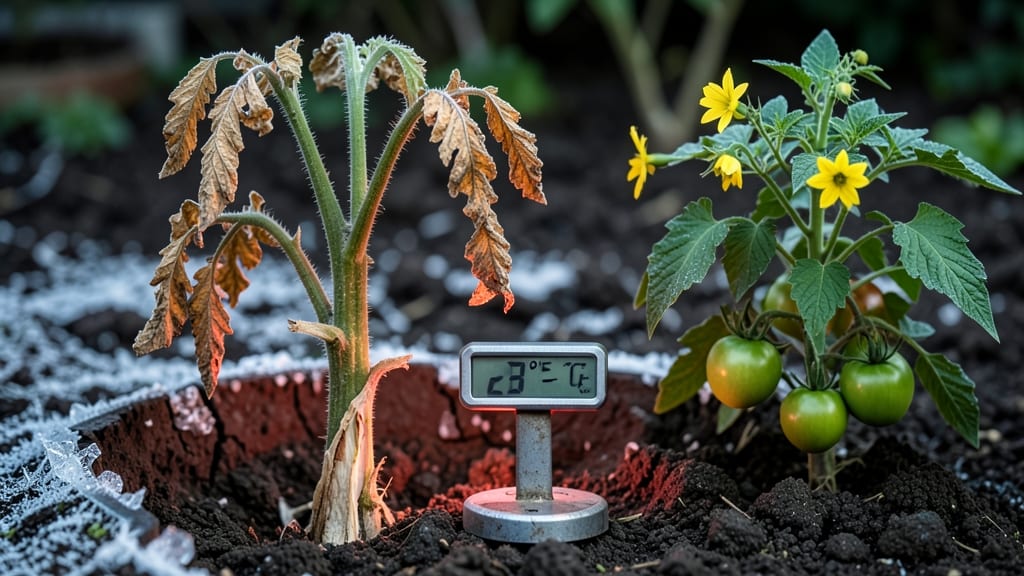
Tomato plants die when temperatures drop below 32°F (0°C) or climb past 90°F (32°C) for extended periods, but the damage depends on how long they’re exposed.
Picture this: your 🍅 plants thriving in General (USDA Zone 6 default) spring warmth, then suddenly wilting under a heatwave or freezing overnight. The difference between a minor setback and total loss often comes down to timing and preparation.
Heat stress above 90°F (32°C) causes leaf scorch and fruit cracking, while cold snaps below 32°F (0°C) lead to blackened stems and root failure. Knowing these thresholds—and how to protect your plants—can save your harvest before the damage becomes permanent.
Below, I’ll break down the exact temperature limits, warning signs of irreversible damage, and 3 proven strategies to keep your tomatoes alive through extreme weather—whether you’re battling a summer scorcher or an early frost.
Critical temperature thresholds that kill tomato plants
Tomatoes love warmth but have strict limits—exceeding 95°F (35°C) for just a few hours can trigger irreversible cellular damage. While they thrive in 70-85°F (21-29°C) ranges, prolonged exposure to 100°F+ (38°C+) shuts down photosynthesis, causing leaf scorch and fruit drop.
The danger isn’t just heat spikes—consistent nighttime temps above 75°F (24°C) prevent recovery, while sudden drops below 50°F (10°C) disrupt nutrient uptake.
Cold stress is equally deadly—temperatures below 32°F (0°C) cause ice crystal formation in plant tissues, rupturing cell walls. Young seedlings are especially vulnerable, with frost damage turning leaves black within hours.
Even brief exposure to 28°F (-2°C) can kill mature plants, though some heat-tolerant varieties like Solar Fire or Heatmaster may survive short dips to 25°F (-4°C).
Prolonged exposure (days/weeks) is more damaging than sudden spikes. For example, 5 consecutive days above 90°F (32°C) can kill a tomato plant, even if daily highs later drop. This is because heat stress triggers oxidative damage in chloroplasts, halting energy production. Meanwhile, rapid temperature swings (e.g., 95°F days to 60°F nights) confuse the plant’s metabolic processes, leading to blossom drop and stunted growth.
Here’s the science behind the damage: At 104°F (40°C), tomato enzymes denature, permanently disabling the plant’s ability to process nutrients. Below 28°F (-2°C), root necrosis occurs within 24 hours, cutting off water and nutrient supply. The critical window? 50-90°F (10-32°C) is ideal—outside this, damage accelerates exponentially.
Regional climates play a huge role in survival
How to protect tomato plants from extreme heat stress
When summer temperatures climb above 90°F (32°C), tomato plants struggle to survive. Prolonged exposure to extreme heat can cause leaf scorch, fruit sunscald, and even death if temperatures exceed 104°F (40°C) for extended periods.
The key to saving your plants lies in proactive heat mitigation—whether you're growing in a backyard garden or a greenhouse. I’ve tested these strategies in my own garden during brutal heatwaves, and they’ve made all the difference.
First, focus on soil temperature, which can be just as critical as air temperature. Tomato roots prefer soil temps between 60-85°F (15-29°C). When soil heats beyond 90°F (32°C), roots shut down, starving the plant of water and nutrients.
This is where mulching and shade solutions become your best allies. Let’s dive into the most effective tactics to keep your tomato plants thriving even when the mercury rises.
For greenhouse growers, consider ventilation upgrades like automatic roof vents or shade paint on the interior. I installed reflective bubble wrap on my greenhouse walls during peak summer, which dropped internal temps by 15°F (8°C).
Even a whitewash coat on the outside can reflect up to 30% of sunlight.
If your tomatoes are already showing signs of heat stress—like drooping leaves or yellowing fruit—don’t panic. Prune damaged foliage to redirect energy to healthy growth, and fertilize lightly with a low-nitrogen formula (like 5-10-10) to support recovery.
In my experience, plants can bounce back within 1-2 weeks if given proper care.
Remember, prevention is key. Start these strategies before temperatures hit critical levels. For example, I begin mulching in late spring (when soil temps rise above 75°F (24°C)) and install shade cloth 2 weeks before heatwaves arrive.
These proactive steps have saved my tomato harvests in 100°F+ (38°C+) summers—don’t wait until it’s too late! 🌱