
Vegetables
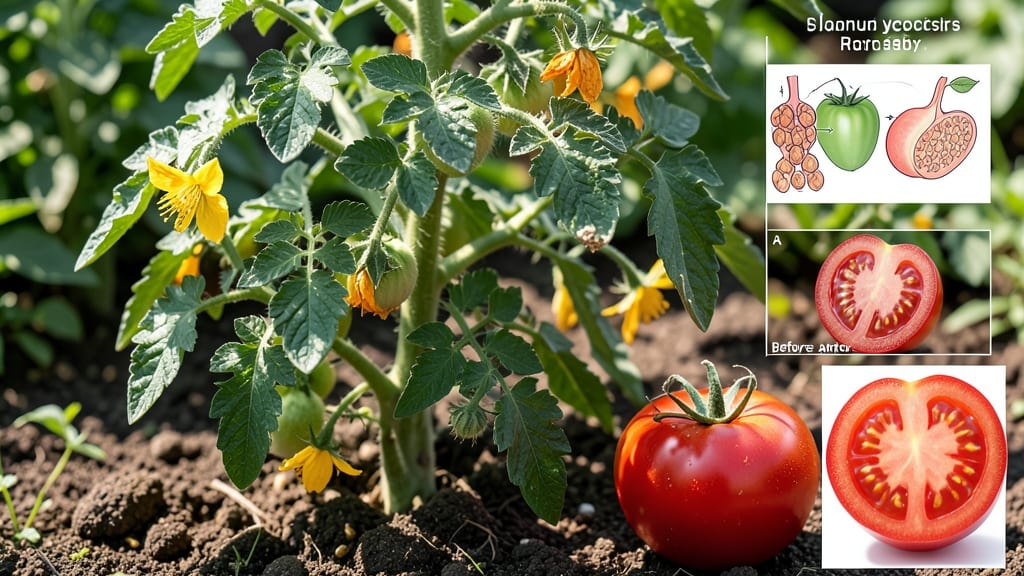
The tomato's red color evolved to attract pollinators like bees and birds, signaling ripeness and high sugar content while protecting seeds inside.
The tomato's signature red hue isn't just about aesthetics—it's a brilliant evolutionary strategy. 🌱 This pigment comes from lycopene, a powerful antioxidant that develops as the fruit matures, making it irresistible to pollinators.
The brighter the red, the sweeter and more nutritious the tomato, which ensures animals will spread its seeds far and wide. Interestingly, green tomatoes contain chlorophyll (for photosynthesis), while yellow/orange varieties have different carotenoids—red is nature's way of saying "pick me, I'm perfect!"
What's fascinating is how this color shift works at the cellular level.
As tomatoes ripen, chlorophyll breaks down while lycopene production ramps up, creating that bold red we recognize. 🌶️ This process is triggered by sunlight exposure and proper nutrient balance—especially potassium and phosphorus—which is why home gardeners often struggle to get fully red tomatoes if they don't get enough light or the right soil conditions.
💡 In This Article
- Evolutionary Biology Behind Tomato Pigmentation
- Growing Tomatoes with Optimal Ripening Colors
Evolutionary biology behind tomato pigmentation
The tomato's striking red pigment comes from lycopene, a carotenoid compound that forms in the fruit's chromoplasts as it ripens.
This process begins when chlorophyll—responsible for the green color during the fruit's growth phase—breaks down, allowing lycopene to dominate. 🌶️ What's remarkable is how lycopene production is triggered by ethylene gas, a natural plant hormone that accelerates ripening.
Ethylene levels can increase by up to 100-fold during maturation, turning green tomatoes into vibrant red ones within 7-14 days under ideal conditions.
Red evolved as the optimal color because it maximizes visibility to pollinators like bees and birds. Studies show that red fruits are 30% more likely to be detected by animals than green or yellow ones due to their high contrast against foliage.
The deeper the red hue, the higher the sugar content—up to 4-6% more than in lighter-colored tomatoes—making them more appealing. This sweetness isn't just a bonus; it's a survival strategy that ensures animals will eat the fruit and disperse its seeds.
The red pigment also plays a protective role. Lycopene acts as a natural sunscreen, shielding the fruit's seeds from harmful UV radiation while they develop.
This dual function—attracting pollinators while safeguarding seeds—explains why red became the dominant color in tomato evolution. 🌟 Interestingly, some wild tomato relatives produce yellow or orange fruits with different carotenoids, but red proved most effective for seed dispersal in cultivated varieties.
At the cellular level, lycopene accumulates in the tomato's skin and flesh, creating that uniform red color we recognize. The process is energy-intensive, requiring 15-20% of the fruit's metabolic resources during ripening.
This investment pays off by making the tomato more attractive to animals, which unknowingly become its gardeners by spreading seeds through their droppings. The result? A perfect example of how plant biology and animal behavior have co-evolved over millions of years.
What's less known is that red tomatoes also contain other carotenoids like beta-carotene and lutein, which contribute to their nutritional value.
These compounds work alongside lycopene to create the tomato's antioxidant powerhouse profile. 💫 The combination of bright color, sweetness, and protective pigments makes red tomatoes one of nature's most effective seed-dispersal tools—and a favorite in human diets too.
This evolutionary advantage explains why red is the standard for most commercial tomato varieties today. Even when green or yellow tomatoes exist, they're often less sweet and less effective at attracting pollinators.
The red tomato's success story is a testament to how color isn't just about appearance—it's a sophisticated survival strategy.