
Planting
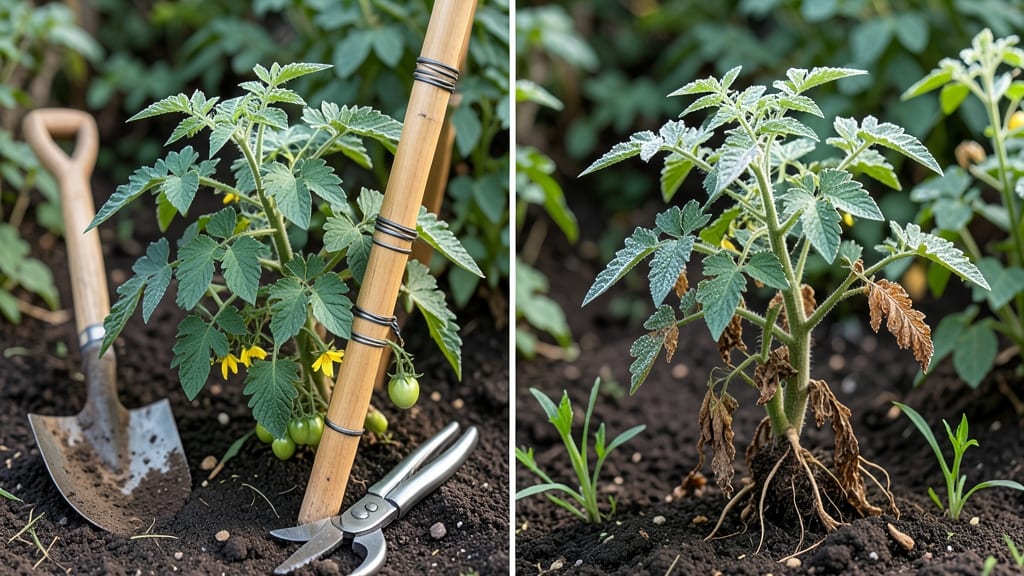
Your tomato plant won't naturally come back each year because it's an annual that dies after fruiting. However, with proper techniques like overwintering indoors or propagating cuttings, you can regrow it season after season.
Tomato plants are designed to complete their entire life cycle—from seed to fruit—in just one growing season. 🌱 Once they produce fruit, their energy shifts toward seed production, and cold temperatures trigger their natural decline.
That said, some tropical varieties might survive mild winters in zones 9-11, but true perennial behavior is rare. The good news? You can extend your plant's life by saving seeds or taking cuttings before frost hits, then nurturing them through winter.
For example, cherry tomato varieties like 'Sungold' often root more easily from cuttings than heirlooms, making them ideal for regrowth projects. The key is timing—wait until after your first frost to collect healthy stems, then use rooting hormone and bright grow lights to encourage new growth.
With patience, you could enjoy the same plant's fruit for years!
💡 In This Article
- Why Tomato Plants Are Annuals (And When They Can Be Perennials)
- How to Save Your Tomato Plant for Next Season
Why tomato plants are annuals (and when they can be perennials)
Tomatoes are classified as annuals because their natural life cycle is tightly linked to warm seasons. Once they produce fruit, their energy shifts dramatically toward seed production—a biological strategy to ensure the next generation survives.
The plant's leaves begin to yellow, stems weaken, and roots degrade as it prepares for death, typically triggered by temperatures below 40°F. This process is hardwired into their genetics, making them unable to survive freezing temperatures or prolonged cold snaps.
The exception lies in tropical and subtropical climates (USDA zones 9-11), where winter temperatures rarely drop below 50°F. In these areas, some tomato varieties like 'Florida 47' or 'Solar Fire' may persist as perennials, growing year-round without dying back.
However, even in these zones, they rarely produce fruit continuously—they'll focus on vegetative growth during cooler months rather than fruiting. The key difference is their ability to avoid the cold shock that kills most tomato plants in temperate climates.
Cold tolerance varies significantly between varieties. Hybrid tomatoes often have slightly better cold resistance than heirlooms, but none are truly frost-hardy. For example, 'Mountain Merit' can handle brief exposure to 28°F without dying, while 'Celebrity' may survive down to 30°F for short periods.
This variation explains why some gardeners report "surviving" tomato plants in marginal climates—what they're actually seeing is delayed death rather than true perennial behavior.
What most gardeners don't realize is that tomato plants also deplete their own energy reserves as they fruit. Each tomato requires significant carbohydrate and nutrient investment, and by harvest time, the plant's root systems are often exhausted.
This energy depletion, combined with cold sensitivity, creates a perfect storm for annual behavior. Even in ideal climates, a tomato plant will eventually decline after 2-3 years of continuous fruiting unless you intervene with propagation techniques.
The botanical term for this is "determinate growth"—tomatoes follow a fixed life cycle where they allocate resources sequentially to leaves, stems, flowers, and finally fruit. Once fruiting begins, the plant's priorities shift irrevocably toward reproduction, leaving little energy for new growth.
This is why you'll rarely see tomato plants "coming back" naturally—their entire biological strategy is geared toward one-season completion.
There's one fascinating exception worth noting: some wild tomato species from South America (like Solanum peruvianum) exhibit semi-perennial behavior, regrowing from the base each year in their native climates.
These relatives of cultivated tomatoes show that perennialism exists within the genus—it's just been bred out of commercial varieties through centuries of selection for high-yield, single-season production.