
Plants
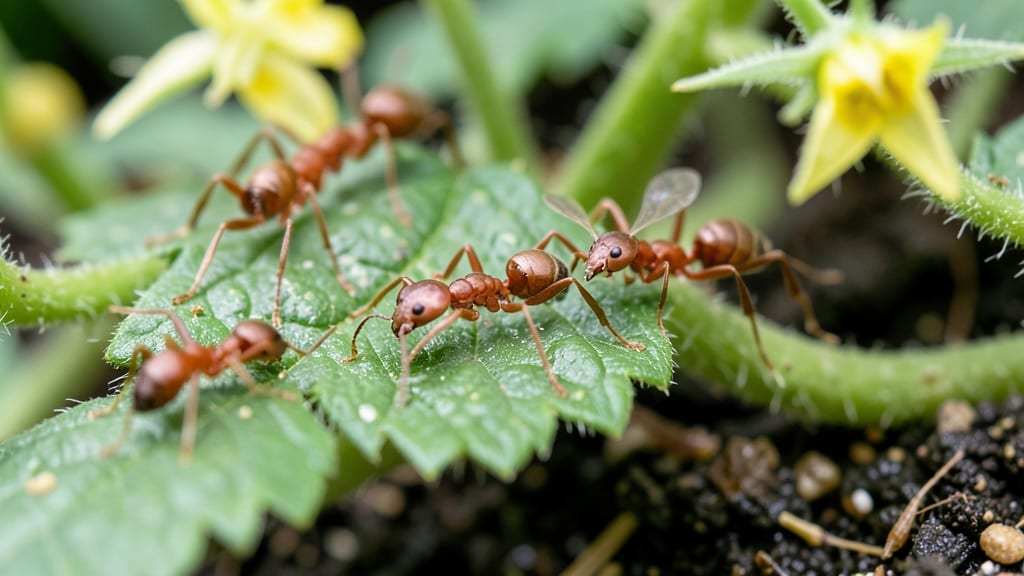
Ants are bad for tomato plants, but they don't directly harm them—they create a dangerous ecosystem by shielding pests like aphids and mealybugs that drain nutrients and leave behind sticky honeydew, leading to sooty mold growth and weakened plants. Eliminating ant trails and nests is key to protecting your tomatoes.
While ants themselves won't chew your tomato leaves, their relationship with sap-sucking pests turns them into silent saboteurs. 🌱 These tiny farmers protect aphids and mealybugs in exchange for honeydew, creating a perfect storm: the pests weaken your plants by sucking juices, while the sticky residue attracts sooty mold that blocks sunlight.
Over time, this trio of problems stunts growth and reduces fruit quality. The solution? Disrupt their teamwork by removing ant nests and using natural barriers like diatomaceous earth or citrus peels around your garden beds.
What's interesting is how quickly this chain reaction happens—within weeks of ant infestation, you might notice yellowing leaves or slower growth that seems unrelated to watering issues. I've found that early intervention with organic ant repellents prevents this cycle before it starts, saving both your plants and your harvest.
💡 In This Article
- How Ants Indirectly Harm Tomato Plants
- Natural Ways to Manage Ants Around Tomato Gardens
How ants indirectly harm tomato plants
Ants don't directly eat tomato plants, but they create a dangerous ecosystem through their relationship with sap-sucking pests like aphids and mealybugs.
These pests produce honeydew—a sticky, sugary substance that ants farm for food. 🔥 The ants protect the pests in exchange for this sweet reward, forming a mutualistic relationship that benefits both species. This dynamic is common in nature, but in your garden, it spells trouble for your tomatoes.
The real damage starts when honeydew coats tomato leaves. This sticky residue creates the perfect environment for sooty mold, a black fungal growth that blocks sunlight from reaching the plant's leaves. Without adequate light, photosynthesis slows down, causing leaves to yellow and weaken.
Over time, this stunted growth leads to smaller fruit yields and weaker plants that are more susceptible to other diseases. Studies show that plants with heavy sooty mold infestations can experience up to a 30% reduction in fruit production compared to healthy plants.
The nutrient drain from sap-sucking pests compounds the problem. Aphids alone can remove up to 20% of a plant's sap in just a few weeks, leaving behind weakened foliage that's more vulnerable to other pests.
The combination of physical damage from feeding and the indirect effects of sooty mold creates a perfect storm that significantly impacts tomato plant health.
Unlike direct chewing pests, this damage is subtle at first—you might notice leaves curling or a slight discoloration before the full extent of the problem becomes apparent.
What makes this situation particularly tricky is how quickly the cycle can escalate. A single ant colony can protect hundreds of aphids, each capable of producing enough honeydew to support dozens more ants.
Within 4-6 weeks, what starts as a minor ant presence can become a full-blown infestation that severely impacts your tomato plants. The key to breaking this cycle is interrupting the ants' ability to protect their pest "livestock" before the damage becomes irreversible.
Interestingly, different ant species vary in their effectiveness as pest protectors. For example, Argentine ants are particularly aggressive protectors of aphids, while fire ants tend to focus more on mealybugs. Understanding which species you're dealing with can help you choose the most effective management strategy.
The visual clues—like the size and color of the ants—can give you important hints about their behavior patterns and preferred food sources in your garden.
This ecological relationship isn't just about immediate damage—it creates long-term weaknesses in your tomato plants. Weakened plants are more susceptible to other stresses like drought or disease, creating a cascading effect that can reduce your harvest quality and quantity.
The good news is that with the right knowledge, you can disrupt this cycle before it gains momentum, protecting both your plants and your investment in your garden.