
Plants
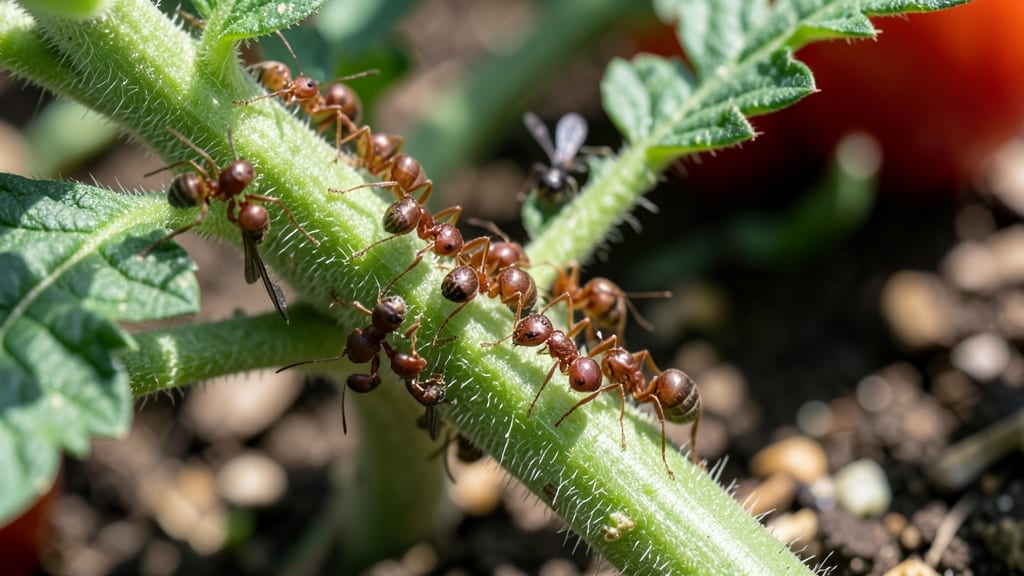
Ants don’t eat tomato plants directly, but they aggressively harvest ripe or overripe fruit to feed their colonies, often damaging stems and attracting pests like aphids in the process. Their activity can also disrupt plant health by weakening vines and spreading fungal spores from decaying tomatoes.
When you spot ants on your tomato plants, they’re not chewing leaves—they’re after the sweet, sugary fruit. 🔥 These tiny farmers harvest overripe tomatoes to feed their colonies, creating entry points for other pests like aphids and even spreading fungal spores from rotting fruit.
The real damage comes from their trail-blazing behavior, which can lead to weakened vines and reduced yields over time.
What’s interesting is how ants use chemical signals to locate ripe tomatoes. They follow scent trails left by volatile compounds released as fruit softens, making them especially drawn to neglected or overripe tomatoes.
This behavior isn’t just about food—it’s a survival strategy that can turn your garden into an ant highway if left unchecked.
💡 In This Article
- Why Ants Target Tomato Fruit Instead of Leaves
- Natural and Chemical Methods to Deter Ants from Tomato Plants
Why ants target tomato fruit instead of leaves
Ants don’t munch on tomato leaves—they’re drawn to the fruit because of its high sugar content, which serves as a quick energy source for their colonies. 🌱 When tomatoes ripen, they release volatile organic compounds like ethylene and sugars that ants detect through their antennae.
These chemical signals act like a dinner bell, guiding them straight to the sweetest, most overripe fruit first. In fact, studies show that ants prefer fruit with sugar concentrations above 10%, which is common in ripe tomatoes.
The real issue isn’t just the fruit loss—it’s what happens next. As ants harvest tomatoes, they create tiny wounds on the stems, which become entry points for fungal spores and bacteria. 🍅 This is why you might notice moldy spots or soft rot developing on tomatoes after ant activity.
Additionally, ants often farm aphids, which excrete honeydew—a sticky substance that attracts even more ants and promotes sooty mold growth on leaves. It’s a vicious cycle that weakens the plant over time.
Here’s the ecological twist: while ants do play a role in seed dispersal by carrying fruit fragments, their behavior in gardens is more destructive than helpful.
Unlike natural ecosystems where ants might spread seeds across forests, your backyard tomato plants aren’t adapted to this kind of "farming." 🌿 The constant traffic of ants also compacts soil around the roots, reducing oxygen flow and stunting growth.
This is why overripe tomatoes left unattended become ant magnets—each bite-sized piece becomes a feeding station.
What makes this behavior particularly frustrating is how ants communicate. They leave pheromone trails that other colony members follow, creating superhighways to your tomato patch. 🚧 These trails can extend 100 feet or more, meaning a single colony can quickly turn your entire garden into a buffet.
Unlike herbivores that graze indiscriminately, ants are strategic foragers—they target the most rewarding resources first, which in your garden means your ripest tomatoes.
Another layer to this is the symbiotic relationship ants have with other pests. For example, aphids—another common tomato pest—produce honeydew that ants "farm" for. 🐜 In exchange, ants protect aphids from predators, creating a mutualistic relationship that further stresses your tomato plants.
This is why you might see clusters of ants and aphids working together, turning your plants into a pest hotspot. The key takeaway? Ants aren’t just stealing fruit; they’re orchestrating a full-blown garden takeover.
Understanding this behavior helps explain why conventional pest control often fails. Simply killing ants with sprays might temporarily reduce numbers, but it doesn’t address the root cause—the chemical signals and symbiotic relationships driving their activity. 💡 The solution lies in disrupting these signals and breaking the cycle before it starts.
This is where organic deterrents and physical barriers come into play, which we’ll explore in the next section.