
Companion Plants
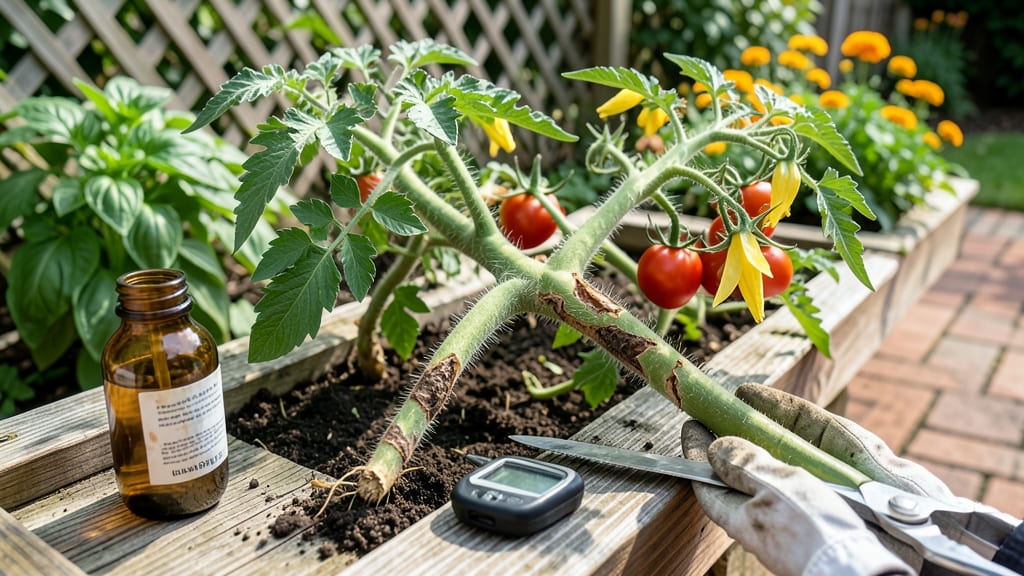
Brown stems on tomato plants mean your harvest is fighting for survival. 🌱 I’ve seen this turn a thriving vine into a sad, wilted mess—but the right pruning and care can bring it back stronger than ever.
The key? Acting fast to stop the spread while giving your plant the support it needs to recover.
Most brown stems come from too much water, fungal diseases like blight, or pests chewing through the stems. Overwatering is the biggest culprit, turning roots into a soggy mess that can’t feed the plant.
Pruning the browned sections (about 1 inch below the damage) removes the problem while encouraging new, healthy growth from the remaining stems.
What you’ll end up with is a tomato plant that’s not just surviving, but producing bigger, firmer fruit than before. The pruned areas will sprout fresh green shoots within 2-3 weeks, and with proper watering (deep but infrequent), your plant will bounce back with a vengeance.
The best part? You’ll learn to spot early signs of stress next season.
This fix works for both garden beds and containers, and it’s especially critical in humid climates where fungal diseases spread fast. If the brown stems keep spreading despite pruning, it might be time to call in a local extension service—they can test for specific pathogens and recommend targeted treatments.
Root Causes of Stem Discoloration
Tomato plants are resilient, but when their stems turn brown, it’s often a sign of stress—or something more serious. Understanding the why behind this issue is the first step toward saving your harvest.
Below, we break down the most common culprits, backed by science, so you can diagnose and act fast.
When tomato stems turn brown, excessive heat or direct sunlight can cause sun scorch, a condition where plant tissues dry out and die.
This is especially common in: - Hot, dry climates (like desert regions or midday summer heat). - Young, tender stems that haven’t yet developed protective wax coatings. - Plants grown in black plastic mulch, which absorbs heat and radiates it back onto stems.
How it happens:
- The cuticle (a plant’s protective outer layer) breaks down under intense UV radiation.
- Water loss accelerates, leading to necrosis (dead tissue) that appears as brown, crispy patches.
- Stems may crack if they expand too quickly in heat, exposing inner tissue to further damage.
Quick test: If the browning is on exposed, upper stems and the plant feels dry to the touch, sun scorch is likely.
Tomatoes are thirsty but sensitive—too much or too little water can turn stems brown. Here’s how:
Underwatering (Drought Stress)
- Symptoms: Brown, dry, brittle stems that snap easily.
Leaves may curl or wilt. - Why it happens: - Xylem vessels (water-conducting tubes) collapse when soil dries out, blocking water flow. - Root pressure drops, causing cavitation (air bubbles forming in stems), which disrupts nutrient transport. - Osmotic stress occurs as cells lose turgor (firmness), leading to necrotic browning.
Overwatering (Root Rot & Oxygen Starvation)
- Symptoms: Mushy, dark brown stems near the soil, foul smell, or wilting despite wet soil.
- Why it happens:
- Fungal pathogens (like Phytophthora or Pythium) thrive in waterlogged soil, infecting stems.
- Lack of oxygen in saturated soil forces roots to ferment, releasing toxins that travel up the stem.
- Cell walls break down due to anaerobic conditions, causing soft rot.
Pro tip: Stick your finger 2 inches into the soil—if it’s dry, water deeply; if it’s soggy, hold off and improve drainage.
Brown stems can signal serious pathogens that spread quickly. The two most common offenders:
| Pathogen | Symptoms | How It Spreads |
|---|---|---|
| Fusarium Wilt | Brown, vascular discoloration (stem turns dark brown when cut open). Plant wilts suddenly, even with water. | Soilborne—survives in infected debris. Thrives in warm soil. |
| Bacterial Wilt | Wilting leaves, yellowing, then brown, oozy stems (especially at nodes). | Transmitted by infected tools or sap-sucking insects (like squash bugs). |
| Verticillium Wilt | Streaks of brown in stems, stunted growth, yellowing leaves (older to younger). | Soilborne—can lie dormant for years. |
Why it’s dangerous:
- These diseases clog xylem vessels with gum, fungus, or bacteria, blocking water and nutrients.
- No cure exists—infected plants must be removed and destroyed to prevent spread.
Prevention tip: Rotate crops, sterilize pruners with rubbing alcohol, and avoid overhead watering to keep stems dry.
Tomato stems are fragile—even minor injuries can lead to browning.
Mechanical Stress
- Wind or hail can crush stems, exposing inner tissue to pathogens or drying.
- Harsh pruning (tearing instead of cutting) creates open wounds that invite infection.
Pruning Gone Wrong
- Cutting too close to the stem (leaving a stub) can strangle the plant by blocking sap flow.
- Over-pruning weakens the plant, reducing its ability to compartmentalize damage (a natural defense mechanism).
Fix it: Always prune at a 45° angle, leaving ¼-inch above a leaf node, and sterilize tools between cuts.
Brown stems can also signal nutritional imbalances:
- Calcium Deficiency (Blossom End Rot’s Cousin):
- Causes brown, necrotic spots on stems, especially in new growth.
- Why? Calcium helps cell wall structure—without it, stems weakened and die.
- Fix: Apply calcium nitrate or crushed eggshells to soil.
- Excess Salt or Fertilizer Burn:
- Brown, crispy edges on stems (like "scorched" tissue).
- Why? High salt levels disrupt osmosis, causing cells to lose water and burst.
- Fix: Flush soil with water and avoid over-fertilizing.
Some pests chew stems without leaving obvious holes, leading to browning:
- Tomato Hornworms: Strip stems clean at night, causing sudden wilting.
- Cutworms: Sever stems at soil level, leaving a clean, brown break.
- Aphids or Spider Mites: Weakens stems by sucking sap, leading to browning and stunting.
Signs to watch for:
- Silken webbing (mites).
- Black frass (poop) near stems (hornworms).
- Notched or jagged edges on stems.
Act fast: Handpick pests or use neem oil to disrupt their life cycle.
How to Fix Weakened Tomato Stems
If your tomato plants are showing brown or mushy stems, don’t panic—there are practical ways to revive them and even boost future growth. The key is identifying the root cause (literally!) and applying targeted fixes.
Below, we break down solutions by issue, from quick fixes to long-term prevention, so you can get your plants back on track for a bountiful harvest. 🍅✨
Fungal infections weaken stems by clogging vascular tissue, turning them brown, black, or soft. Act fast to prevent spread:
🍳 Immediate Treatment
- Prune infected stems 🔪: Use sterilized pruners (wipe with rubbing alcohol) to cut off brown/mushy stems at least 1 inch below the affected area. Dispose of clippings in the trash (not compost).
- Apply fungicide 🛡️: Spray with a copper-based fungicide (like copper sulfate) or a neem oil solution (2 tbsp neem oil + 1 tsp mild soap per gallon of water). Reapply every 7–10 days.
- Improve airflow 🌬️: Thin out crowded plants and remove nearby weeds to reduce humidity around stems.
🌱 Long-Term Prevention
- Rotate crops 🔄: Avoid planting tomatoes (or nightshades like peppers/eggplants) in the same spot for 3–4 years.
- Solarize soil ☀️: In late summer, cover infected soil with clear plastic for 4–6 weeks to kill fungal spores.
- Choose resistant varieties 🌿: Opt for blight-resistant tomatoes like ‘Mountain Merit’ or ‘Defiant PhR.’
Soggy soil and waterlogged roots starve stems of oxygen, causing them to turn brown or rot. Fix it with these steps:
⏰ Quick Drainage Fix
- Check soil moisture 💧: Stick your finger 1–2 inches into the soil—if it’s damp, hold off on watering. Tomatoes prefer 1–1.5 inches of water per week.
- Aerate the soil 🏗️: Loosen compacted soil around the base with a fork or trowel to improve oxygen flow.
- Raise plant beds 🪜: If growing in containers or garden beds, ensure pots have drainage holes or amend clay soil with compost or perlite.
🎯 Prevention Tips
- Water deeply but less often 🌊: Water at the base of the plant in the morning to avoid evening moisture.
- Use mulch 🍂: Apply a 2–3 inch layer of straw or wood chips to retain moisture without suffocating roots.
- Avoid overhead watering 💦: Splashing water on leaves spreads disease—stick to drip irrigation or soaker hoses.
Pests like aphids or chewing insects can weaken stems, leaving brown trails or holes. Here’s how to evict them:
👨🍳 Pest Control Steps
- Blast off pests 💦: Spray plants with a strong stream of water to dislodge aphids or mites.
- Introduce beneficial insects 🐞: Release ladybugs or lacewings (available at garden centers) to eat pests naturally.
- Apply insecticidal soap 🧼: Mix 1.5 tbsp mild soap + 1 quart water and spray directly on infested stems.
🔥 Prevention Strategies
- Inspect plants weekly 🔍: Check undersides of leaves for pests early in the season.
- Use row covers 🛡️: Cover young plants with floating row fabric to block pests until flowering.
- Plant companion herbs 🌿: Basil, marigolds, or garlic repel pests—interplant them near tomatoes.
Brown, brittle stems can signal a lack of key nutrients. Test your soil and adjust with these fixes:
📊 Soil Amendment Guide
| Deficiency | Symptoms | Solution |
|---|---|---|
| Potassium (K) | Brown edges on leaves + weak stems | Add wood ash or banana peels (composted) or use a balanced fertilizer (10-10-10). |
| Calcium (Ca) | Blossom end rot + brown stems | Sprinkle crushed eggshells or use calcium nitrate. |
| Magnesium (Mg) | Yellowing between leaf veins | Apply Epsom salt (1 tbsp/gallon water) as a foliar spray. |
💡 Pro Tips
- Test your soil 🧪: Use a home soil test kit to identify deficiencies before symptoms appear.
- Fertilize in stages 🌱: Feed plants with a low-nitrogen fertilizer (like 5-10-10) when flowers appear, not just at planting.
- Avoid over-fertilizing ⚠️: Too much nitrogen = lush leaves but weak stems. Stick to recommended doses.
With these fixes, your tomato plants should bounce back—and with stronger stems, they’ll support bigger, healthier fruit! 🍅💪 For persistent issues, consider replacing severely infected plants to protect your harvest. Happy gardening!
Frequently asked questions
Why do tomato stems turn brown near the base but stay green at the top?
This is often a sign of root rot or overwatering. When soil stays too wet, roots suffocate and can't supply water to lower stems, causing brown, mushy areas. Check if the soil feels soggy—if so, reduce watering and improve drainage with compost or perlite.
Can I save a tomato plant if half its main stem is brown and mushy?
It depends on the cause. If it's fungal disease (like Fusarium wilt), the plant is likely beyond saving—remove it to prevent spread. But if it's mechanical damage or underwatering, prune the brown section 1 inch below the damage and adjust care. New growth should sprout from healthy nodes within 2-3 weeks.
What’s the difference between brown stems from sun scorch vs. fungal disease?
Sun scorch causes dry, crispy brown patches on exposed upper stems, often with no softness. Fungal disease creates mushy, dark brown stems near the soil, sometimes with black streaks inside when cut open. Check for these clues to diagnose correctly. vs.
Will pruning brown stems help my tomato plant produce more fruit?
Yes! Pruning removes diseased or damaged areas while redirecting the plant's energy to healthy growth. Focus on cutting below leaf nodes—this encourages new shoots that can support more fruit. Just avoid over-pruning, which weakens the plant.
How do I know if my tomato plant’s brown stems are from pests vs. disease?
Look for physical signs: Pests (like hornworms) leave chewed stems or frass (poop), while diseases cause soft, oozy stems or black streaks. Check undersides of leaves for pests—if you see aphids or mites, use insecticidal soap. For diseases, focus on fungicides and airflow. vs.