
Companion Plants
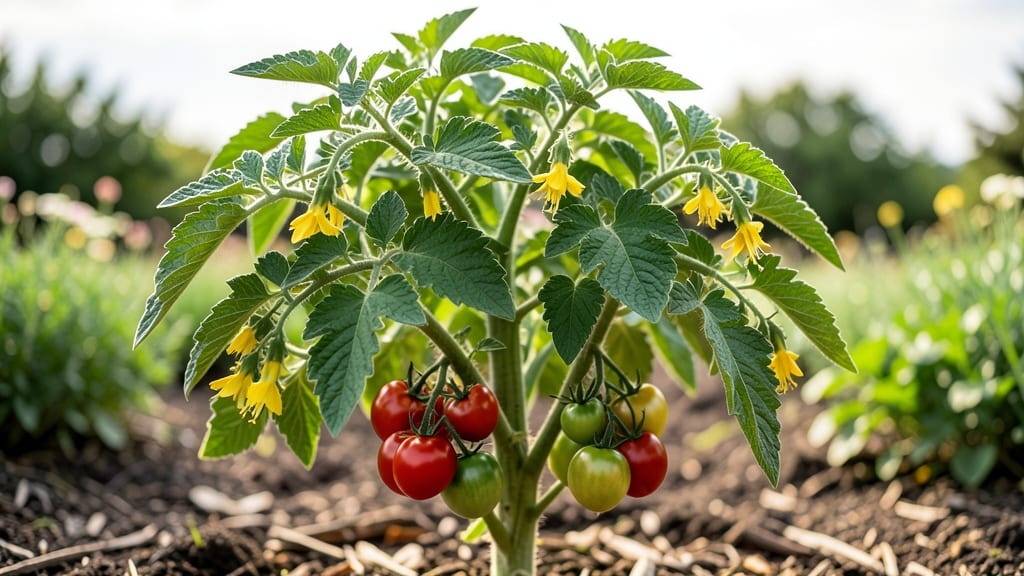
Bushy tomato plants start with three simple cuts—not more, not less. 🌱 I’ve pruned hundreds of tomato plants, and the difference between scraggly vines and thick, productive bushes comes down to sunlight and airflow.
Most gardeners over-prune or under-prune, but the sweet spot is a balance that keeps energy flowing to the fruit. The right approach depends on your tomato type: determinate varieties (like Roma) need minimal pruning, while indeterminate types (like Cherry) thrive with regular trimming.
Grab your shears and focus on removing suckers—those little shoots between the main stem and branches—when they’re no bigger than a pencil. This keeps the plant’s energy focused on what matters: bold, flavorful fruit. By mid-summer, your plants will look like sturdy bushes instead of floppy vines.
Leaves stay healthy, pests take a hike, and you’ll harvest 20-30% more tomatoes than last season. The key is consistency: check your plants weekly, especially after rain or wind, which can stress the structure. Works for containers, raised beds, or in-ground gardens.
Here’s how to do it without killing your plants—guaranteed.
📚 In This Guide
- What you need
- Instructions
- Tips and common mistakes
- Wrapping up and next steps
What you need
- ● Tomato plants: 3–6 healthy seedlings or transplants (determinate or indeterminate varieties, depending on your preference).
- ○ Pruning shears: Sharp, clean bypass pruners (avoid anvil pruners—they crush stems). Optional: Small hand pruners for delicate trimming.
- ● Gloves: Sturdy gardening gloves (to protect against thorns and dirt).
- ● Disinfectant: 70% isopropyl alcohol or a 1:10 bleach-water solution (to sterilize tools between cuts).
- ● Mulch: Organic mulch (straw, shredded leaves, or grass clippings) to retain moisture and suppress weeds.
- ● Stakes or cages: 4–6 ft tall tomato cages or sturdy wooden/bamboo stakes (for support as plants grow).
- ● Tie-downs: Soft plant ties or old T-shirts (to secure stems to stakes without damaging them).
- ● Garden twine: For additional support if using stakes.
- ● Potting soil or compost: High-quality, well-draining soil amended with compost (if planting in containers or poor soil).
- ● Watering can or hose with nozzle: For gentle, deep watering (avoid wetting leaves to prevent disease).
- ○ Sunlight meter (optional): To check if your plants are getting 6–8+ hours of sunlight daily.
How to prune for bushy, high-yield tomato plants
Transform leggy tomato plants into sturdy, productive bushes with this proven pruning method.
✂️ Step 1: Identify and Remove Suckers Early
Suckers are the small shoots that form in the leaf axils where a stem and branch meet. These compete with your main plant for energy and should be pinched off when they're no more than 2 inches long. Use your thumb and forefinger to gently squeeze the sucker at its base—don't tear the stem, just break it cleanly.
I check for suckers every 5-7 days during the growing season. The earlier you remove them, the more energy the plant puts into fruit production instead of vertical growth. If you miss a sucker, it'll grow into a competing vine that steals sunlight and nutrients from your main stems.
☀️ Step 2: Prune for Optimal Airflow and Light Penetration
Open up the plant's center by removing any inward-growing branches that block sunlight from reaching the inner leaves. Focus on leaves near the base—these rarely get enough light to photosynthesize effectively. Snip them off with clean, sharp pruning shears, cutting just above a leaf node or lateral branch.
Your goal is 6-8 inches of space between branches so air circulates freely. This prevents fungal diseases like early blight and blossom end rot. You'll know you're doing it right when you can see sunlight reaching the center of the plant and air moving through the branches when you fan them gently.
🌿 Step 3: Maintain 3-4 Main Stems for Balance
Most determinate tomato varieties do well with a single main stem, but indeterminate varieties thrive with 3-4 strong main stems. When you prune suckers, leave the largest, healthiest ones growing upward. Remove any stems that grow at sharp angles or show signs of disease.
I like to keep the plant's shape symmetrical by removing stems that grow too close together. This creates a natural scaffold that supports the weight of fruit without bending. Watch for new suckers forming at the base of these main stems—these are your future lateral branches that will bear fruit.
⏰ Step 4: Time Pruning for Maximum Yield
Prune early in the morning when the plant is turgid with water. This reduces stress and allows wounds to heal faster. Avoid pruning during hot afternoons or after heavy rain, as this increases disease risk. Use sterilized pruning shears or your fingers for small suckers to prevent spreading pathogens.
Cut back 10-15% of the plant's foliage during each pruning session. Over-pruning weakens the plant and reduces its ability to photosynthesize. You'll know you're pruning at the right rate when you see new growth appearing within 3-5 days and the plant maintains its vigor.
🌱 Step 5: Post-Pruning Care for Recovery
After pruning, give your tomato plants a light application of balanced fertilizer (10-10-10) to replenish nutrients. Water deeply at the base to help the plant recover. Avoid overhead watering for 24 hours to prevent fungal spores from settling on fresh cuts.
Monitor the plant closely for 2-3 days after pruning. You should see new lateral branches emerging from the leaf axils of your main stems. These will become your fruit-bearing branches. If you notice any yellowing leaves or wilting, it's a sign the plant is stressed—reduce pruning frequency and provide shade during hot days.
Tips & tricks for pruning tomato plants for maximum yield
These simple yet powerful techniques will help you transform leggy tomato plants into sturdy, high-producing bushes that yield bigger, healthier fruit all season long.
Tool Selection Matters: Always use clean, sharp pruning shears for larger branches and your fingers for small suckers. I sterilize my shears with rubbing alcohol between plants to prevent spreading disease. For those stubborn suckers that resist pinching, a small pair of scissors works better than tearing—it creates a cleaner break that heals faster. This attention to cleanliness is especially important when you're working with 3-4 main stems as recommended in Step 3, since each cut is an entry point for pathogens.
Visual Pruning Guide: When checking for suckers every 5-7 days as directed in Step 1, look for the classic "V" shape where the sucker emerges from the leaf axil. The ideal time to remove them is when they're still 2 inches long—this is when they're most vulnerable and easiest to pinch off without damaging the main stem. I've found that using a small hand mirror helps me spot hidden suckers on the undersides of leaves, particularly on taller indeterminate varieties.
Pruning Frequency Insight: The 10-15% foliage reduction guideline in Step 4 is your safety net—never exceed this amount in a single session. I've learned this the hard way after over-pruning and watching my plants struggle to recover. Instead, think of pruning as a gradual process: if your plant looks stressed (yellowing leaves, wilting), scale back to every 10-14 days instead of the usual weekly check. The goal is to maintain that perfect 6-8 inch spacing between branches while keeping the plant's energy focused on fruit production.
Post-Pruning Recovery Hack: After your morning pruning session, I've found that a quick foliar spray of diluted seaweed extract (1 tablespoon per gallon of water) helps the plants recover faster. The nutrients in the spray replenish what was lost during pruning and provide a protective barrier against fungal spores. This works particularly well when combined with the 24-hour no-overhead-watering rule from Step 5—it gives those fresh cuts time to callus over before potential pathogens get a foothold.
Pro Tips for Bushy Tomato Plants
- These simple yet powerful techniques will help you transform leggy tomato plants into sturdy, high-producing bushes that yield bigger, healthier fruit all season long.
- Tool Selection Matters: Always use clean, sharp pruning shears for larger branches and your fingers for small suckers.
- Visual Pruning Guide: When checking for suckers every 5-7 days as directed in Step 1, look for the classic "V" shape where the sucker emerges from the leaf axil.
Frequently asked questions
Got questions about managing bushy tomato plants? You’re not alone!
Here are answers to the most common concerns—from pruning timing to troubleshooting—so you can keep your plants thriving and productive.
Why should I prune bushy tomato plants at all?
Pruning boosts airflow and sunlight exposure, reducing disease risk (like blight) and improving fruit quality. Bushy plants often produce fewer, larger tomatoes—so yes, it’s worth the effort! Focus on removing suckers (shoots between stems) and crowded foliage.
When is the best time to prune bushy tomato plants?
Prune early and often—start when plants are 12–18 inches tall, then repeat every 1–2 weeks. Avoid heavy pruning late in the season (after flowering), as it can stress the plant. Morning is ideal to let wounds heal before evening moisture sets in.
What if my tomato plant is already overgrown? Can I still prune it?
Even overgrown plants benefit from pruning, but go slowly—remove no more than ⅓ of the foliage at once. Focus on dead or diseased leaves first, then thin out crowded branches. Water deeply afterward to reduce shock. Pro tip: Use sterilized pruners to prevent spreading disease.
Will pruning reduce my tomato yield?
Not if done right! Pruning increases yield by directing energy to fruit production. However, over-pruning (removing too many leaves) can limit photosynthesis. Leave 6–8 leaves below the first flower cluster to balance growth and harvest.
Are there alternatives to pruning bushy tomato plants?
Yes! If pruning feels overwhelming, try:
- Thinning seedlings early to prevent overcrowding.
- Using dwarf or determinate varieties (like ‘Patio’ or ‘Tiny Tim’) that stay compact.
- Staking or caging plants to improve airflow naturally.
My pruned tomato plant looks stressed—what went wrong?
Stress often stems from over-pruning or poor timing. Check for:
- Too many leaves removed? Leave at least half the foliage.
- Pruned too late? Avoid heavy cuts after flowering.
- Disease signs (yellow leaves, spots)? Use fungicide if needed.
Wrapping up and next steps
Growing bushy tomato plants is all about balancing pruning for airflow and maximizing sunlight exposure—two simple yet powerful steps to unlock healthier, more productive vines. 🌱 By trimming strategically and pairing your tomatoes with the right companion plants, you’ll not only prevent disease but also encourage bigger, tastier harvests.
The best part? Every snip and placement decision brings you one step closer to a thriving garden.
Ready to put your new skills to work? Start by assessing your tomato plants this weekend—grab those pruners and get pruning! Your future salads (and bragging rights) will thank you. 🍅✨