
Plants
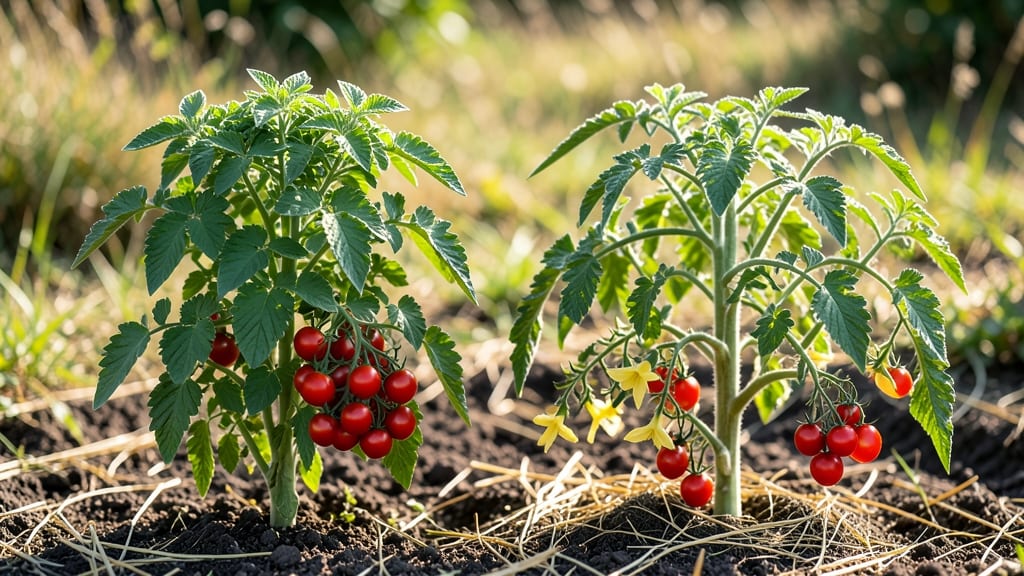
Cherry tomato plants are determinate or indeterminate, with determinate varieties producing compact bushes and a single harvest, while indeterminate types grow vining and yield continuously throughout the season. Choose based on your garden space and desired fruit volume.
Determinate cherry tomato plants grow as compact, bushy shrubs and produce fruit all at once, making them ideal for small gardens or container growing. They stop growing once they set their first fruit cluster, which means you'll get a heavy harvest in just 2-3 weeks.
Indeterminate varieties, on the other hand, keep growing and producing fruit until frost, creating a steady supply throughout the summer. 🌱 This continuous growth means they need sturdy support like cages or trellises to manage their height and weight.
The choice between the two often comes down to whether you prefer a big harvest all at once or a steady stream of tomatoes over months.
For gardeners with limited space, determinate varieties are often the better option because they stay contained and don't require as much maintenance. However, if you're looking to maximize your yield over a longer period, indeterminate varieties are the way to go.
They also tend to have better disease resistance because their continuous growth allows them to outpace many common tomato diseases. Just be prepared for the extra work of pruning and supporting their vines as they grow taller and heavier with each passing week.
💡 In This Article
- Key Differences Between Determinate and Indeterminate Cherry Tomatoes
- Best Cherry Tomato Varieties for Your Garden Type
Key differences between determinate and indeterminate cherry tomatoes
The fundamental distinction lies in their growth patterns and genetic programming. Determinate cherry tomatoes grow as self-supporting bushes, typically reaching 3-4 feet tall with a rounded shape. Their growth stops after they produce their first flower cluster, which triggers a single massive harvest.
This is because their apical meristem (the growth tip) stops elongating once flowering begins, redirecting all energy to fruit production. 🌿 The result is a concentrated yield within 2-3 weeks, perfect for canning or preserving.
Indeterminate varieties, however, keep growing indefinitely until frost, producing vines that can reach 6-10 feet or more with proper support. Their apical meristem remains active, continuously producing new leaves, flowers, and fruit clusters. This means you'll get smaller harvests every 7-10 days throughout the season, rather than one big event.
The trade-off? Indeterminate plants require more maintenance—regular pruning to remove suckers (side shoots), staking or caging, and often more frequent watering to support their vigorous growth.
Another key difference is their flowering mechanism. Determinate plants produce flowers in clusters at the ends of branches, which all ripen simultaneously. Indeterminate types develop flowers in leaf axils along the vine, creating a staggered ripening process.
This continuous flowering also means indeterminate varieties often have better disease resistance—their ongoing growth helps "outpace" many fungal pathogens that thrive in dense foliage. 🌱 The downside is that indeterminate plants are more susceptible to cracking if not watered consistently, since their fruit develops over a longer period.
Let's talk about yield potential. A single determinate cherry tomato plant might produce 1-2 pounds of fruit all at once, but you'll need multiple plants for a continuous supply.
An indeterminate plant, however, can yield 5-10 pounds over the season if properly cared for, though the fruit comes in smaller batches. For example, 'Sweet Million' (indeterminate) will give you cherry tomatoes every week, while 'Tiny Tim' (determinate) will flood you with fruit in one glorious burst.
Consider your garden's microclimate too. Determinate plants thrive in cooler climates or shorter growing seasons because they complete their cycle quickly. Indeterminate varieties perform better in warm, long seasons where they can keep producing until frost.
The choice affects not just your harvest timing but also your garden layout—determinate plants work well in containers or small spaces, while indeterminate types need vertical space and room to sprawl.
Here's a visual comparison to remember: Imagine determinate plants as apple trees that bear all their fruit at once, while indeterminate types are more like grapevines producing clusters continuously. This fundamental difference shapes everything from your planting strategy to how you'll use your harvest throughout the season. 🌱