
How To
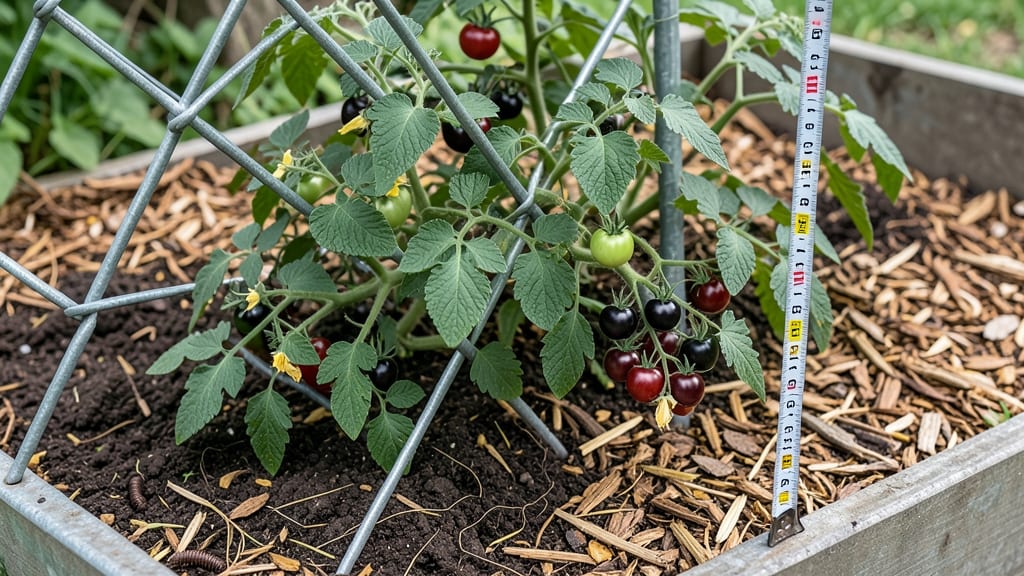
Black cherry tomato plants grow to a mature height of 4 to 6 feet when given proper care, making them perfect for trellises or tall cages.
If you’re dreaming of lush, vine-covered trellises loaded with sweet, glossy 🍅 Black Cherry tomatoes, knowing their growth habits is key to maximizing your harvest—and avoiding a jungle in your garden.
These indeterminate varieties don’t stop growing until frost hits, so spacing and support are critical. Without them, you’ll end up with sprawling vines that crowd out other plants and make harvesting a chore.
Below, I’ll break down how to control their height, whether you’re working with a small balcony container or a full backyard plot, plus the best trellising and pruning tips to keep your plants productive all season.

Black cherry tomato height differences: indeterminate vs determinate varieties explained
If you’ve ever wondered how tall do black cherry tomato plants grow, the answer depends entirely on whether you’re growing indeterminate or determinate varieties. These two types have completely different growth habits that will change how you plan your garden layout, trellising, and even pruning.
Let me break it down so you can choose the perfect variety for your space.
Most black cherry tomatoes you’ll find at nurseries are indeterminate, meaning they grow continuously throughout the season until frost stops them. These vining plants can reach 4 to 6 feet tall—sometimes even taller if given perfect conditions.
Meanwhile, determinate varieties stay compact, topping out at 2 to 3 feet, making them ideal for containers or small gardens. The difference isn’t just height—it’s also how they produce fruit and how much space they’ll need.
Here’s where things get interesting: indeterminate plants produce fruit along their entire vine, giving you a steady harvest all season long. Determinate plants, however, set fruit only on the ends of branches, so they’ll produce a big crop all at once.
If you’re planning a continuous snack supply of sweet black cherries, indeterminate is the way to go. But if you prefer a heavy harvest in one go (like for canning), determinate might suit you better.
Now, let’s talk about the garden planning implications. Indeterminate plants need strong trellising or cages to support their weight, especially when loaded with fruit. I’ve seen vines stretch to 8 feet tall in ideal conditions, though 4-6 feet is more common.
Determinate plants, on the other hand, often don’t need support unless they’re in windy areas or heavy fruiting causes them to flop.
| Type | Mature Height | Growth Habit | Trellising Needs | Fruit Production | Best For |
|---|---|---|---|---|---|
| Indeterminate | 4–6 ft (or taller) | Vining, continuous growth | Strong trellis/cage required | All season, steady harvest | Large gardens, trellises, containers with support |
| Determinate | 2–3 ft | Bushy, stops growing at maturity | Optional (stakes for windy areas) | Single heavy harvest | Containers, small spaces, canning |
The spacing requirements also differ dramatically. Indeterminate plants need 18 to 24 inches between vines when trellised, while determinate varieties can be planted 12 to 18 inches apart.
In my small urban garden, I’ve used determinate black cherry tomatoes in 5-gallon containers with great success—they stayed compact and produced enough for my family’s needs without taking over the space.
When it comes to pruning, indeterminate plants benefit from regular pruning to remove suckers (those little shoots in the leaf axils) and encourage airflow. This keeps the plant focused on producing fruit rather than excessive foliage.
Determinate plants, however, rarely need pruning unless you’re dealing with disease or pest issues. Over-pruning determinate varieties can actually reduce your yield since they rely on all their leaves for photosynthesis during that single harvest window.
One common mistake I see is assuming all black cherry tomatoes are the same when it comes to height. If you’re working with limited space, always check the seed packet or plant tag to confirm whether it’s indeterminate or determinate.
For example, the 'Black Cherry' heirloom is typically indeterminate, while 'Tiny Tim' black cherry is a dwarf determinate variety that stays under 2 feet tall—perfect for balconies or windowsills.
If you’re growing indeterminate varieties, consider vertical gardening techniques like floral arches or tomato towers to maximize your space.
I’ve even seen gardeners train their vines to grow up permanent trellises made from bamboo or metal pipes, creating a stunning vertical display while keeping the garden floor free for other crops.
For determinate plants, focus on mulching to retain moisture and staking if needed—they’re low-maintenance but still appreciate a little support in windy conditions.
Remember, the height of your black cherry tomato plants directly impacts how much fruit you’ll produce and how easy they’ll be to care for. Choose wisely based on your garden’s layout, your time for maintenance, and whether you prefer a steady supply or a big all-at-once harvest.
With the right variety and support system, you’ll be enjoying those sweet, glossy black cherries in no time!
How to control black cherry tomato plant height for small gardens or containers
Black cherry tomato plants are indeterminate varieties, meaning they grow continuously until frost, reaching 4-6 feet tall if left unchecked. For small gardens or containers, controlling their height isn't just about aesthetics—it's about maximizing yield, airflow, and disease prevention.
With the right techniques, you can keep these vining beauties compact while still enjoying a bumper crop of sweet, glossy fruits.
I’ve found that combining pruning, trellising, and selecting dwarf varieties works best for my urban garden. The key is to guide their growth vertically while keeping the plant’s energy focused on fruit production rather than excessive foliage.
Let’s break down the step-by-step process to tame those towering vines without sacrificing your harvest.
Step-by-Step Guide to Controlling Black Cherry Tomato Height
- 1 Choose the right variety: Opt for dwarf or patio varieties like 'Tiny Tim' (2-3 ft) or 'Patio Princess' (3-4 ft). These are bred for compact growth and still produce abundant black cherry tomatoes.
- 2 Install a sturdy trellis early: Use a 5-foot tall trellis or tomato cage for standard varieties. For containers, a spiral trellis or bamboo stakes work wonders. Install it when seedlings are 6-8 inches tall to avoid root disturbance.
- 3 Prune regularly to control height: Pinch off the topmost suckers (the small shoots in the leaf axils) when they’re 1-2 inches long. This redirects energy to fruit production. Aim to keep the plant’s height to your desired limit (e.g., 3-4 feet for containers).
- 4 Train vines upward: Gently tie the main stem to the trellis every 12 inches using soft plant ties. This prevents the plant from sprawling and keeps it upright. Avoid tying too tightly to prevent stem damage.
- 5 Harvest frequently: Picking ripening tomatoes every 2-3 days encourages the plant to produce more fruit. Overripe tomatoes signal the plant to focus on seed production, slowing down growth and yield.
- 6 Fertilize wisely: Use a balanced fertilizer (5-10-10) every 4-6 weeks to support compact growth. Avoid high-nitrogen fertilizers, which promote leafy growth over fruit. A light feed of compost tea mid-season boosts root health.
For container gardening, I’ve had great success with 5-gallon fabric grow bags paired with a freestanding trellis. The deep roots thrive in the extra space, and the trellis keeps the plant contained. Just ensure your container has drainage holes to prevent root rot—a common issue with overwatered tomatoes.
If your black cherry tomatoes still seem unruly, don’t hesitate to prune aggressively in early summer. Cut back the main stem by 1/3 to encourage bushier growth and more fruit clusters. This technique works especially well for overwintered plants that have outgrown their space.
With these methods, you’ll enjoy a high-yielding, space-efficient black cherry tomato plant that fits perfectly in small gardens, balconies, or even sunny windowsills. Happy growing—and may your trellis be ever laden with sweet, glossy tomatoes! 🍅