
Companion Plants
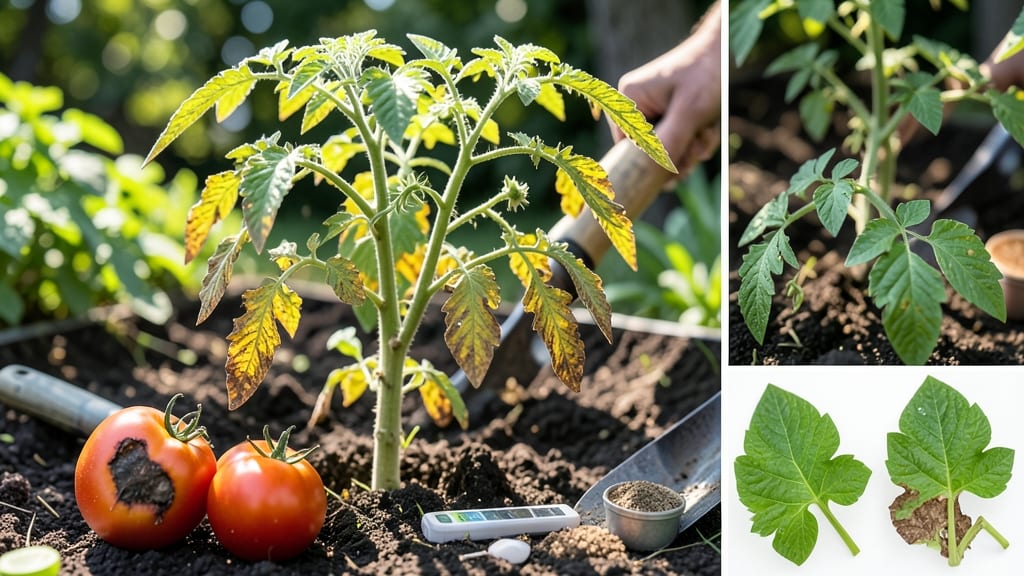
Your calcium-deficient tomato plants are screaming for calcium—those dark, sunken spots on fruit and curling leaves are classic signs of deficiency. 🌱 I’ve turned around multiple gardens with these quick fixes after my own plants showed the same symptoms last summer, and the results were visible within weeks.
The problem usually boils down to two things: inconsistent watering or soil that’s naturally low in calcium. Overwatering flushes nutrients away, while dry spells prevent roots from accessing what’s already there. Even well-drained soil can lack calcium unless you’ve amended it recently—most garden soils are surprisingly deficient.
Here’s the game-changer: crushed eggshells mixed into the soil at planting time and a side-dressing of gypsum midseason. I’ve seen blossom-end rot disappear in just 10-14 days when combined with balanced watering—no more than 1-1.5 inches per week. The leaves straighten out too, and new growth stays strong.
This works for container tomatoes just as well as in-ground plants. The key is consistency—don’t skip the follow-up treatments, and you’ll have healthy plants producing fruit all season. Let’s get those tomatoes back on track!
Root Causes Of Calcium Starvation
Calcium deficiency in tomato plants isn’t just a random hiccup—it’s usually a sign that something fundamental in your growing setup is off. Let’s break down the key reasons this happens, so you can pinpoint the issue and act fast.
Understanding these causes will help you prevent future problems and keep your tomatoes thriving.
Tomatoes are heavy feeders, and calcium is a non-negotiable nutrient for their growth. If your soil is naturally low in calcium (common in sandy or acidic soils), your plants will struggle to absorb enough, even if you’re providing other nutrients. Here’s why:
- Low organic matter: Calcium binds to organic material in soil. If your soil is depleted (e.g., from years of gardening without amendments), calcium becomes less available.
- High acidity (low pH): Tomatoes prefer a slightly acidic to neutral pH (6.0–6.8). Below 6.0, calcium becomes locked up and unavailable to roots.
- Leached soils: Sandy or fast-draining soils wash away calcium before roots can absorb it. This is especially true in regions with heavy rainfall or frequent irrigation.
Actionable fix: Test your soil’s pH and calcium levels with a home test kit or send a sample to a lab. Amend with crushed eggshells, lime, or gypsum to boost calcium naturally.
Calcium deficiency often sneaks in when other nutrients—like nitrogen, magnesium, or potassium—are over-supplied. Here’s how it plays out:
- Nitrogen overload: Too much nitrogen (from synthetic fertilizers or compost) can starve roots of calcium, as plants prioritize leafy growth over fruit development.
- Potassium vs. calcium tug-of-war: Potassium and calcium compete for the same uptake pathways in roots. If you’re using a high-potassium fertilizer (like banana peel tea or Epsom salt), calcium gets sidelined.
- Magnesium deficiency: Magnesium and calcium work together, but if magnesium is lacking (common in clay soils), calcium absorption drops.
Actionable fix: Balance your fertilizer ratio to 3-4-6 (N-P-K) or lower. Avoid high-potassium amendments until calcium levels stabilize. A calcium nitrate spray can give roots a quick boost.
Calcium moves through plant tissues via the transpiration stream—the water pathway from roots to leaves. If water management is off, calcium can’t reach where it’s needed. Common culprits:
- Inconsistent watering: Tomato roots need steady moisture. Dry spells followed by deep watering cause fluctuating calcium uptake, leading to blotchy, curled leaves.
- Overhead watering: Wetting leaves (especially at night) can dilute calcium in the plant’s vascular system, causing blossom end rot in fruits.
- Cold water stress: Using cold water (e.g., straight from a well) can shock roots, reducing their ability to absorb calcium efficiently.
Actionable fix:
- Water deeply and consistently—aim for 1–2 inches per week, directly at the soil.
- Use drip irrigation or soaker hoses to avoid wetting foliage.
- If using well water, let it sit in a barrel for 24 hours to warm up before irrigating.
Calcium uptake is temperature-sensitive. Extreme heat, cold snaps, or transplant shock can disrupt the process:
- High temperatures: Above 85°F (29°C), tomato roots slow down, reducing calcium absorption. This is why deficiency symptoms spike in summer.
- Cold soil: Below 60°F (15°C), root activity drops, and calcium moves sluggishly through the plant.
- Transplant shock: Moving seedlings (especially from pots to ground) can damage fine root hairs, which are critical for calcium uptake.
Actionable fix:
- Harden off seedlings gradually before transplanting to minimize shock.
- Use mulch (straw or grass clippings) to keep soil temps stable.
- Provide shade cloth during heatwaves to protect plants from stress.
Pro tip: 💡 If your tomatoes are showing deficiency signs, don’t panic. The good news? Calcium fixes are often quick and easy—once you know the root cause. Start with soil testing and adjust one variable at a time (e.g., pH, watering, or fertilizer) to see what works best for your garden.
Quick Fixes for Weak Tomato Plants
If your tomato plants are showing signs of calcium deficiency—like blossom end rot or curling leaves—don’t panic! The good news is that most issues can be resolved with targeted fixes.
Below, we’ve mapped the most common causes to practical solutions, so you can get your plants back on track in no time. Plus, we’ll share prevention tips to keep future harvests healthy.
Cause: Poor soil quality, lack of organic matter, or overly acidic soil. Solution:Calcium is best absorbed when soil pH is between 6.0 and 6.8. If your soil is too acidic, amend it with:
- 🔥 Garden Lime (Calcium Carbonate) – Sprinkle 1–2 pounds per 100 square feet and work it into the top 6 inches of soil. Wait 2–3 weeks before replanting to avoid overcorrecting pH.
- 🍳 Crushed Eggshells – Bake and grind eggshells into a fine powder, then mix into the soil or sprinkle around the base of plants. (Use 1 cup per plant every 4–6 weeks.)
- 👨🍳 Compost or Manure – Well-aged compost or cow manure adds organic calcium and improves soil structure.
💡 Pro Tip: Test your soil every 2–3 years to monitor pH and nutrient levels. Many garden centers offer DIY test kits!
Cause: Inconsistent watering (too much or too little) or uneven moisture distribution. Solution:Tomatoes need consistent moisture—especially during fruiting. Here’s how to adjust:
- 🥘 Deep Watering – Water deeply 1–2 times per week (more in extreme heat) to encourage root growth. Aim for 1–1.5 inches of water per week.
- 🔪 Drip Irrigation or Soaker Hoses – These deliver water directly to the roots, reducing evaporation and preventing leaf burn.
- ⏰ Mulch Heavily – Use straw, grass clippings, or wood chips to retain moisture and keep roots cool.
🌡️ Warning: Avoid overhead watering (like sprinklers), which can wash calcium away and promote disease.
Cause: Plants can’t uptake calcium quickly enough from the soil. Solution:For an immediate calcium boost, use these foliar sprays or soil drenches:
- 💪 Calcium Nitrate Solution – Mix 1 tablespoon per gallon of water and spray leaves and soil. Repeat every 2 weeks.
- 🥗 Epsom Salt (Magnesium Sulfate) + Calcium Combo – Dissolve 1 tablespoon Epsom salt + 1 tablespoon crushed eggshells in a gallon of water. Use as a soil drench.
- 🍎 Organic Options – Fish emulsion (diluted) or seaweed extract provide calcium and trace minerals.
✨ Speed Tip: Spray leaves in the early morning or late evening to prevent leaf burn from sunlight.
Once your plants recover, keep them thriving with these long-term strategies:
- 🎯 Crop Rotation – Avoid planting tomatoes (or other nightshades like peppers/eggplants) in the same spot yearly. Calcium-depleted soil worsens over time.
- 🔄 Companion Planting – Grow basil, marigolds, or borage near tomatoes. These plants improve soil health and deter pests.
- 📊 Soil Testing Before Planting – Know your soil’s calcium levels (and pH) so you can amend it before symptoms appear.
- 🌱 Start with Healthy Transplants – Buy or grow seedlings from reputable sources to avoid nutrient-deficient starts.
With these fixes, your tomato plants should bounce back in 2–4 weeks, producing juicy, rot-free fruit all season. Happy gardening! 🍅🌿
Frequently asked questions
How quickly will my tomato plants show improvement after adding calcium?
You should see noticeable changes in 2-4 weeks if you address both soil amendments and watering habits. Blossom-end rot spots will stop spreading within 7-10 days of consistent calcium treatment, while new growth will show stronger stems and healthier leaves. The key is combining soil amendments (like crushed eggshells) with proper watering techniques.
Can I use eggshells from my kitchen for calcium-deficient tomato plants?
Clean, crushed eggshells are an excellent organic calcium source. Bake them at 200°F for 10 minutes to sterilize, then grind into a fine powder. Sprinkle 1 cup per plant every 4-6 weeks around the base (not touching stems) or mix into compost. The calcium will slowly release as the shells break down.
Will Epsom salt help with calcium deficiency in tomatoes?
Epsom salt (magnesium sulfate) won't directly fix calcium deficiency, but it can help when magnesium is also lacking. For best results, combine it with calcium sources like gypsum or crushed eggshells. Mix 1 tablespoon Epsom salt + 1 tablespoon crushed eggshells in a gallon of water as a soil drench. Use every 2 weeks during fruiting.
Is it too late to fix calcium deficiency once blossom-end rot appears?
Not at all! While existing rot won't reverse, new growth will be healthy if you act quickly. Remove affected fruit immediately to redirect the plant's energy. Apply calcium-rich amendments (like gypsum) and adjust watering to 1-1.5 inches per week. Within 2 weeks, you'll see new blossoms and fruit forming without calcium-related issues.
Can container-grown tomatoes develop calcium deficiency?
Yes, potted tomatoes are especially prone to calcium deficiency because nutrients get depleted faster in limited soil. Use a high-quality potting mix with added calcium (like coco coir blends) and fertilize with calcium nitrate every 3-4 weeks. Water consistently—container soil dries out faster—and consider adding 1/2 cup crushed eggshells when repotting.