
Neem Oil
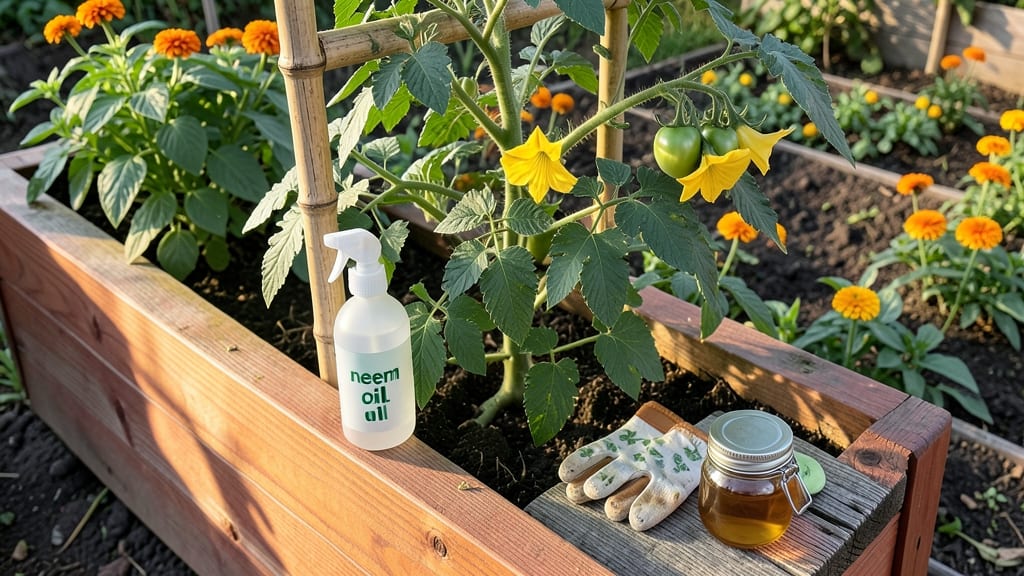
Yes, neem oil can be used on tomato plants as a natural fungicide and insect repellent, but it must be applied carefully to avoid harming pollinators or disrupting fruit development. Always use it when plants are dry and dilute to 1-2 teaspoons per gallon of water.
Neem oil works wonders for tomato plants because its active compounds—like azadirachtin—disrupt insect life cycles and inhibit fungal spores. 🌱 For example, it effectively targets common tomato pests like aphids and whiteflies while preventing early blight.
The key is timing: apply it in the early morning or evening when bees are less active, and always avoid spraying during flowering or fruiting stages to protect pollinators and fruit development.
For best results, I recommend using a 1% solution (1 teaspoon per quart of water) and reapplying every 7-14 days during active pest seasons.
Organic gardeners often swear by this method because it’s a natural alternative to synthetic chemicals, but always test a small area first to ensure your plants tolerate it.
💡 In This Article
- How Neem Oil Protects Tomato Plants from Pests and Diseases
- Best Practices for Safe Neem Oil Application on Tomatoes
How neem oil protects tomato plants from pests and diseases
Neem oil's power comes from its complex chemical profile, where azadirachtin and nimbin act like nature's pest control duo. Azadirachtin disrupts insect hormones, preventing pests like aphids from maturing while also repelling whiteflies with its bitter taste.
At the cellular level, it interferes with insect molting processes, causing larvae to die before reaching adulthood. 🔥 For tomato plants, this means fewer new infestations and quicker elimination of existing pests.
The oil also contains triterpenoids that inhibit fungal spores by damaging their cell membranes, making it effective against early blight and powdery mildew. Studies show a 1% neem oil solution can reduce fungal growth by up to 80% when applied preventatively.
The key is its lipophilic nature—it penetrates waxy plant surfaces while remaining active for 7-14 days after application, unlike many synthetic fungicides that wash away quickly.
What makes neem oil particularly valuable for tomatoes is its multi-faceted action. Unlike single-purpose pesticides, it works through three mechanisms: direct toxicity to pests, repellency through odor, and growth inhibition via hormone disruption.
For example, whiteflies are deterred by the oil's strong aroma while aphids' feeding is disrupted by the chemical interference with their digestive enzymes. This comprehensive approach explains why gardeners see results even when pests develop resistance to other treatments.
However, the protection isn't immediate. Neem oil requires 24-48 hours to fully activate after application, which is why consistent 7-day intervals during peak pest seasons (spring to early fall) are crucial.
The oil's effectiveness also depends on proper coverage—undersides of leaves often harbor pests, so thorough spraying with a hose-end sprayer ensures complete protection. 🌱 For organic certification, this method meets OMRI standards when used according to guidelines.
One fascinating aspect is how neem oil affects plant physiology. While it targets pests, it also stimulates the tomato plant's natural defenses by increasing phenolic compounds in the leaves. These compounds act as additional barriers against pathogens, creating a double layer of protection.
The result is healthier plants that can better resist stress from both biotic (pest/disease) and abiotic (environmental) factors.
For visual learners, imagine this: healthy tomato leaves have a vibrant green sheen, while stressed plants appear dull. Neem oil applications help maintain that glossy foliage by preventing fungal spots and pest damage.
The oil's amber color when diluted creates a visible protective film on leaves that repels insects while allowing photosynthesis to continue uninterrupted.
What most gardeners don't realize is that neem oil's benefits extend beyond the visible plant. The active compounds break down into harmless byproducts in the soil, unlike many synthetic pesticides that leave toxic residues. This makes it particularly safe for compost systems and beneficial soil organisms when used correctly. 💫