
Plants
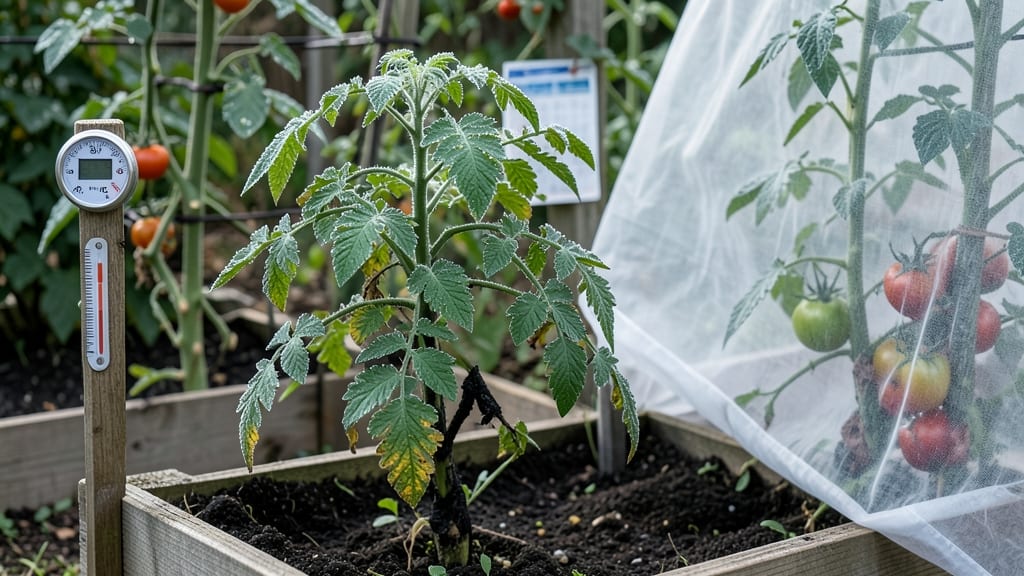
Tomato plants cannot survive a hard frost, as temperatures below 32°F (0°C) cause irreversible damage to leaves, stems, and fruit. Young plants may die, while mature ones can recover if frost is light and brief, but frost-sensitive varieties rarely bounce back fully.
Tomatoes are tropical plants that struggle when temperatures dip below freezing, making them highly vulnerable to frost damage. 🌱 While mature plants might show some resilience after a brief frost, their growth can stall or produce poor-quality fruit.
The real danger comes from prolonged exposure or repeated frosts, which can kill even established plants by disrupting their cellular structure and halting nutrient flow.
If you're growing tomatoes in colder climates, consider frost-resistant varieties like 'Solar Fire' or 'Mountain Merit', which handle cooler temperatures better than traditional types. Planting in containers also gives you the flexibility to move plants indoors during cold snaps, extending their growing season significantly.
💡 In This Article
- Tomato Plant Frost Sensitivity: Temperature Thresholds and Damage Stages
- Protecting Tomato Plants from Frost: Immediate Actions and Long-Term Prevention
Tomato plant frost sensitivity: temperature thresholds and damage stages
Tomatoes are tropical plants that lack the natural cold resistance of hardy crops like kale or cabbage. Their cellular structure simply can't handle freezing temperatures. When temperatures drop below 32°F (0°C), ice crystals form inside plant tissues, rupturing cell walls and disrupting nutrient transport.
This is why even a light frost can cause leaves to turn black and crispy within hours - the damage is immediate and often irreversible at this stage.
The severity of frost damage depends on three key factors: temperature duration, plant maturity, and variety type. A 30-minute exposure to 28°F (-2°C) might kill young seedlings completely, while mature plants could survive 2-3 hours at 26°F (-3°C) with only cosmetic damage.
Hybrid varieties like 'Better Boy' typically handle cold better than heirloom types, but no tomato plant can withstand prolonged freezing. The most vulnerable parts are the stems and growing tips, which often blacken first due to their higher water content.
What happens at the cellular level is fascinating - when water freezes, it expands by about 9%, creating microscopic tears in cell membranes. This disrupts photosynthesis and nutrient flow, causing leaves to wilt and die.
The plant's natural response is to shut down growth temporarily, but repeated frost events can overwhelm even mature plants. You'll often see frost damage manifest as brown, papery leaves that crumble at the touch, while stems may develop blackened areas that feel mushy when pressed.
Recovery chances improve dramatically with milder frosts - temperatures between 30-32°F (-1 to 0°C) for short periods may only cause superficial damage. In these cases, plants often regrow new leaves from the base within 1-2 weeks if the roots remain intact.
The key is monitoring weather forecasts and acting quickly when frost warnings appear. Even a simple plastic sheet draped over plants can raise temperatures by 5-10°F, making the difference between survival and death.
Another critical factor is soil temperature - roots can remain viable even when above-ground parts are damaged if the ground stays above 35°F (2°C). This is why mulching with straw or leaves before frost season helps protect the root zone.
The contrast between air and soil temperatures explains why some plants appear dead after frost only to regrow weeks later - their energy reserves in the roots may have survived the cold event.
Understanding these damage stages helps gardeners make better decisions. For example, if you see only 10-20% of leaves affected by frost, the plant likely has a good chance of recovery. But when 50% or more of foliage turns black and crispy, growth will stall and fruit production will suffer.
The plant may survive but won't produce quality tomatoes that season. 🌱