
Vegetables
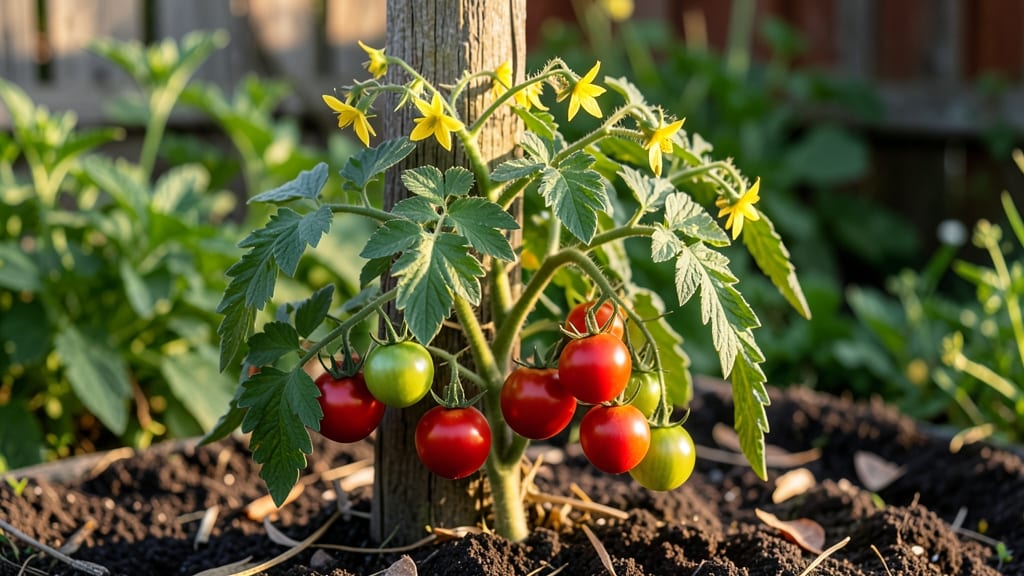
Growing cherry tomato hybrids means sweet, bite-sized rewards that turn every meal into a sunlit garden experience. 🌱 I learned the hard way that not all hybrids are created equal—determinate bushes yield fast but stop growing, while indeterminate vines climb forever, producing until frost.
The right choice depends on your space, patience, and what you crave most: early harvests or long-season abundance.
Start with rich, well-draining soil mixed with compost (think 3 inches deep of organic matter) and plant after your last frost when soil hits 60°F.
Cherry tomatoes need 6-8 hours of sun daily—no shade shortcuts—and spacing matters: indeterminate vines need 18-24 inches apart, while determinate bushes thrive in 12-inch grids. Trellising isn’t optional for vining types; it’s the secret to disease-free, sun-kissed fruit hanging just above your reach.
Water at the base deeply 1-2 times weekly (never overhead), pinch suckers early, and feed with balanced fertilizer every 4-6 weeks. The payoff? Clusters of 1-inch jewels bursting with flavor—sweeter than store-bought, with colors from gold to deep red.
Harvest when firm but yielding slightly; the longer they stay on the vine, the more they turn mealy. Pro tip: Pick in the morning for the best taste.
Common pitfalls? Overwatering (root rot is silent), skipping pruning (crowded plants = fewer tomatoes), and ignoring pests like hornworms. But with these basics, you’ll go from seedling to harvesting handfuls by midsummer. Ready to turn your garden into a cherry tomato factory?
📚 In This Guide
- What you need
- Instructions
- Tips and common mistakes
- Wrapping up and next steps
What you need
- ● Seeds or seedlings: 1–2 packets of cherry tomato hybrid seeds (e.g., 'Sweet 100,' 'Sun Gold,' or 'Tiny Tim' for determinate; 'Super Sweet 100' for indeterminate).
- ● OR 3–5 healthy seedlings from a nursery (check for disease resistance!).
- ● Containers or garden space: For determinate varieties: 5-gallon pots or raised beds (12–18" deep).
- ● For indeterminate varieties: 5–10-gallon pots OR a sturdy trellis in a garden bed (24–36" deep).
- ● Potting mix: 1–2 bags of lightweight, well-draining mix (e.g., 50% peat/50% perlite or a tomato-specific blend).
- ● Fertilizer: Balanced organic fertilizer (e.g., 10-10-10) or compost (1 cup per plant at planting).
- ○ Stakes or cages: Determinate: Optional (unless heavy fruit load).
- ● Indeterminate: Essential! 6–8 ft tall stakes or tomato cages (6–8 ft diameter).
- ● Watering tools: Hose with a gentle spray nozzle or drip irrigation system.
- ● Pruning shears (for indeterminate varieties to encourage airflow).
- ● Mulch (straw or shredded leaves to retain moisture).
- ● pH test kit (ideal soil pH: 6.0–6.8).
- ● Grow lights (if starting seeds indoors before last frost).
- ● Plant markers (to track varieties!).
How to grow cherry tomatoes: determinate vs indeterminate secrets
Cherry tomatoes thrive when you understand their growth habits—here's how to pick the right type and grow them like a pro.
🌱 Step 1: Choose Your Growth Type Based on Space and Goals
Determinate varieties produce all their fruit at once in a compact bush, perfect for 6-8 weeks of harvest before stopping. Indeterminate vines grow continuously, producing fruit until frost but requiring strong support like cages or trellises. I always plant 2 indeterminate plants per family for a steady supply, while determinate types work better in containers or small gardens.
Check the seed packet for height predictions—determinate types rarely exceed 3-4 feet, while indeterminate can reach 6-10 feet if properly pruned. This difference affects everything from spacing to staking. I've learned that indeterminate varieties need at least 2 feet of vertical space from day one, while determinate plants can start in smaller pots.
☀️ Step 2: Plant in Full Sun with Proper Spacing
Cherry tomatoes need 6-8 hours of direct sun daily—no exceptions. I plant mine in the garden's sunniest spot, often near the south-facing fence. For determinate types, space plants 18-24 inches apart in all directions. Indeterminate varieties need 24-36 inches between plants to account for their sprawling vines.
Dig holes twice as wide as the root ball but only as deep as the container. This encourages root spread rather than forcing new roots upward. Gently loosen the roots before planting, especially if you're transplanting from a small pot. I always water deeply right after planting to eliminate air pockets around the roots.
💧 Step 3: Water Deeply and Consistently
Cherry tomatoes hate inconsistent moisture—they'll split if watered unevenly or develop blossom end rot from drought stress. Water 1-2 inches per week, aiming for the soil rather than the leaves. I use soaker hoses for indeterminate plants to keep the base consistently moist without wetting the foliage.
Check soil moisture by sticking your finger 1-2 inches deep—if it feels dry, water thoroughly. Mulch with 2-3 inches of straw or shredded leaves to retain moisture and prevent soil-borne diseases. The key is maintaining even moisture without creating soggy conditions.
✂️ Step 4: Prune and Support for Maximum Yield
Indeterminate varieties need regular pruning to direct energy toward fruit production. Remove suckers (the small shoots that form in the leaf axils) weekly—these compete with the main stem. I prune in the morning when plants are turgid, using clean shears to avoid tearing stems.
For determinate types, minimal pruning suffices—just remove any diseased or crowded leaves. Install sturdy stakes or cages at planting time. I've seen indeterminate plants topple under their own weight when support comes too late. Tie vines to supports with soft plant ties every 10-12 inches as they grow.
🌿 Step 5: Fertilize and Monitor for Pests
Start with a balanced 10-10-10 fertilizer at planting, then switch to a low-nitrogen, high-phosphorus formula (like 5-10-10) when flowers appear. I fertilize every 3-4 weeks during the growing season, always watering before and after application to prevent root burn.
Watch for common pests like aphids and hornworms. I handpick hornworms in the morning when they're sluggish, and spray aphid-infested leaves with soapy water. The moment I see yellowing leaves, I check for spider mites on the undersides—early intervention prevents outbreaks.
Tips & tricks for perfect cherry tomato cultivation
These game-changing insights will help you maximize your harvest from both determinate and indeterminate cherry tomato varieties.
Variety-Specific Spacing: The 18-24 inch spacing for determinate types might seem generous, but it prevents overcrowding that leads to disease. For indeterminate varieties, that 24-36 inch spacing becomes critical—they'll sprawl aggressively. I've seen plants double their expected width when given insufficient space, leading to tangled vines and reduced fruit production.
Sunlight Optimization: Those 6-8 hours of direct sun are non-negotiable, but here's the pro move: position indeterminate plants to receive morning sun first. This prevents afternoon sunburn on tender new growth. I place mine along my south-facing fence where they get uninterrupted morning light, then partial afternoon shade from nearby shrubs.
Pruning Precision: When removing suckers from indeterminate varieties, aim to keep the main stem clean of leaves within 12 inches of the ground. This improves airflow and reduces disease risk. I prune in the morning when plants are turgid, using clean shears to avoid tearing stems—this keeps the plant's energy focused on fruit production rather than healing wounds.
Fertilizer Timing: The switch from 10-10-10 to 5-10-10 when flowers appear is crucial. Too much nitrogen at this stage promotes leafy growth over fruit production. I make this transition when I see the first flower clusters, and I always water before and after application to prevent root burn. This simple adjustment can double your yield!
Pro Tips for Cherry Tomato Hybrid
- These game-changing insights will help you maximize your harvest from both determinate and indeterminate cherry tomat...
- Variety-Specific Spacing: The 18-24 inch spacing for determinate types might seem generous, but it prevents overcrowd...
- Sunlight Optimization: Those 6-8 hours of direct sun are non-negotiable, but here's the pro move: position indetermin...
Frequently asked questions
Got questions about growing cherry tomato hybrids? You’re not alone! Whether you’re a first-time gardener or a seasoned pro, these answers will help you navigate determinate vs. indeterminate varieties like a pro.
What’s the difference between determinate and indeterminate cherry tomato hybrids?
Determinate hybrids grow in compact bushes (great for containers!) and produce fruit all at once, while indeterminate types grow vine-like, needing staking, and yield continuously. Choose determinate for quick harvests or indeterminate for a longer season.
How long does it take for cherry tomato hybrids to bear fruit?
Expect 50–70 days from transplanting for determinate hybrids and 60–85 days for indeterminate ones. Early varieties (like ‘Tiny Tim’) may fruit sooner, but cooler weather can delay ripening. Start seeds indoors 6–8 weeks before your last frost for a head start!
Can I grow cherry tomato hybrids in containers? Both types?
Determinate hybrids thrive in containers (5+ gallon pots), but indeterminate types need larger pots (10+ gallons) and sturdy stakes or trellises. Ensure drainage and use lightweight potting mix. Pro tip: Prune suckers to encourage fruit production!
What’s the best way to prevent pests or diseases in cherry tomato hybrids?
Rotate crops yearly, use mulch to deter pests, and choose disease-resistant hybrids (look for labels like ‘VFN’ for virus/fungus/nematode resistance). Remove yellow leaves promptly and avoid overhead watering to prevent blight.
Are cherry tomato hybrids sweeter than regular tomatoes?
Yes! Their high sugar-to-acid ratio makes them naturally sweeter, especially when fully ripened on the vine. For extra flavor, harvest in the morning and let them ripen indoors. Pair with basil or mozzarella for a burst of taste!
Wrapping up and next steps
Growing cherry tomato hybrids—whether determinate or indeterminate—is a rewarding journey that brings vibrant flavors and lush harvests to your garden. 🌱 Whether you’re a seasoned gardener or just starting, understanding their unique growth habits unlocks the potential for bountiful yields.
Now that you’re armed with the right knowledge, grab those seeds, prep your soil, and get planting! Ready to experiment? Try growing both types side by side to compare their performance and find your favorite.