
Diseases
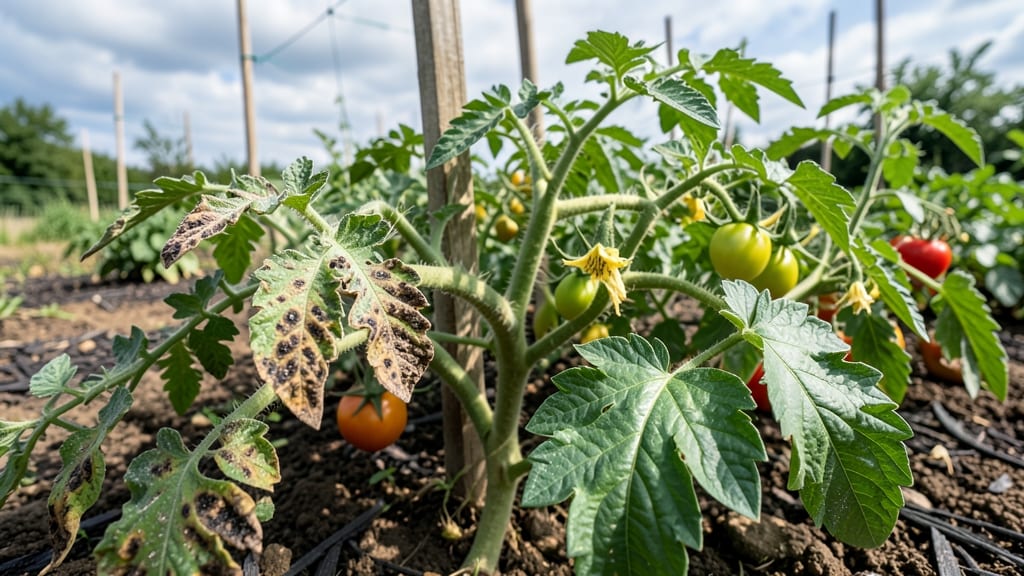
Tomato leaf diseases can turn your lush plants into a sad, spotted mess—unless you catch them early. 🌱 I’ve lost entire harvests to fungal spots and wilting leaves, but now I know the telltale signs: brown rings (early blight), water-soaked patches (late blight), or white powder (mildew).
The good news? Most are preventable with simple organic fixes.
These diseases thrive when humidity meets poor airflow, but you can break that cycle. Prune leaves for better airflow, water at the base (never overhead), and rotate crops yearly to starve soil-borne pathogens.
Copper sprays and neem oil work wonders for fungal spots, while baking soda mixes stop powdery mildew before it spreads.
You’ll save your plants—and your tomatoes—by acting fast. Remove infected leaves immediately, and compost them far from the garden. With these steps, your plants will bounce back stronger, and you’ll enjoy vine-ripened tomatoes all season long.
For stubborn cases, dig deeper: check soil health, adjust watering, and consider companion planting (like basil) to deter pests. Prevention is easier than cure, but even late-stage plants can recover with the right care.
Root Causes Behind Leaf Troubles
When your tomato plants start showing signs of distress—spotted, yellowed, or wilted leaves—it’s rarely a random act of nature. Instead, these symptoms almost always stem from a mix of environmental stressors, biological invaders, or poor growing conditions.
Understanding the why behind these issues is the first step to saving your plants and ensuring a bountiful harvest. Below, we break down the most common culprits, backed by science and actionable insights.
Fungal diseases are among the most destructive forces behind tomato leaf problems, thriving in moist, warm conditions. These pathogens don’t just appear—they infect through wounds, spores, or even healthy tissue, then spread like wildfire. Here’s how it happens:
- Early Blight (Alternaria solani):
This fungus loves cool, damp nights (60–80°F) and attacks older leaves first. Spores hitch a ride on wind, water, or even your gardening tools, landing on leaves and creating concentric brown spots with yellow halos. Over time, the spots expand, killing leaf tissue and reducing photosynthesis.
- Late Blight (Phytophthora infestans):
A more aggressive cousin, late blight thrives in humid conditions above 70°F and can destroy a plant in days. It starts with dark, greasy-looking spots on upper leaves, then spreads to stems and fruit. Unlike early blight, late blight feeds on living tissue, causing rapid rot.
- Powdery Mildew (Oidium spp.):
This fungus doesn’t need water—it spreads via airborne spores and thrives in low humidity with poor airflow. It coats leaves in a white, powdery film, blocking sunlight and stunting growth. Unlike other fungi, it doesn’t need wet leaves to survive, making it a year-round threat in greenhouses.
💡 Pro Tip: Fungal spores can overwinter in soil or plant debris, so rotate crops and sterilize tools between seasons to break the cycle.
Unlike fungi, bacteria are microscopic, single-celled organisms that enter plants through natural openings (stomata) or wounds. Once inside, they multiply rapidly, clogging plant vessels and disrupting nutrient flow. Here’s how bacterial diseases take hold:
- Bacterial Spot (Xanthomonas perforans or Pseudomonas syringae):
These bacteria love warm, wet conditions (75–90°F) and spread via rain, overhead watering, or contaminated tools. They create tiny, water-soaked spots with yellow halos that enlarge into crusty lesions. Severe infections can defoliate plants or cause fruit scarring.
- Bacterial Wilt (Ralstonia solanacearum):
A soil-borne bacterium, it enters through roots and blocks water transport, causing sudden wilting—even in healthy-looking plants. Leaves may yellow and crisp as the plant starves. This disease is especially deadly in tomatoes and can persist in soil for years.
- Bacterial Leaf Spot (Xanthomonas vesicatoria):
Similar to bacterial spot but more aggressive, this strain thrives in humid climates and causes dark, greasy lesions with yellow margins. It can infect fruit, leading to marketable losses.
🔥 Key Trigger: Overhead irrigation is the #1 way bacteria spread. Always water at the base of the plant to keep leaves dry.
Tomato plants are heavy feeders, and when they don’t get the right nutrients, leaves send distress signals through color changes, spots, or stunted growth. Here’s what’s missing when leaves misbehave:
| Symptom | Likely Deficiency | Why It Happens |
|---|---|---|
| 🟢 Yellowing between veins (chlorosis) | Nitrogen (N) | Nitrogen is crucial for leaf growth and chlorophyll. Deficiencies occur when soil is depleted or when plants can’t absorb it (e.g., too much water or high pH). |
| 🟡 Yellowing at leaf edges with brown tips | Potassium (K) | Potassium regulates water and nutrient movement. Poor soil, overwatering, or competing weeds can starve plants of this essential mineral. |
| 🟤 Purple or reddish stems/leaves | Phosphorus (P) | Phosphorus fuels root and flower development. Cold soils or fresh manure (which binds phosphorus) can lock it out of reach. |
| 🟤 Interveinal yellowing (veins stay green) | Magnesium (Mg) | Magnesium is the center of chlorophyll. Overwatering or compacted soil can wash it away, leaving leaves unable to photosynthesize. |
✨ Soil Test Savior: If you suspect a deficiency, test your soil before guessing. A simple $20 home kit can reveal exactly what’s missing—and how to fix it.
Tomatoes are tropical plants at heart, and when their environment strays too far from ideal, leaves react with visible stress signals. Here’s how heat, cold, and other factors wreak havoc:
- Extreme Heat (Above 90°F):
Tomatoes wilting midday? That’s their way of conserving water. Prolonged heat causes:
- Sunburn: Leaves develop white or brown patches (like scalded skin) due to UV damage.
- Blossom Drop: High temps disrupt pollination, leading to poor fruit set.
- Cold Stress (Below 50°F):
Tomatoes are frost-sensitive, and even cool nights can cause:
- Blackened or mushy leaves (from cell rupture).
- Stunted growth due to metabolic
Quick Fixes for Sick Tomato Leaves
When your tomato plants start showing signs of distress—whether it’s yellowing, spots, or wilting—acting fast is key. Below are practical, step-by-step solutions tailored to the most common leaf diseases, along with prevention tips to keep your plants thriving. No gardening degree required—just follow these fixes!
Cause: Alternaria solani fungus thrives in warm, humid conditions, creating concentric brown spots on older leaves.
How to Fix It: 🔥 Remove & Toss Infected Leaves
- Snip off yellow or brown spotted leaves (don’t compost them—this spreads spores). Use sterilized pruners (wipe with rubbing alcohol between cuts).
🍳 Boost Airflow & Space Plants
- Thin out crowded plants so air circulates. 3–4 feet between rows prevents humidity buildup.
👨🍳 Apply Fungicide (Organic or Chemical)
- Prevention spray: Mix 1 tsp baking soda + 1 quart water + a few drops of dish soap (spray undersides of leaves weekly).
- For severe cases: Use copper fungicide (follow label instructions) every 7–10 days.
🌡️ Prevention Tip:
- Rotate crops—don’t plant tomatoes in the same spot yearly.
- Water at the base (avoid overhead sprinkling) to keep leaves dry.
Cause: Phytophthora infestans spreads rapidly in cool, wet weather, causing greasy-looking brown spots with white mold underneath.
How to Fix It: 🔪 Destroy All Infected Plants Immediately
- Do NOT compost—bag and trash infected plants to stop spores from spreading.
⏰ Spray Preventatively (Even If No Signs Yet!)
- Weekly copper fungicide spray (start when temps drop below 80°F).
- Homemade option: 1 tbsp neem oil + 1 tsp soap per gallon of water (spray every 5–7 days).
💡 Pro Tip:
- Mulch with straw (not plastic) to reduce soil splashing onto leaves.
- Avoid overhead watering—use drip irrigation instead.
Cause: Septoria lycopersici fungus creates small, dark spots with yellow halos, often on lower leaves.
How to Fix It: 🌿 Prune & Dispose of Lower Leaves
- Remove infected leaves (especially on the bottom) to improve airflow.
🍄 Use a 3-Step Fungicide Rotation
- Baking soda spray (1 tbsp per gallon of water + soap).
- Copper fungicide (alternate weeks).
- Neem oil (for prevention).
🎯 Prevention Tip:
- Space plants 18–24 inches apart to reduce humidity.
- Water early in the day so leaves dry quickly.
Cause: Tiny bugs suck sap, causing yellow stippling, webbing, or curled leaves.
How to Fix It: 🚿 Blast Them Off with Water
- Strong spray from a hose (early morning) knocks them off.
🌿 Introduce Beneficial Insects
- Ladybugs or lacewings eat mites naturally (buy online or attract with dill/marigolds).
🔥 Soap Spray (Safe & Effective)
- Mix 1 tsp mild liquid soap + 1 quart water—spray directly on pests (test on a small leaf first).
💡 Pro Tip:
- Yellow sticky traps catch mites before they multiply.
- Avoid broad-spectrum pesticides—they kill good bugs too!
No matter the disease, these universal tips help prevent problems: ✅ Rotate crops—don’t plant tomatoes, peppers, or eggplants in the same spot yearly. ✅ Start with disease-resistant varieties (e.g., ‘Mountain Merit,’ ‘Celebrity’). ✅ Water deeply but infrequently (1–2 inches per week) to avoid soggy soil. ✅ Clean up debris in fall—burn or trash old plant material. ✅ Test your soil—tomatoes need pH 6.0–6.8 and balanced nutrients.
Final Reminder: The sooner you act, the better your chances of saving your tomato plants! Check leaves weekly, and don’t wait until spots spread—prevention is your best tool. 🍅✨
Frequently asked questions
What’s the difference between early blight and late blight on tomato leaves?
Early blight shows as concentric brown rings with yellow halos on older leaves, while late blight creates greasy-looking dark spots that spread rapidly to stems and fruit. Early blight thrives in cool, damp nights (60–80°F), while late blight strikes in humid conditions above 70°F and can destroy plants in days.
Can I save a tomato plant with bacterial wilt?
Unfortunately, bacterial wilt (Ralstonia solanacearum) is usually fatal. Once symptoms appear (sudden wilting, yellowing leaves), the bacteria have already clogged the plant’s water vessels. Remove infected plants immediately and avoid planting tomatoes, peppers, or eggplants in that spot for 3–4 years—this soil-borne pathogen can survive for decades.
How often should I spray neem oil for powdery mildew?
Apply neem oil every 5–7 days at the first sign of powdery mildew (white, powdery coating on leaves). Mix 1 tbsp neem oil + 1 tsp mild soap per gallon of water and spray undersides of leaves. Stop spraying 24 hours before harvesting to avoid bitter flavors. For prevention, spray once weekly during humid weather.
Will composting tomato leaves with diseases spread the problem?
Yes—composting infected leaves can spread fungal spores or bacteria to other plants. Instead, bag and trash severely diseased leaves, or burn them if safe. For mild cases, remove only the worst spots and compost the rest far from your garden. Always sterilize pruners with rubbing alcohol between cuts.
Are there disease-resistant tomato varieties I can plant next year?
Look for varieties labeled VFN (resistant to Verticillium and Fusarium wilts) or F (foliar diseases). Top picks include ‘Mountain Merit,’ ‘Defiant PhR,’ and ‘Bush Early Girl.’ These hybrids are bred to fight common fungal and bacterial diseases while still producing great-tasting fruit. Start seeds indoors 6–8 weeks before last frost for the best results.