
Pests
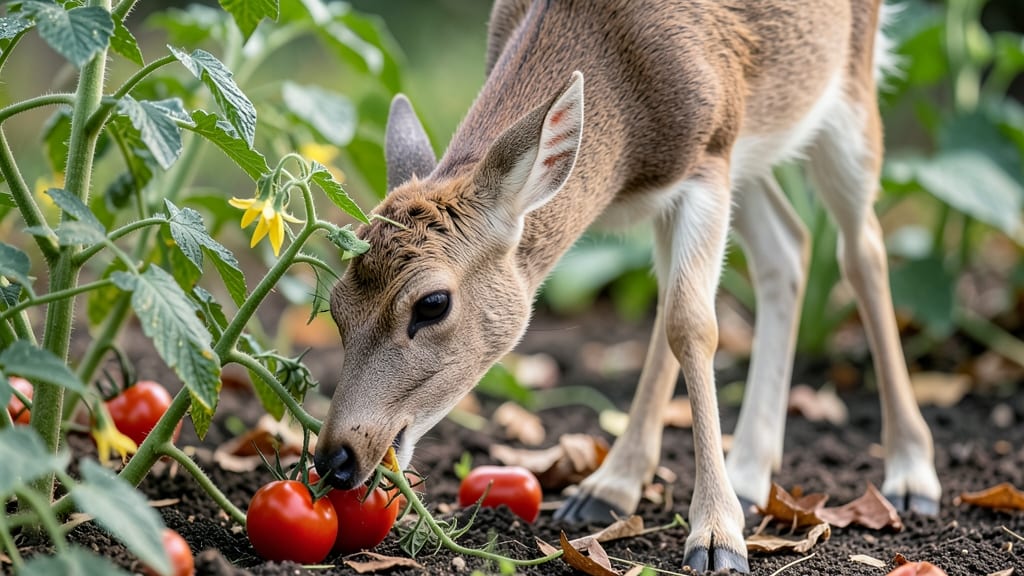
Deer eat tomatoes and tomato plants voraciously, targeting leaves, stems, and fruit—especially when other food sources are scarce. Their browsing can devastate gardens, requiring proactive deterrents like repellents or fencing.
Deer are notorious for feasting on tomato plants because they find them irresistible—both the green foliage and ripe fruit. 🌱 The sweet scent of tomatoes and the tender leaves make them an easy snack, particularly during late summer and fall when deer are searching for nutritious options.
Without protection, a single deer can strip an entire plant in minutes, leaving gardeners with nothing but chewed stems and ruined harvests.
To combat this, I recommend combining physical barriers like 8-foot fencing with natural deterrents such as rotten egg spray or deer-resistant companion plants like marigolds. Timing matters too—deer are most active at dawn and dusk, so setting up motion-activated lights can also help deter them from your garden.
💡 In This Article
- Why Deer Target Tomato Plants and Fruits
- Effective Deer-Proofing Strategies for Tomato Gardens
Why deer target tomato plants and fruits
Deer have an exceptional sense of smell—up to 30 times stronger than humans—which makes them irresistibly drawn to the aromatic compounds in tomato plants. 🌿 The leaves emit volatile organic compounds (VOCs) like hexanal and hexenal, which deer perceive as fresh, nutritious vegetation.
These same compounds also signal ripening fruit, triggering their foraging instincts. Unlike many garden plants, tomatoes contain soluble sugars (1-5%) and carbohydrates that provide quick energy, making them a high-value snack during late summer when deer seek easy calories.
Texture plays a role too. Tomato leaves and stems have a tender, fibrous structure that deer can easily strip with their sharp incisors. Unlike woody plants, tomato foliage offers minimal resistance, allowing deer to consume large quantities in 5-10 minutes.
The plants' upright growth habit also makes them accessible—deer typically browse at 18-36 inches above ground, where tomato stems are most vulnerable. 🦌 What's surprising is that deer often prefer young, tender leaves over fully ripened fruit, which contains more seeds and less water content.
The seasonal pattern of deer feeding aligns with tomato growth cycles. In spring and early summer, deer target young tomato seedlings, mistaking them for clover or other preferred forage. By late summer, when tomatoes are fruiting, deer shift focus to the ripe, red fruit, which contains higher sugar concentrations.
This explains why gardeners often see selective damage—deer may nibble leaves in June but completely devour tomatoes in August. 🍅 Their behavior mirrors that of wild herbivores seeking seasonal abundance.
Scientific studies on deer foraging reveal another key factor: habituation. Deer in suburban areas quickly learn which gardens offer the easiest access to food. If a tomato plant goes unprotected for even one season, returning deer will remember its location and return year after year.
This memory-driven behavior makes prevention critical—once a deer discovers a food source, it becomes a reliable part of their diet. The combination of scent, texture, and seasonal availability creates a perfect storm for tomato plants in deer-populated areas.
Interestingly, deer show preference hierarchy among tomato varieties. Heirloom tomatoes with thicker leaves or hairy stems (like 'Cherokee Purple') are slightly less appealing than smooth-leaved hybrids.
However, no variety is completely deer-proof—once hungry, deer will consume anything edible. 🌱 The key difference lies in how quickly they can harvest the plant, with bush varieties being more vulnerable than indeterminate types that grow taller and produce fruit higher off the ground.
Understanding these behavioral triggers helps gardeners implement targeted solutions. For example, removing fallen fruit immediately reduces scent trails that attract deer, while planting tomatoes near deer-deterrent herbs (like rosemary or lavender) can mask their aroma.
The science of deer foraging shows that prevention must address both scent attraction and accessibility—two factors that make tomatoes such tempting targets.